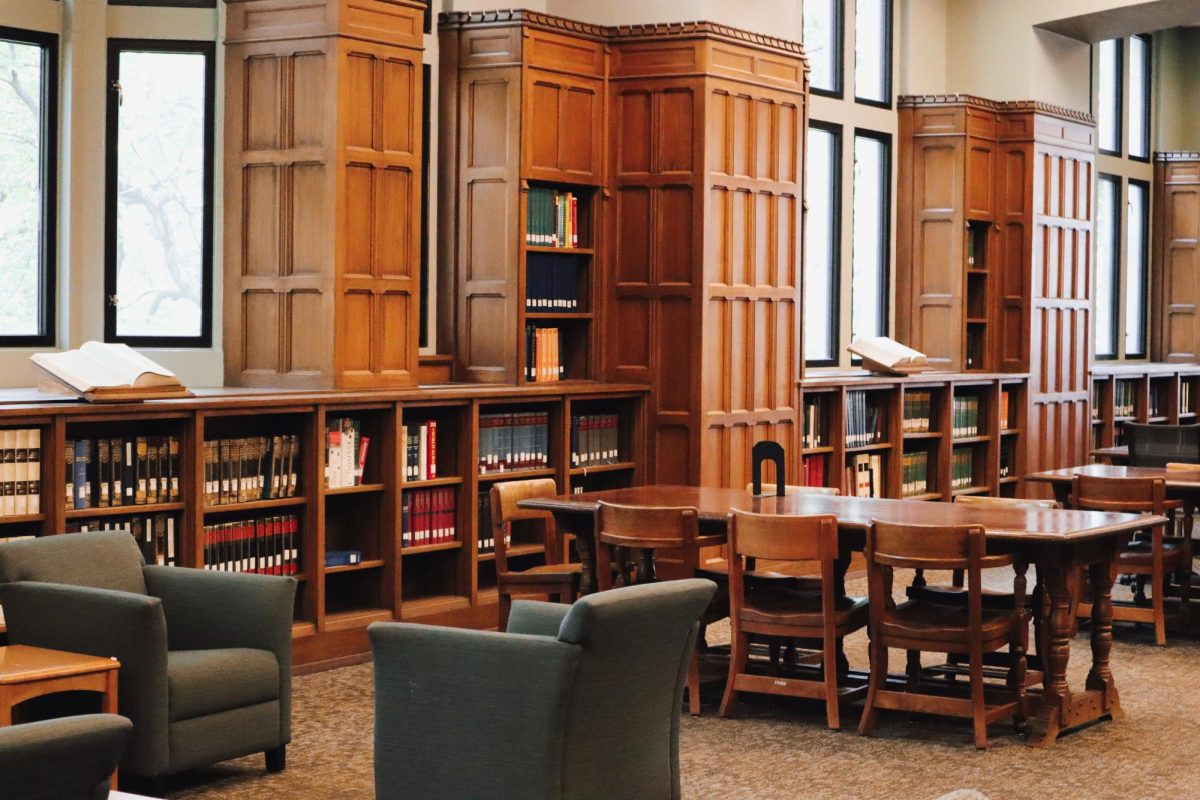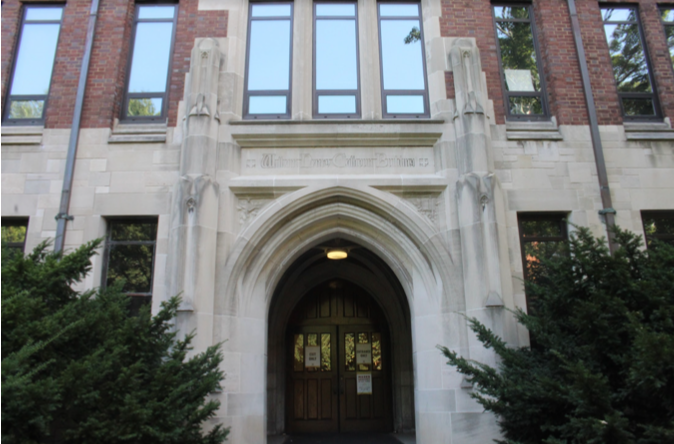


The reopening of Garland Hall does more than increase the building’s size from approximately 49,000 to 72,500 square feet. Design choices within the new home for the Medicine, Health and Society, Anthropology and other College of Arts and Sciences departments promote collaboration. Both inside and outside of Garland Hall, aged brick harmonizes with new glass and classic concrete connects with wood accents, just as faculty and students bring together arts and science.
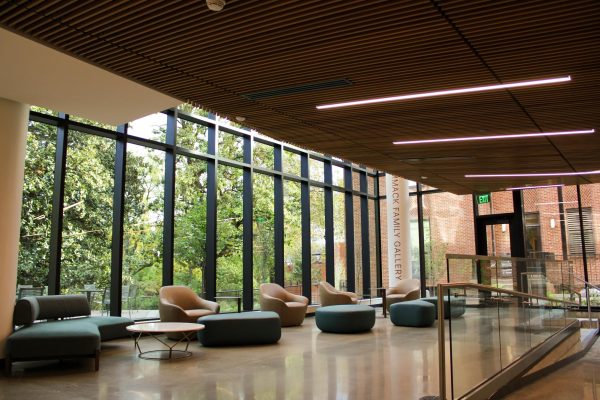
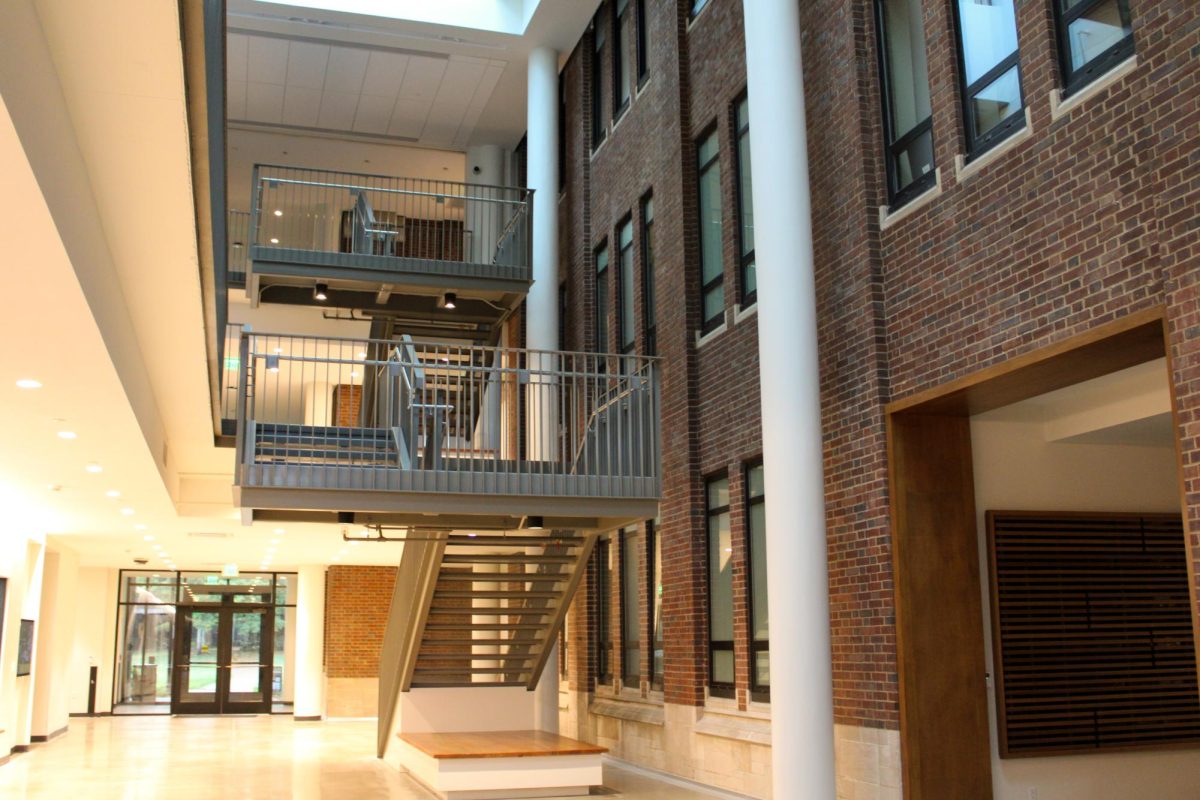
Garland Hall was originally built in 1928 as an academic building alongside Buttrick Hall and Calhoun Hall, and the 2025 renovations tie together the historic character of the building with modernized open-concept aesthetics. Inside, a traditional brick façade meets tall white columns, creating a balance between its historic character and modern elegance.

Garland Hall’s renovation increases the number of workspaces from 73 to 96. Study spaces vary from booth tables to open sofa seating, supporting diverse study preferences for different studying needs.

It’s hard to miss the renovation’s added wood detailing, blurring the line between indoor and outdoor spaces. Warm tinted wood lines the walls, seating and stairways, inviting a sense of nature into the academic space.
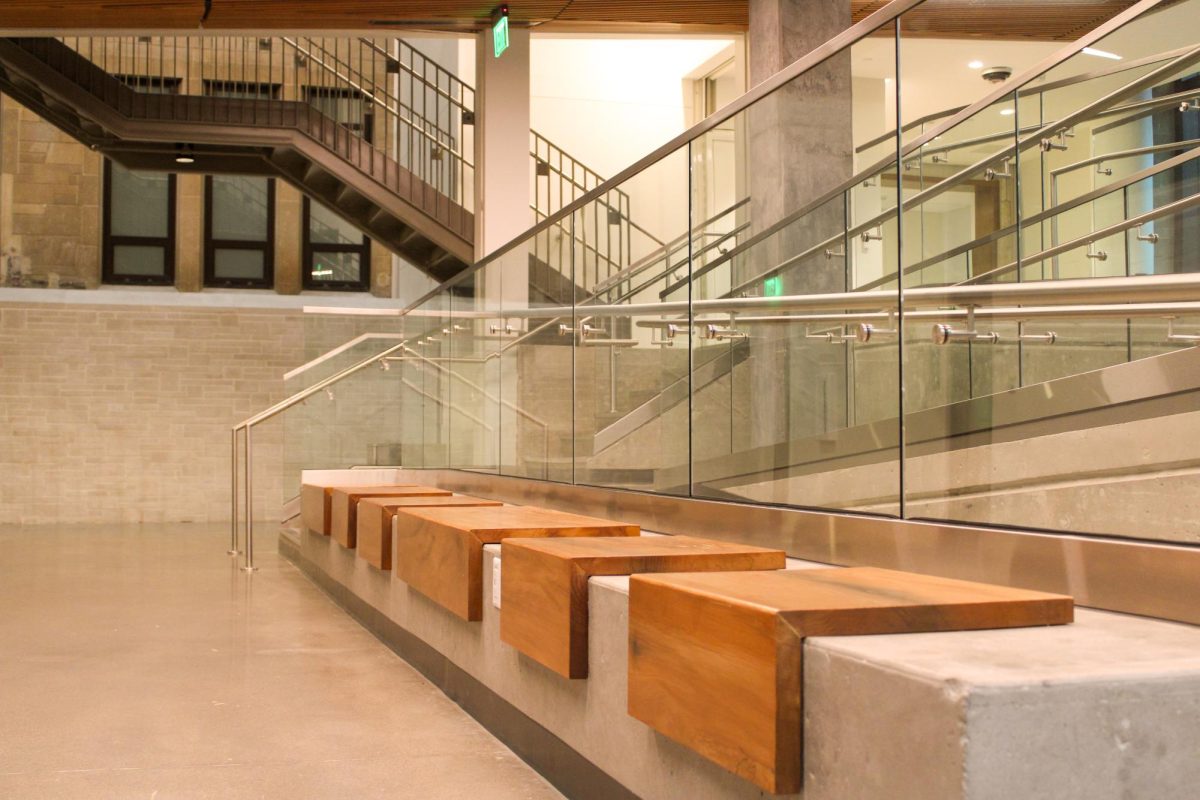
Ultimately, Garland Hall’s renovations reflect their intended atmosphere of interconnection. An ever-present dialogue between the building’s traditional frame and contemporary furnishings complements the desired collaboration between the students and faculty populating it.
By design, Garland Hall will continue to anchor Vanderbilt in its goals of dialogue and collaboration. And hopefully, for the coming century, Garland will serve as a hub of connection with art meeting science, brick meeting wood and the outdoors meeting the indoors.