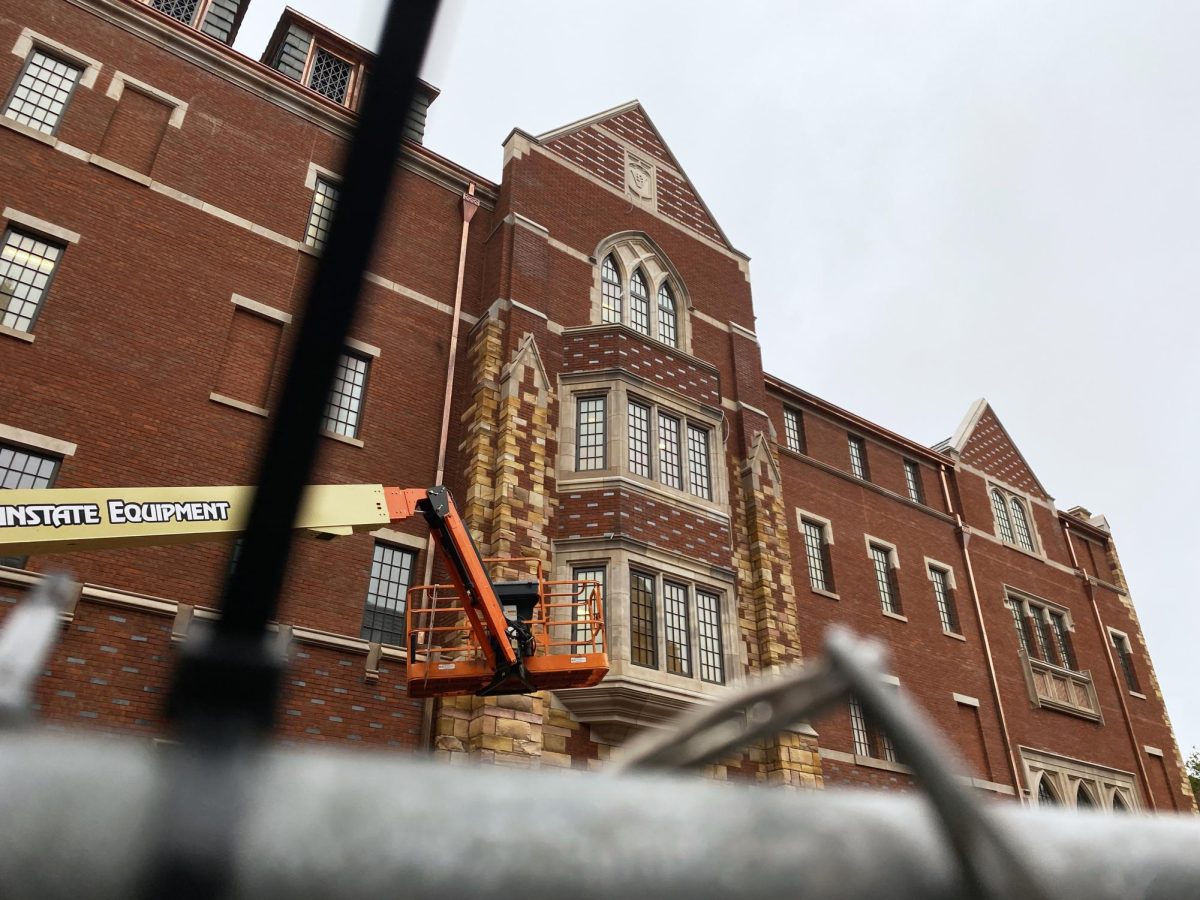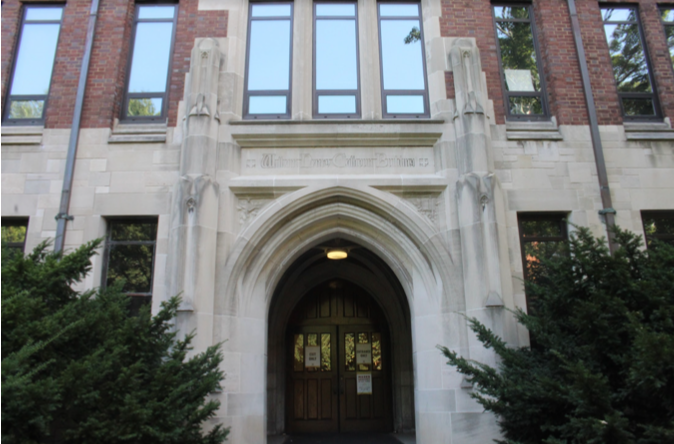


Garland Hall reopened its doors to students last month after a year of renovation and expansion. Construction on FirstBank Stadium was also completed with the opening of the new south end zone facilities.
Construction projects continue around campus as part of Vanderbilt’s FutureVU land use plan that began in 2015. FutureVU focuses on making improvements to each neighborhood of campus: Historic Core, West End, Central, Highland, Peabody, Student Village, Triangle and Athletics.
Here’s a look at the latest construction updates in some of these campus neighborhoods.
Historic Core Neighborhood
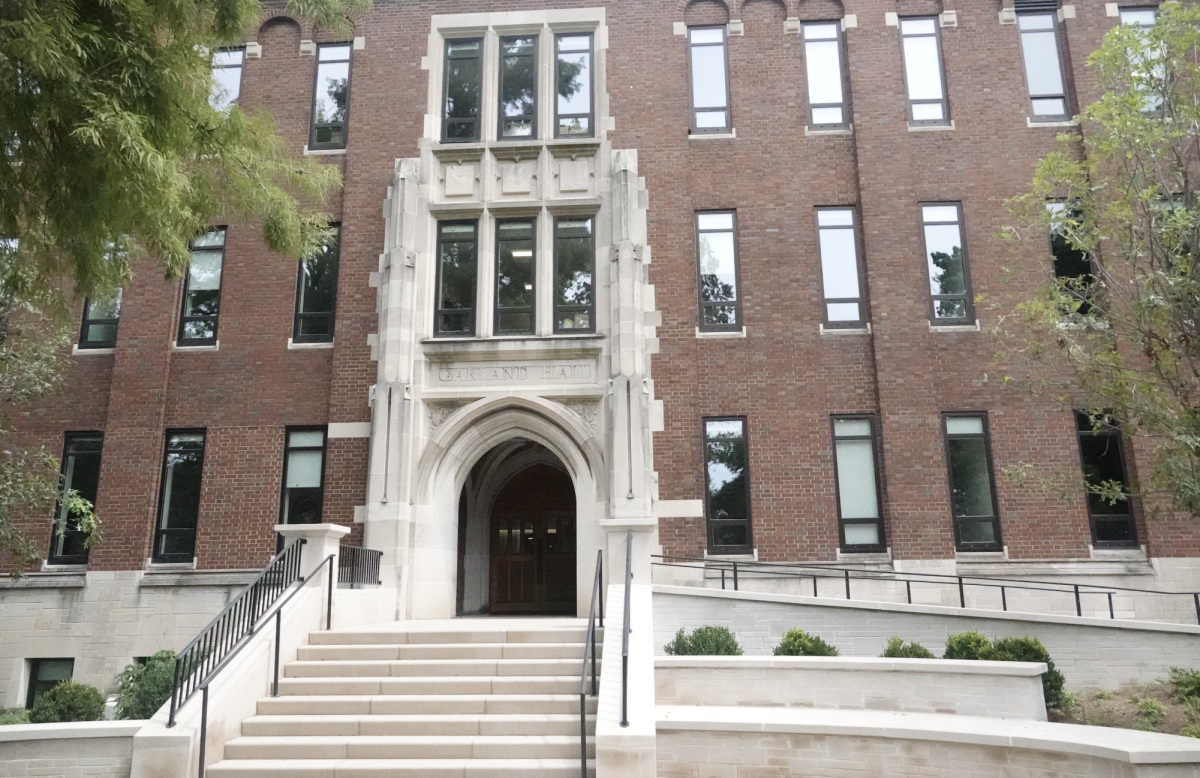
The newly renovated Garland Hall expanded the previous design by 35,000 square feet and includes new classrooms, laboratories and collaborative and meeting spaces, according to a university press release.
In a message to The Hustler, first-year student Eve Busch discussed her thoughts on the project. She said she is pleased with the renovation and commended the newly expanded seating both within and outside of Garland.
“I think it’s super nice,” Busch said. “Compared to the other buildings, I think I enjoy it a lot more because there’s just a lot of seating and areas to relax that are a lot nicer.”
John Sides, William R. Kenan Jr. Chair and political science professor, who teaches a political science class in Garland Hall, expressed relief at the completed project.
“The renovations to Garland Hall provide some much-needed classroom space on the historic core of campus,” Sides said. “The new classrooms offer some great flexibility in how the spaces are designed and can be used.”
Others, like Senior Ezri Tyler, have been less impressed with the new additions, noting that the improvements have not actually been necessary. According to Tyler, being inside the newly renovated Garland Hall was “like being in a hamster bowl.” Tyler also found fault in the “massive concrete path, where it used to be such a beautiful lawn.”
Athletics Neighborhood

FirstBank Stadium opened to fans for the first home football game of the season against Charleston Southern with its south end zone renovations complete. The end zone houses premium seating options, an updated concourse, new locker rooms and an upgraded video and sound system.
Other athletic facilities under construction include an updated tennis center, the completion of which is projected for March 2026. The university did not immediately respond to The Hustler’s request for a comment on the status of other athletic construction projects.
These projects represent the next step in the Vandy United campaign to establish the Frist Athletics Village, whose completed projects include the Huber Center — a basketball facility dedicated this past January — and the north end zone of FirstBank Stadium.
Central Neighborhood

Plans to demolish Stevenson Center 6 were announced by the university in April after The Hustler reported on the plans in November 2024 prior to the university’s announcement.
Demolition was initially scheduled to begin in summer 2025, but the building still stands. Work has begun around the building to prepare the site for the new state-of-the-art science building that will be shared by the College of Arts and Science, the School of Engineering and the School of Medicine Basic Sciences. The building is scheduled to open in 2028.
Classes previously held in Stevenson 6, including those in the Department of Physics and Astronomy and the Department of Earth and Environmental Sciences, are being held in other spaces on campus. Some physics laboratory courses are taking place in a university-owned building at the corner of 19th Avenue S. and Grand Avenue.
Junior Hugo Turro-Serrano, who is currently taking a class in the 19th and Grand building, expressed concern about the distance between it and the rest of campus.
“I would much rather be on campus instead of going off campus. We have to go all the way across campus just to just to go to a building that’s a little bit far away from everything so that’s kind of annoying,” Turro-Serrano said.
Additionally, John Thomas Mintz expressed concerns about safety when it came to distance and time between these off-campus classes.
“[The situation] makes me worry about the safety of some of my fellow classmates,” Mintz said. “There is a girl in my visions who has to go way off campus for a lab that ends around eight at night and then walk back through the darkness back to campus.”
Also in the Central Neighborhood, the University Club and Community Partnership house were demolished over the summer to make space for the next phase of residential colleges. The four new colleges are scheduled to open in phases beginning in 2028. Manual demolition continues at Branscomb Quad, which was initially scheduled for demolition this summer as well. Demolition is now continuing after it was temporarily halted due to small amounts of asbestos being discovered during routine testing.
Work on the Central Utilities Initiative’s second phase occupies part of the Central Neighborhood as well. Phase I was completed with the opening of the Highland Energy Plant, and Phase II continues the work of upgrading chilled and hot water lines and moving overhead utilities underground.
Peabody Neighborhood
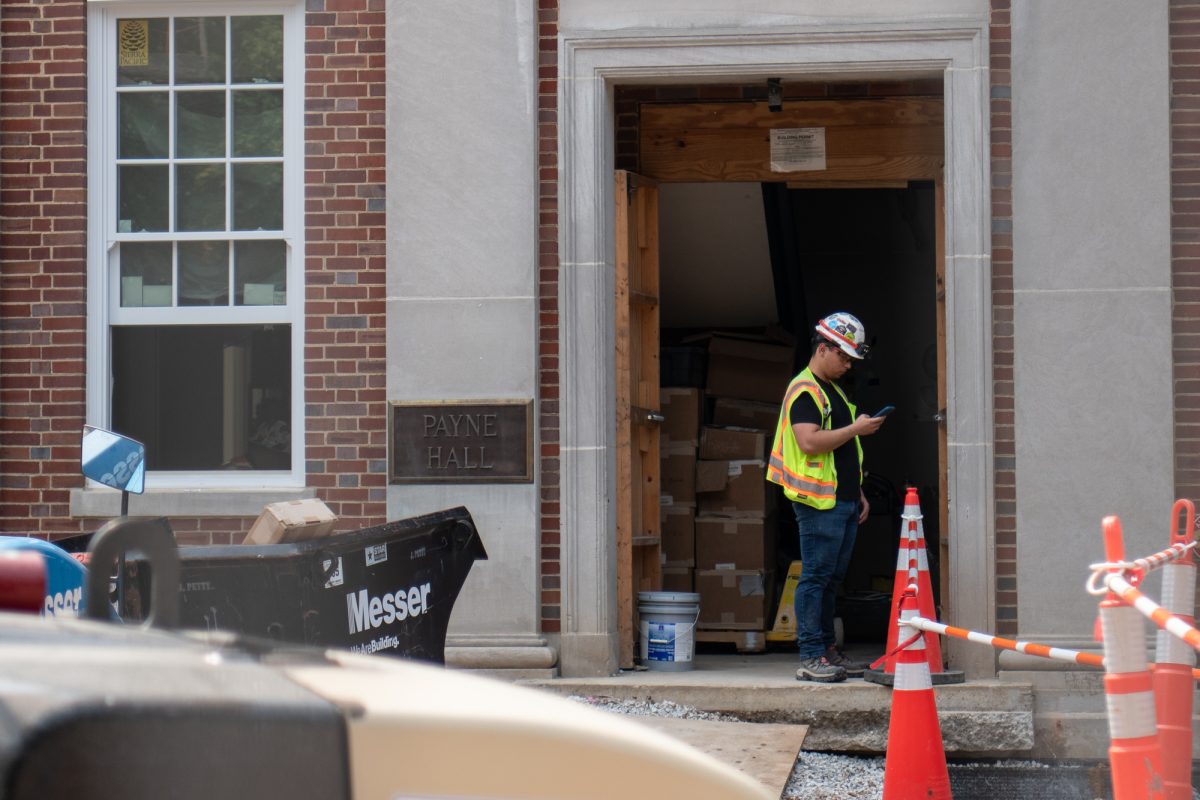
On the Peabody side of campus, Payne Hall remains under construction and is slated for completion next spring. With the last renovation done to the building almost 30 years ago, the current renovations seek to upgrade office and classroom spaces, install a new roof, HVAC system and elevators and improve overall building accessibility.
The Roberts Academy and Dyslexia Center at Vanderbilt opened in 2024 in a temporary location, but construction is underway on a permanent location on the corner of 18th Avenue S. and Edgehill Avenue that will open next year. The new space will provide enhanced educational and research spaces.
Highland Neighborhood
The Engineering and Science Building opened in 2016 with only four floors completed. Since then, progress has been made to complete floors five and six as well. The seventh and final floor, which will house research space for biochemistry faculty, is under construction and is scheduled to be completed early next year.
In addition to current campus construction projects, the university announced a 40-acre campus expansion on the west side of campus in July. Though construction has not begun, the design process is underway to plan this “innovation district.” The university also has plans to expand its reach across the nation by opening campuses in Florida, New York and California.