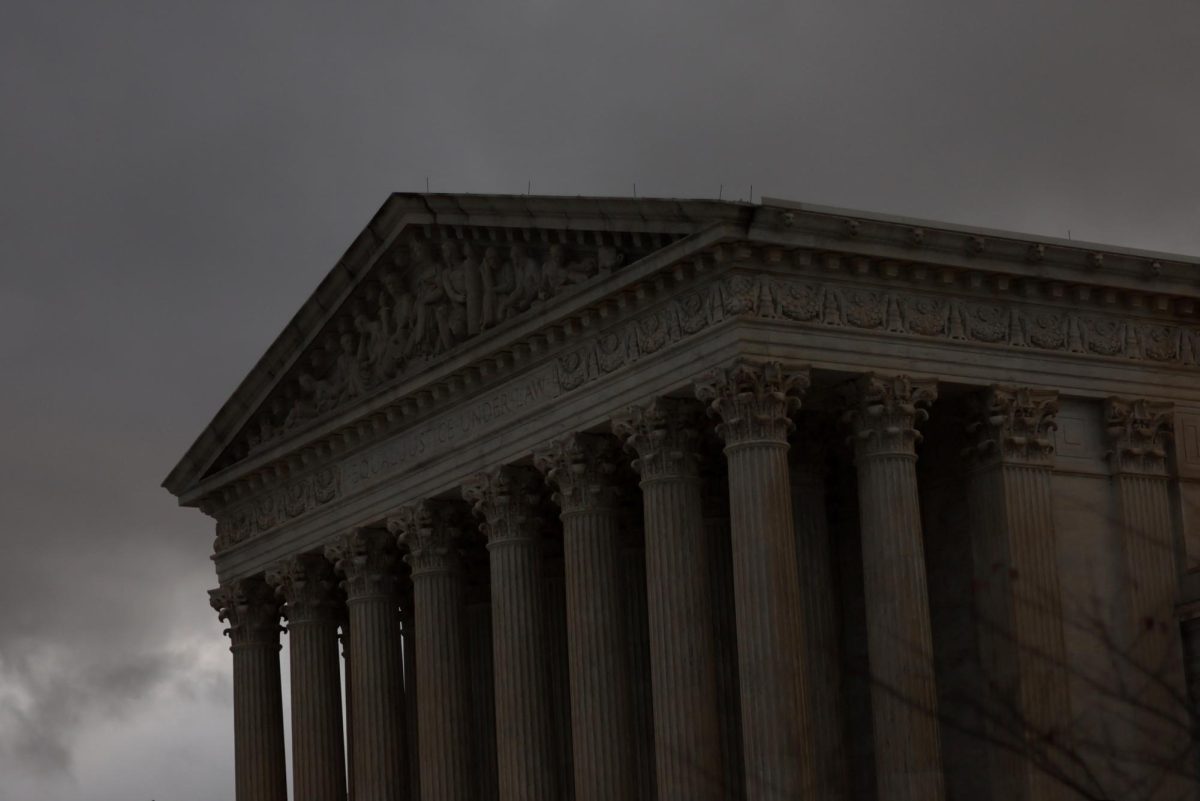
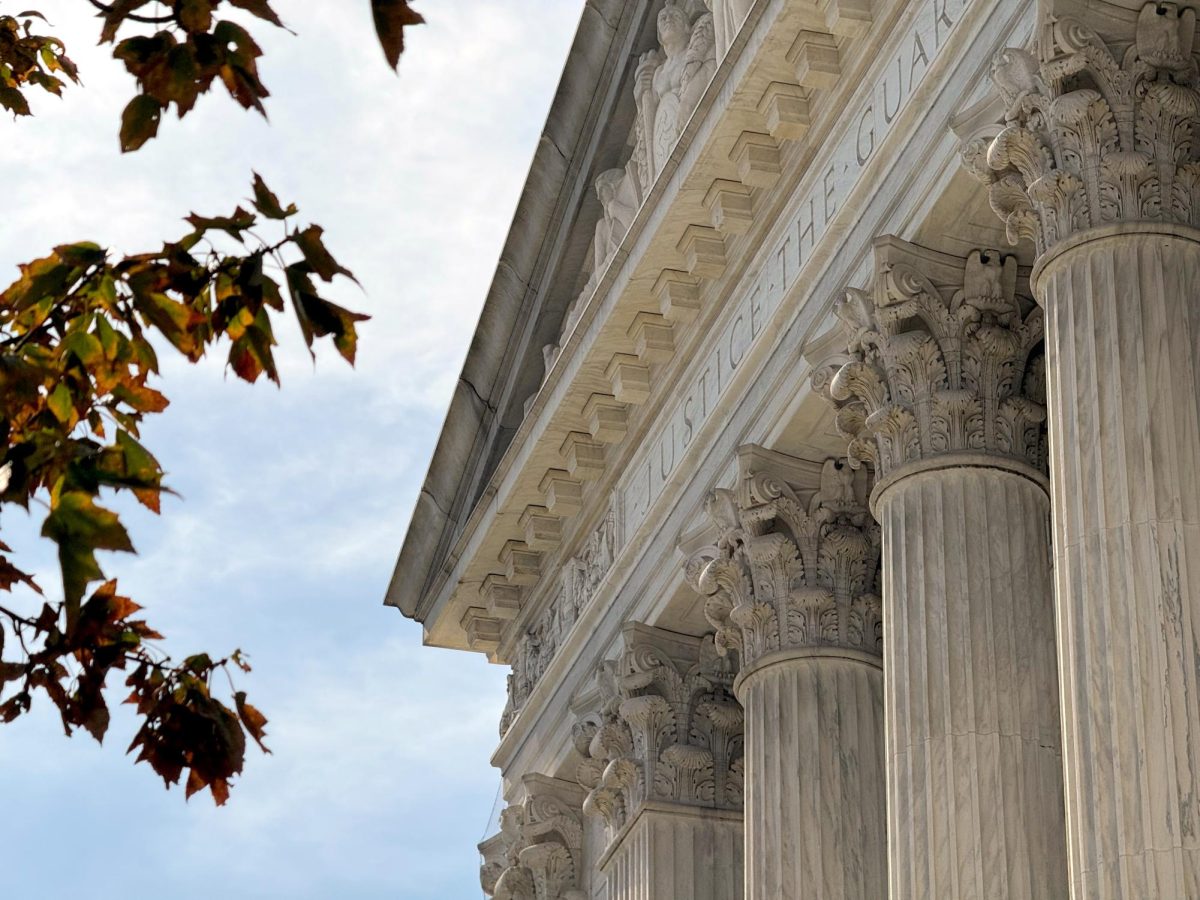

In a 6-3 decision, the Supreme Court ruled in Trump v. Barbara that children born in the United States are guaranteed citizenship regardless of their parents’ immigration statuses. This ruling comes in response to President Donald Trump issuing Executive Order No. 14160, which posited that children born to parents “unlawfully or temporarily present” in the country do not qualify for citizenship under the 14th Amendment.
“The 14th Amendment has never been interpreted to extend citizenship universally to everyone born within the United States,” the executive order reads. “The 14th Amendment has always excluded from birthright citizenship persons who were born in the United States but not ‘subject to the jurisdiction thereof.’”
Oral arguments for the case were heard April 1. Dean John Sauer, the United States’ solicitor general, presented arguments on behalf of Trump et al.
Cecillia Wang, the national legal director of the American Civil Liberties Union, argued the case on behalf of respondents Barbara et al.
Breaking down the ruling
Chief Justice John Roberts delivered the majority opinion, which struck down the executive order. Justices Sonia Sotomayor, Elena Kagan, Amy Coney Barrett and Ketanji Brown Jackson joined him. The majority opinion emphasized the legal principle of jus soli and its history in the United States. Justice Brett Kavanaugh published a separate opinion that concurred in part and dissented in part.
“This common law of citizenship — known as jus soli, or right of the soil — crossed the Atlantic and prevailed in ‘each and all of the states’ after American independence, and continued to emphasize reciprocal ‘allegiance’ and ‘protection,’” Roberts wrote. “By ‘the doctrine of natural allegiance,’ all ‘who [we]re born within the jurisdiction of a State’ were citizens.”
Roberts noted that jus soli remained as the dominant and settled understanding until the Supreme Court’s 1857 decision in Dred Scott v. Sandford. In Dred Scott, the Court adopted the principal of jus sanguinis or right of blood, which holds that citizenship is acquired by descent. The Dred Scott decision ultimately ruled that enslaved and free Black individuals were not citizens of the United States and thus could not sue in federal court.
In his writing, Roberts also explained that the Dred Scott decision was “repudiate[d]” by the 14th amendment.
“The goal [of the 14th amendment] was even grander [than that of the Civil Rights Act]—to put the ‘great question of citizenship’ ‘beyond the legislative power’ altogether, to settle the issue once and for all,” Roberts said. “The 14th Amendment achieved its aim … A child born on American soil and subject to American law was made an American citizen.”
The majority opinion also reaffirmed the Court’s 1898 decision in United States v. Wong Kim Ark.
“What the Court held in Wong Kim Ark was simple: the Citizenship Clause incorporated the common law and granted citizenship to nearly all children born in the United States,” Roberts wrote. “Not surprisingly, then, in the 128 years since, we have repeatedly understood the rule of Wong Kim Ark to guarantee citizenship to all children born in the United States and subject to its power. We see no reason to depart from that view today.”
Roberts finally argued that the Government and the principal dissent “err[ed]” in their emphasis on domicile. Roberts defined the term domicile as the “place of one’s permanent home.” He wrote that the Citizenship Clause and 14th Amendment did not intend to limit citizenship to children whose parents were “domicile” to the United States.
“If Congress intended to limit American citizenship to the children of those domiciled in the United States, nothing in the succinct language of the Citizenship Clause conveyed that design,” Roberts said. “At no point did the Court identify any evidence in the historical record that the ratifiers of the Fourteenth Amendment thought themselves to be imposing a domicile limitation.”
In an interview with The Hustler, political science professor Carrie Russell explained the opinion, stating that it relied on Wong Kim Ark as precedent.
“In the majority opinion, Roberts highlights the primacy of Wong Kim Ark as precedent. The Court’s 1898 recognition that the 14th Amendment’s language was clear and that the ruling focused on plain text,” Russell said. “The majority here upheld Wong Kim Ark and respected stare decisis, the norm of letting a decision stand unless there’s a truly compelling reason backed by ideally more than a bare majority.”
Justices’ differing opinions
Justice Clarence Thomas published a dissenting opinion. He was joined by Justice Neil Gorsuch. Thomas expressed his belief that neither the Civil Rights Act nor the 14th Amendment guaranteed citizenship to “persons who were not domiciled in the United States.”
“The phrase ‘not subject to any foreign power’ excluded from citizenship children of foreign temporary visitors, who were subject to the power of their home nation,” Thomas wrote.
Jackson, who was joined in part by Sotomayor, published a concurring opinion that addressed Justice Thomas’ dissenting opinion.
“The America that was reborn from the rubble of the Civil War simply does not countenance that inequitable result,” Jackson wrote. “Thankfully, a majority of the Court remembered this today, and has dutifully preserved the most basic animating principle of our Nation’s founding — that all human beings are created equal — once more.”
Justice Samuel Alito also authored a dissenting opinion. He stated his interpretation that the 14th Amendment grants citizenship only to children who, at birth, owe allegiance “solely” to the United States. He also emphasized that this interpretation does not require nor represent the loss of citizenship for individuals born to parents who hold temporary or undocumented status in the country.
Kavanaugh, who concurred in part and dissented in part, argued that while Trump’s executive order did not violate the 14th Amendment, it does contravene federal statute 8 U.S.C. §1401(a). The statute defines a person born in the United States to be subject to its jurisdiction and thus a citizen.
“For the Executive Order to be lawful… Congress would need to amend §1401(a) or otherwise enact new legislation to encompass those two new exceptions,” Kavanaugh wrote.
Russell highlighted the majority and minority split, noting that this decision was not unified.
“It’s important in a constitutional democracy for the Court to speak with a unified voice whenever possible, particularly on something as fundamental as who is a citizen of this country. When the Court doesn’t speak with a unified voice — when opinions aren’t signed onto by more than a bare majority — it creates room for division, confusion and upheaval,” Russell said.
She added that the vote’s close split with only five signatures on the majority opinion reveals its fragility, raising the possibility that a future case may split the Court in the other direction.
“Five-to-four typically signals that among nine people with lifetime appointments, it could have gone the other way just as easily … that creates a tenuousness,” Russell said. “It makes you wonder whether a similar case five or ten years from now could flip the other way and render the Citizenship Clause of the 14th Amendment meaningless.”
Vanderbilt students
Sophomore pre-law student Aaron Park said that he was surprised that the decision was not unanimous.
“I thought it was a pretty straight-forward case; the president does not have any authority to put limits to birthright citizenship,” Park said in a message to The Hustler. “Birthright citizenship has just been fully established from the 14th amendment and over a century of Supreme Court precedent. I was surprised it wasn’t a unanimous decision.”
Park also believes that this decision is good news.
“For Vanderbilt students who came undocumented [to the United States] or have undocumented family members, it would be a bit of good news in a period where there’s been seldom good news for the status of undocumented immigrants,” Park said. “Especially for people who fall specifically under the situation being a born a citizen on American soil by undocumented parents.”
Marvy Nessim, a rising junior and president of the Multicultural Leadership Council, told The Hustler that the MLC welcomes the decision.
“We believe this decision reinforces and protects the values of belonging and inclusion that strengthen both our campus and our nation as a whole,” Nessim said. “For Vanderbilt students, it reinforces the idea that people from all backgrounds belong here and deserve the opportunity to thrive without uncertainty surrounding their place in the country they call home.”
Vanderbilt College Republicans and Vanderbilt College Democrats did not respond to requests for comment.