
Before we made universities and curricula, we made stories.
Long before the world of academia, with its laboratories and peer-reviewed journal articles, humans looked up at a sky they couldn’t understand and traced constellations between the stars. Roughly 17,000 years ago, they crushed minerals into paint and covered the walls of Lascaux. They wrote songs for their dead before even knowing what killed them. None of these acts were strictly necessary for survival, nor did they establish any objective truth. But, like clockwork, every civilization we know has done them in some form.
Amid debate over what it is that actually drives people — what wakes us up in the morning — what I keep thinking about is this: At the beginnings of civilization, we found food, water and shelter. And then, almost immediately, we began writing stories. We began making art. We began falling in love with one another. If survival was the goal, we could’ve stopped there. Instead, we started searching for the answer to what survival is for.
That is my conception of the humanities as an academic discipline. In a sweeping sense, it has existed as long as humans have walked this earth. And over time, it’s becoming more and more multifaceted. But it is also commanding less respect. It was only a matter of time until it came under attack by Vanderbilt, too.
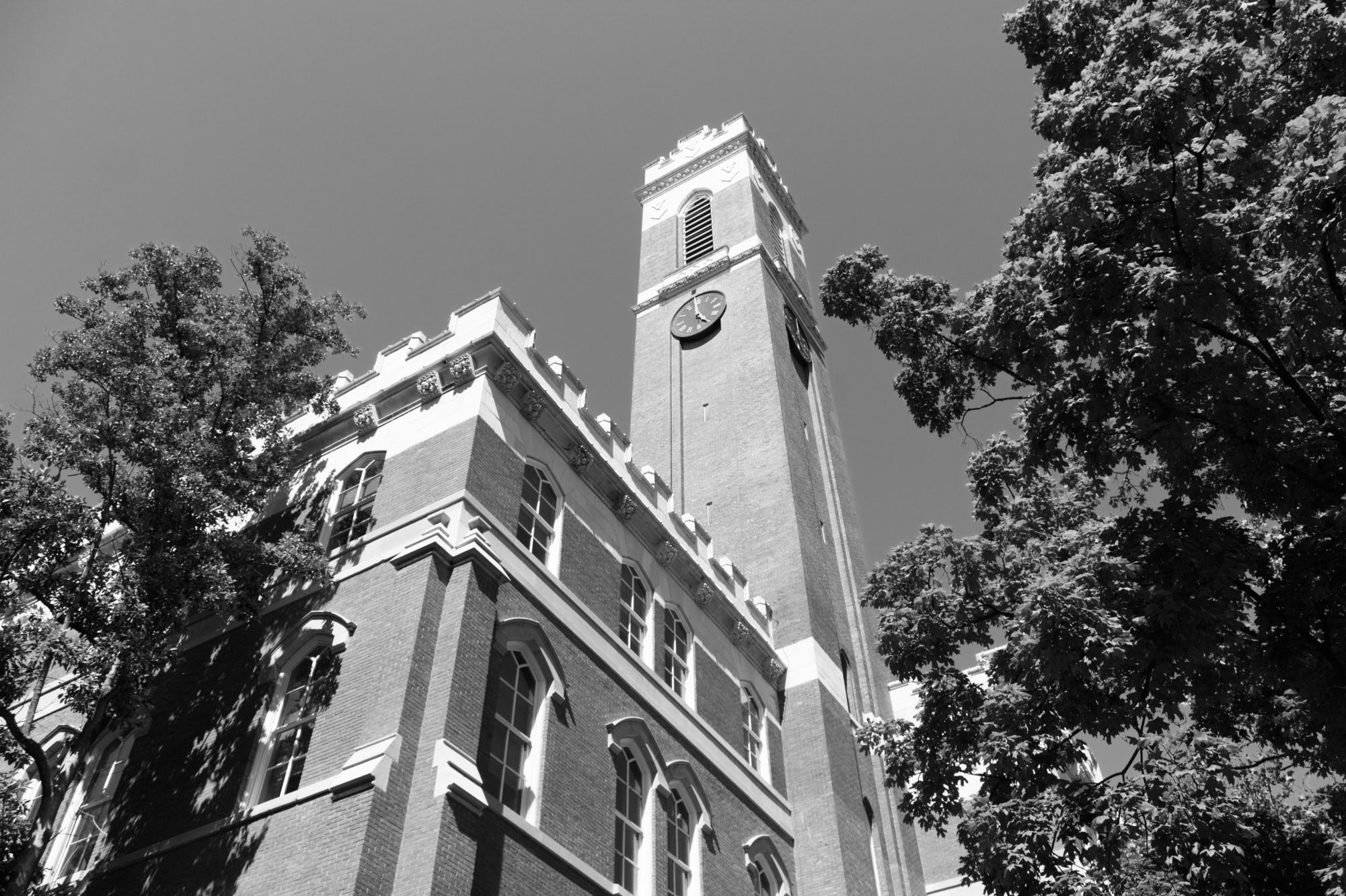
On June 5, Vanderbilt released a joint report with Washington University in St. Louis titled “Report on the State of Scholarship in the Humanities and the Humanistic Social Sciences.” Commissioned in August 2025, the report employs input from New York University’s Paul Boghossian and nine other scholars in humanities fields to answer the question: Have the humanities deteriorated?
Their verdict, after nine months, was yes. The report’s core diagnosis is that every discipline it examined shows symptoms of the same disease: namely, that political conviction is slowly replacing the “scholarly standard” of objectivity. The report treats this as a kind of rot in academia. If truth is always relative to perspective and context, how could any finding be considered more rigorous than another?
Honestly, I’m not interested in litigating this report line by line. Amid accusations by cited authors that their work was misrepresented and the questionable nature of the report’s methodology, it might not even be worth it to. But what I am interested in is the premise that does all the actual work for its authors: that objectivity is the gold standard and subjectivity — perspective, feeling, the particulars and unavoidable errors of human life — is the backwash of scholarship.
Assumption is the report’s true grave error. Not just about the nature of scholarship, but about what life is even for.
Do you want to know the real truth about the humanities? Better yet, do you want to know the truth about Being Human? Perhaps Jason Merchant, co-author of the report and soon-to-be dean of the College of Arts and Science should listen up, since CORE 1010: Being Human is about to be within his purview… Almost nothing is objective.
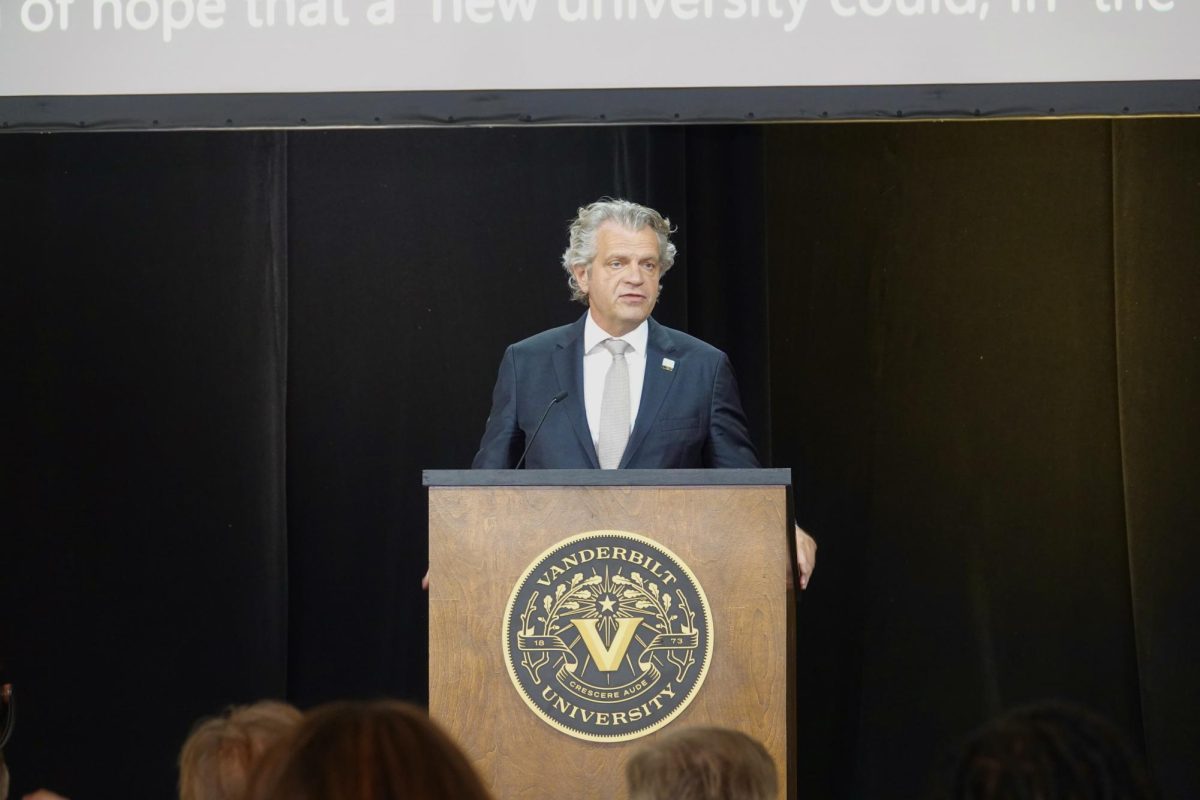
The funny thing is, the authors of the report know this. In fact, I don’t even have to argue the merits of the humanities, because the report does so in one of its first sections. As they put it, the sciences are respectable disciplines with immeasurable utility. But at the end of the day, “who is going to help you decide what satisfactions are really worth pursuing? Which outcomes are worth aiming for? What is worth wanting?”
Touché, Chancellor, but it seems like you missed the point. The things that make the humanities crucial are inherently subjective matters.
The deeper irony is that this 27-page document insisting that academic disciplines need to purge themselves of bias is, in itself, a profoundly subjective argument about what kinds of knowing deserve respect. At best, it is a conclusion with a smuggled-in value judgment that simply doesn’t hold up under inspection.
Subjectivity is unavoidable. It is not a left-wing mechanism to brainwash students into social activism. The assertion otherwise is definitionally a matter of perspective, and I thought the report insisted on avoiding those? We know this is absurd. The idea that there can be some aspects of a discipline that aren’t wholly concerned with finding objective truth is not a failure mode of inquiry.
Once again, the report’s own pages give the game away. They spend multiple pages differentiating and comparing epistemic reasoning — which this report tries to make synonymous with objectivity — and moral reasoning.
“It’s much harder to make sense of comparing epistemic reasons with moral or prudential ones,” the report reads. “How much money would someone have to offer you to get you to disbelieve that, at this very moment, you are sitting in front of a text reading these words — or better: to make it rational for you to disbelieve this? The question seems absurd.”
Maybe the author believes this to be a “gotcha” moment; in reality, it’s cherry-picked nonsense. No humanities scholar worth their salt would try to argue that whether someone is sitting in front of a computer or not is a subjective matter. But say we were to flip this scenario on its head and change the question to, for example, “What is the moral standard we should live by?” Objectivity has less utility. Nobody is going to discover the answer to that question in a lab. It certainly isn’t obvious to the naked eye.
Funnily enough, a huge chunk of ethics devotes itself to whether or not that perfect moral standard is objective. But the fact that society is still divided on this question, and truly might always be, should tell you that the mindless rush to find a concrete answer has no place in certain fields. So, nice try with that example, but it doesn’t hold up under scrutiny.
What I think, honestly, is that this report’s diagnosis is not an attempt at amelioration or rigor catching. It reads more like an expression of distaste for certain political views and potentially for the disciplines examined themselves. Because the standards put in place for humanities scholars are literally unattainable by the authors of the report themselves — who, by the way, still have not disclosed the reports that led them to grade down the one quality that is integral to the humanities. Call that a finding if you want, but I’d call it a tell.
But let’s take a second and zoom out. Because we can debate the real problem with the humanities, or if there’s even a problem at all. We can hash out whether this is a matter of right-wing versus left-wing or whatever other incendiary thing that might make people care about this development. But there’s one thing nobody in the report had to say out loud, because it’s the one thing it seems everybody agrees on: People need something to live for, and that thing has never shown up under a microscope. It’s right there on a cave in France, in a novel or a song, in the questions that only the humanities can answer.
We don’t study them because we like concrete facts but because they make us feel. Is that unrigorous? Or is it what we wake up for?