


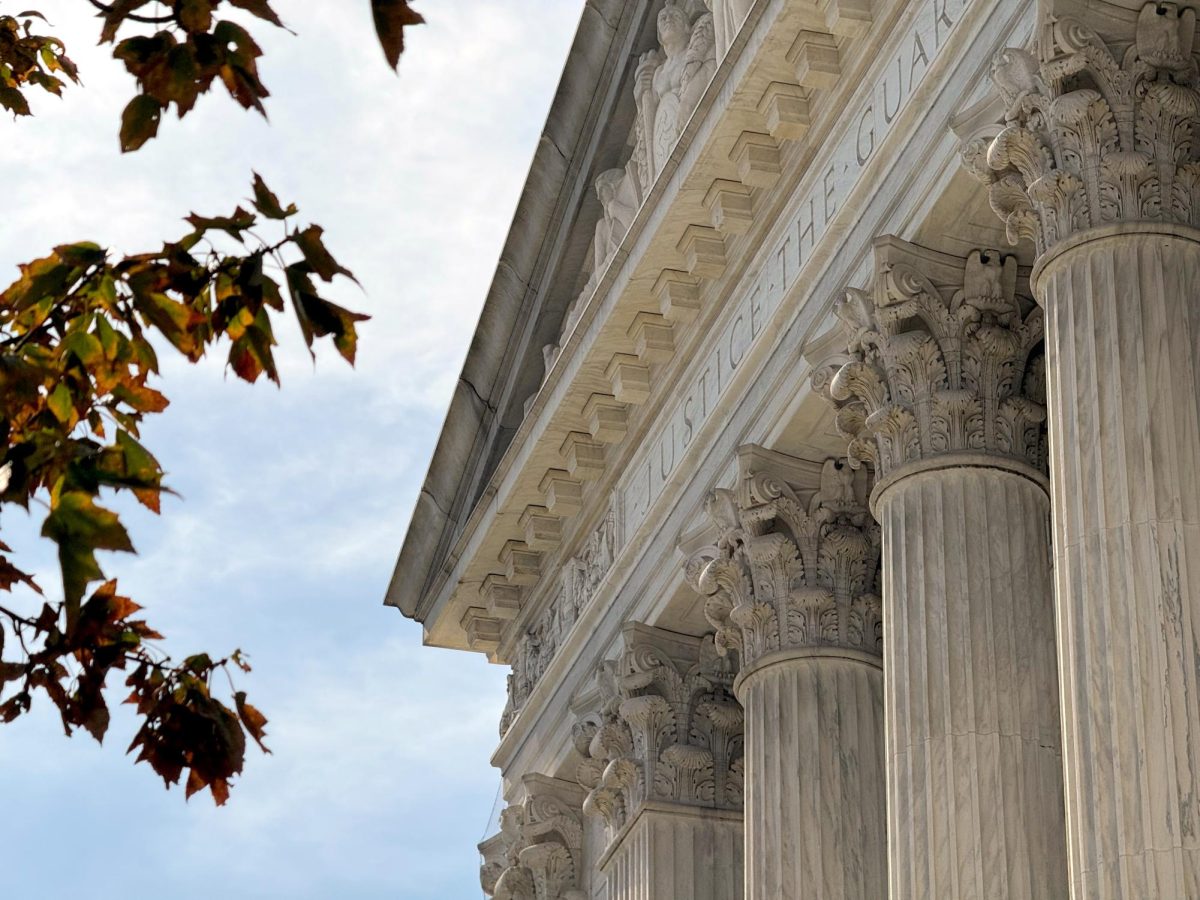
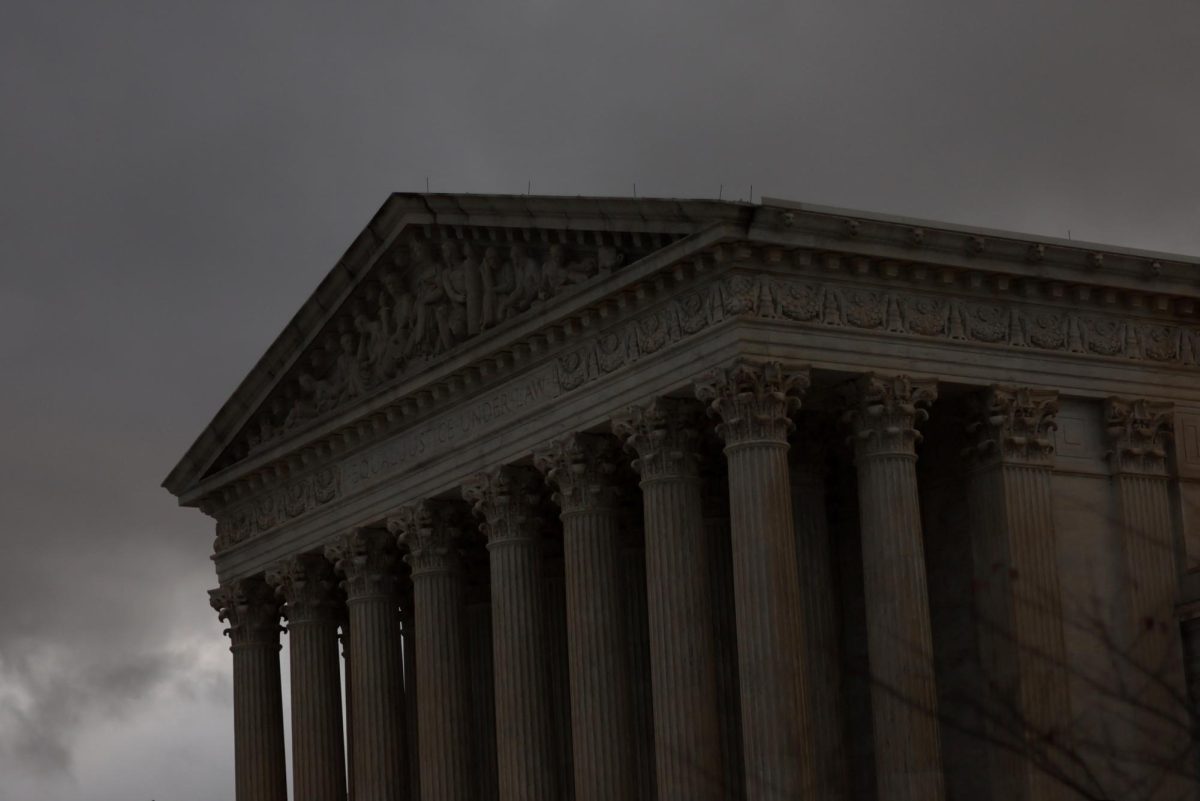
The Supreme Court ruled 6-3 on Sept. 8 in Noem v. Vasquez Perdomo to overturn a federal judge’s order that previously prohibited federal immigration agents from stopping and questioning individuals about their immigration status based solely on their race, language, job or location. This decision comes after Los Angeles District Court Judge Maame Ewusi-Mensah Frimpong blocked President Donald Trump and his administration in early August from sending ICE agents to help control Los Angeles immigration protests.
It is unclear how this ruling will directly affect Vanderbilt students, faculty and the greater Nashville community.
Explaining the Court’s decision
Justice Brett Kavanaugh explained the Court’s reasoning in his concurring opinion, stating that allowing ICE agents to question individuals’ immigration status is a routine governmental responsibility meant to streamline national security efforts.
“The Government sometimes makes brief investigative stops to check the immigration status of those who gather in locations where people are hired for day jobs; who work or appear to work in jobs such as construction, landscaping, agriculture, and who do not speak much if any English,” Kavanaugh wrote. “If the officers learn that the individual they stopped is a U. S. citizen or otherwise lawfully in the United States, they promptly let the individual go. If the individual is illegally in the United States, the officers may arrest the individual and initiate the process for removal.”
In her dissenting argument, Justice Sonia Sotomayor expressed her concerns about the constitutionality of this decision and its implications for not only California but also the vast majority of Americans.
“Countless people in the Los Angeles area have been grabbed, thrown to the ground and handcuffed simply because of their looks, their accents and the fact they make a living by doing manual labor,” Sotomayor wrote. “After today, that may no longer be true for those who happen to look a certain way, speak a certain way; and appear to work a certain type of legitimate job that pays very little. Because this is unconscionably irreconcilable with our Nation’s constitutional guarantees, I dissent.”
In a message to The Hustler, Carrie Russell, political science professor, explained some implications of the Court’s decision regarding American court structure.
“I think it’s really important to note that [the Supreme Court of the United States], technically, did nothing more than allow the lower court decision to stand pending the disposition of the appeal in the United States Court of Appeals for the Ninth Circuit,” Russell said.
Russell also discussed the origins of the lawsuit and its legal grounds, starting from the Trump administration’s deployment of troops to LA and the following response from the Federal District Court Judges.
“The basis of this lawsuit stems from The Immigration and Nationality Act. [Trump] claims the act authorizes immigration officers to ‘interrogate any alien or person believed to be an alien as to his right to be or to remain in the United States,’” Russell said. “Immigration officers ‘may briefly detain’ an individual ‘for questioning’ if they have ‘a reasonable suspicion, based on specific articulable facts, that the person being questioned is an alien illegally in the United States.’”
Community reactions
Senior Soham Saraf, Vanderbilt Student Government president, expressed concerns about the ruling and shared what VSG is doing to support students who may be directly impacted.
“VSG understands that the Supreme Court’s decision from Sept. 8 may impact Vanderbilt students and cause unanticipated stress to certain groups on campus. Our sole priority is to promote and protect students’ interests and their place on our campus,” Saraf said in a message to The Hustler. “We are actively exploring what avenues exist for us to support students who may be directly impacted by the Supreme Court’s decision.”
In a message to The Hustler, Celso Thomas Castilho, director of the Center of Latin American, Carribean and Latinx Studies (CLACX), explained what the ruling could mean for Hispanic and Latino students at Vanderbilt.
“Latino/Hispanic undergraduates represent the second largest, ethnic-minority group here at Vanderbilt. The face of the football team is of Latino background. This is Vanderbilt in 2025,” Castilho said. “The recent ruling, which legitimates racial profiling, affects us all — students, staff and faculty.”
Junior Emily Cha, president of the pre-law fraternity Phi Alpha Delta, expressed her personal connection to the Court’s decision in a message to The Hustler. Cha, who is the daughter of an immigrant family from Los Angeles, said she was “deeply disheartened” by the decision.
“For racial minorities and immigrant students at Vanderbilt, this ruling is not just an abstract legal development but a lived reality that marginalizes our communities who already face systemic inequities, “Cha said. “As future advocates, we find it disheartening that the highest court would strip away the very protections the law is meant to provide.”
Senior Melanie Gerko and junior Drew Spiegel, co-presidents of Vanderbilt College Democrats, said the effects of the ruling are “direct and devastating.”
“The Supreme Court is enabling ICE’s campaign of fear and terror in our neighborhoods,” Gerko and Spiegel said in a message to The Hustler. “Students should be able to learn in class, participate in clubs and relax on lawns without fear of masked federal agents abducting them from campus. Racist policies like this will never be the solution to our country’s broken immigration system.”
Senior Noah Jenkins, president emeritus of Vanderbilt College Republicans and chairman of Tennessee College Republicans, said he believes the press’s reframing of certain phrases from the Supreme Court’s decision led to misconstrued information for minority communities.
“This new Supreme Court ruling simply means that the ‘reasonable suspicion’ standard is being reaffirmed to be the standard governing the appropriateness of ICE stops,” Jenkins said. “To frame this as the Supreme Court supporting racial profiling, as many have suggested, is simply a politically convenient way to sidestep this rather straightforward legal reality.”
Jenkins further expressed that Vanderbilt students should not be worried about this decision, citing the Court’s writing and language directly.
“Vanderbilt students who are present in the country legally should not have to worry, as the decision also makes clear that an individual found to be a ‘citizen or otherwise lawfully in the United States’ after being detained should ‘promptly’ be let go,” Jenkins said.
First-year Emma Tang, an international student, cited the ruling as a cause for increased uncertainty and concern, particularly with respect to her education and ability to remain in the U.S.
“We’re all incredibly lucky to be part of the Vanderbilt community, whether we are domestic or international students,” Tang said. “But I do think that, especially with this new development, international students have a fear that sort of looms over our heads: unlike domestic students, we can’t always follow what others do without the risk of deportation or losing our visa status.”
In a message to The Hustler, Gini Pupo-Walker, director of National Education Strategy at the Raikes Foundation and former Metropolitan Nashville Public Schools school board member, expressed her concerns not only regarding the Court’s decision, but also its direct connection with the greater Nashville community.
“The Supreme Court’s disheartening ruling places our immigrant neighbors at even greater risk, but it also serves to embolden the many Nashvillians who support their presence here, including our educators, clergy and city leaders who understand that schools and university campuses must be safe places for learning and not sites for fear and intimidation,” Pupo-Walker said. “School and university officials must reach out and offer support to frightened students and families and work with local community organizations to ensure that they have accurate information.”


Sam • Sep 25, 2025 at 2:54 pm CDT
Emma Tang has a good point — the ruling notes that ICE releases people “quickly”, but given the limited due process problems could be created even for citizens. Note Retes, the US veteran citizen who was detained and held in an ICE facility from Thursday to Sunday a few weeks ago without even notification to his family or a lawyer. International students and even US citizens should keep their documentation with them, as they may not have a chance to retrieve it if they’re picked up — real ID’s should suffice for citizens, but for international students it would have to be the passport with visa stamp.
Emily Cha • Sep 11, 2025 at 10:46 am CDT
Great article. Just a response to some of the comments -The INA may allow only brief questioning and require release once status is confirmed, but in reality people are detained and deported regardless of immigration status and criminal history with low level officers afforded the decision to deport people without a hearing through the expansion of expedited removal. So in practice, this ruling gives ICE more cover to expand race-based arrests and detentions, undermining the due process and equal protection the 14th Amendment guarantees to all on U.S. soil.