

It’s not going to happen.
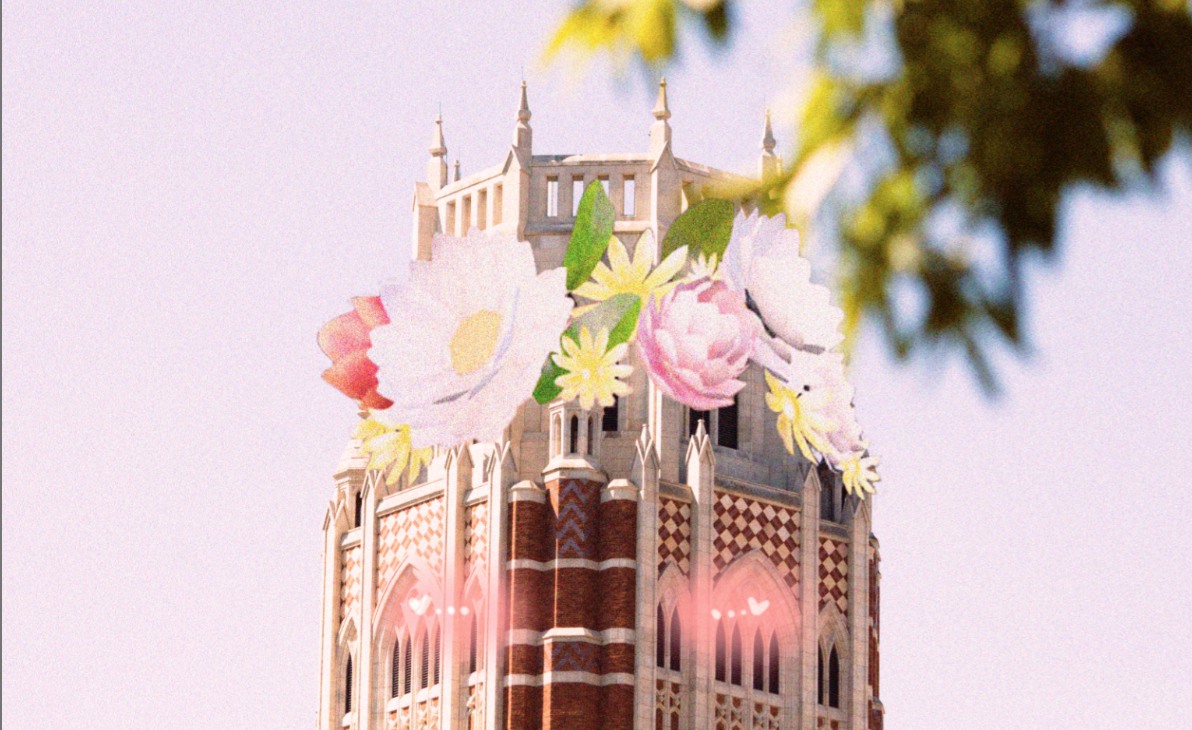
Don’t get me wrong — 2016 was iconic for a multitude of reasons. Social media brimmed with fun challenges, iconic fashion and dance trends, all underscored by a summer with its own defining soundtrack. For many, the mere mention of 2016 evokes images of Adidas Superstars, the rose gold iPhone 6 and Snapchat’s flower-crown and dog filters. In retrospect, the year is often remembered as brighter and more carefree, especially when contrasted with the present. With the praise it receives, someone who didn’t experience 2016 firsthand might assume it was a time when life felt blissful and uncomplicated.
The revisionist history is truly immaculate.
Back in 2016, I was acutely aware of how much everybody hated the year, as many lamented how cursed it was and how eager they were for 2017 to arrive.
One striking example of the “curse” was the wave of celebrity deaths that year, including David Bowie, Prince, Muhammad Ali and Carrie Fisher, among many others. Additionally, the world was plagued with a multitude of other tragedies, such as the enduring outbreak of the Zika virus, the Pulse nightclub shooting and creepy clowns — not to mention the shocking outcome of the 2016 presidential election. Numerous articles were even published containing comedic compilations of people expressing their distress.
So, why is it that 2016 has become so unhealthily romanticized by many?
One apparent answer is the enduring mental, emotional and psychological impacts of the COVID-19 pandemic, when many were engrossed with constant worries about health while experiencing prolonged periods of physical and social isolation. Moreover, news of the virus and its devastating impacts were inescapable, as we were bombarded with a multitude of distressing headlines.
Particularly, isolation became an impetus for the propagation of nostalgia. A study examining the interactive effects of nostalgia and loneliness on daily well-being in undergraduate students found that both nostalgia and loneliness were profoundly detrimental to well-being; in fact, the effects of stress, anger, and misery were even more pronounced when nostalgia was involuntarily elicited by negative situational cues such as loneliness and social exclusion.
Some of us spend much of our lives feeling incredibly nostalgic for times that weren’t all that great to begin with. When we were presently living in those moments, it’s not like we were constantly talking about how great everything was; in fact, we were actually doing the opposite. Evidently, many of us are trapped in a never-ending cycle of living physically in the present but emotionally in the past.
I don’t mean to sound pessimistic, nor do I intend to shame people for trying to lift their spirits by reminiscing about the “good old days.” It makes sense to long for a time in life when the sun seemed to shine brighter and the grass appeared greener; however, when we reflect on our past through a distorted lens to try to appease the malaise swelling in our hearts, we only risk further harm to ourselves.
Clinging to nostalgia fosters stagnation, dissatisfaction and avoidance. The excessive time we spend comparing our current situations to our past situations places us at an increased risk of experiencing internal dissatisfaction. Instead of confronting the moment in front of us, we focus on the past, pressuring ourselves to distort it to make it appear more favorable.
This distortion is so common that it even occurs involuntarily through “recall bias,” the tendency to misremember or omit details from past events, a phenomenon that further intensifies over time. There’s no better time at which we’re most accurately and wholly aware of what’s happening than in the present. In these moments, we can accurately comprehend the nature of the mental, psychological and emotional impacts of what we experience. However, as time passes, our brains reconstruct our memories, and in nostalgia’s case, this distortion tends to alleviate or even expunge our negative experiences and emotions.
Memory is not infallible; in fact, it is often unreliable. The memory of whatever you were doing before reading this article will likely be distorted by the time you reach the end. If memory is so malleable, we must ask: is our fallible memory the real force behind the popularity of the cliche that a certain period of life will be “the best years”? Could this explain why so many people insist that life’s peak occurs near its beginning and why youth is so persistently romanticized?
Perhaps memory distortion serves as a survival mechanism, reinforcing optimism in a world that often feels as though it is unraveling; by viewing the past through a more generous lens, we preserve faith in what lies ahead.
Regardless of our conscious or unconscious motivations, certain truths remain unchanged.
The days of Pokémon hunting in the streets are long gone. Vine is dead.
We can’t turn back the clock. We may never be able to fully recapture what we once felt. Though that truth may be difficult to accept, we cannot allow ourselves to become trapped in the endless refrain of saying, “I wish things were the way they used to be.” Nostalgia can feel as warm as a loving embrace, but its grip can just as easily become suffocating.
And perhaps if we deliberately choose to treasure the present, we may begin to see that life contains more good moments than we often realize.
2016 had its highs and lows. 2026 will have its own. So will every year after that.
Instead of resurrecting 2016, give 2026 the space to become meaningful in its own right. Grant yourself the grace to grow rather than the burden of clinging to the past.
Ache less for what was. Aspire to what could be.