In his evasive, enigmatic statement addressing the Trump administration’s proposed “Compact,” Chancellor Daniel Diermeier made one thing crystal clear: he needs to brush up on his gaslighting skills.
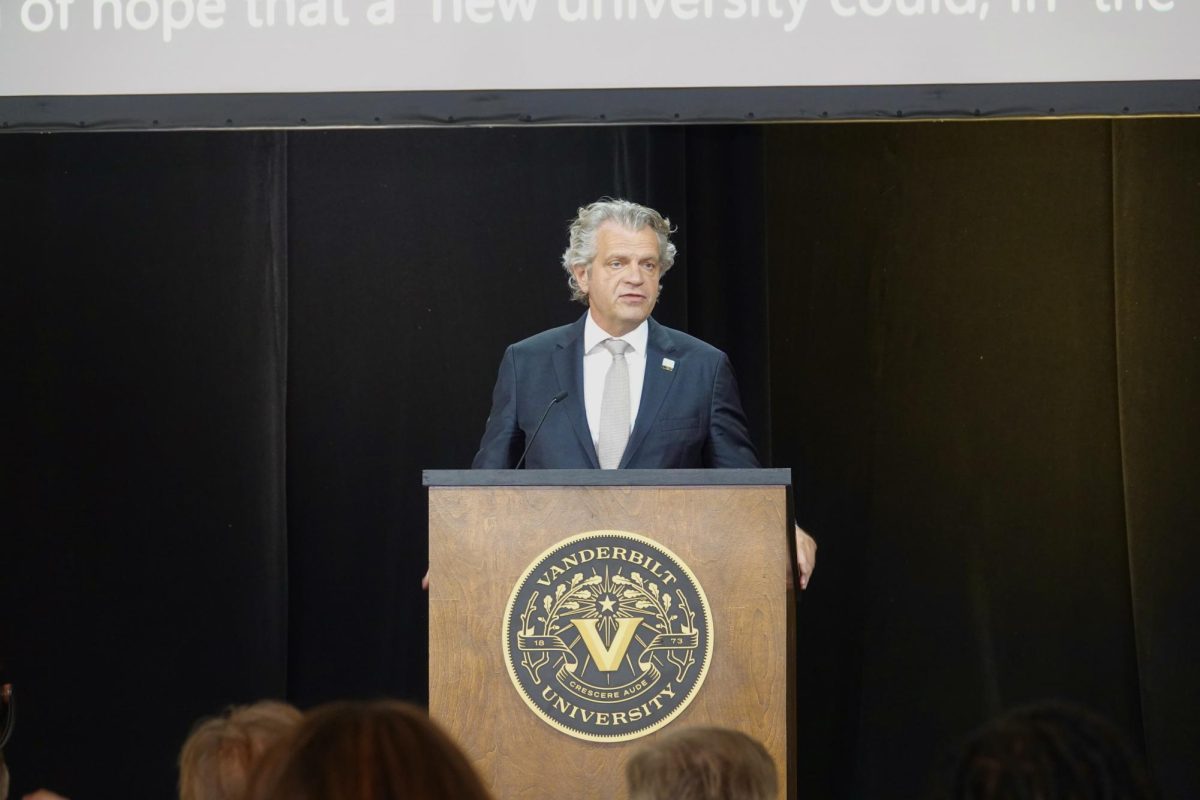
Last Monday, the Chancellor took a craven seat in the same spot where six other universities have taken a courageous stand. But not only did he fail to defend the university’s international, transgender or politically engaged students and staff with his decision to “provide comment,” he tried to disguise his own cowardice behind a semantic smokescreen.
In his email, he explains that “despite reporting to the contrary,” Vanderbilt has not “been asked to accept or reject the compact.” Setting aside the off-putting anti-journalism undertone, he has not produced a copy of the letter sent by U.S. Secretary of Education, Linda McMahon, to prove this claim. However, if it was anything like the letter sent to the University of Virginia, Diermeier conveniently leaves out the portions in which McMahon states the compact is “largely in its final form” and any feedback would be in prelude to signing a finalized document in Washington on a date “no later than November 21.”
Contrary to Diermeier’s deceptive introduction, the letter to UVA makes it clear these schools were, in fact, being asked to either reject or sign the compact in the near-term, with little ability to make significant changes to its content. Of course, this was before the collective backbone of the other universities put the planning of any such signing ceremony into question, helping our beloved, spineless institution save face.
But let’s pretend we believe Diermeier’s argument that he’s simply complying with his understanding of this letter; he’s providing feedback on its enclosed compact, as to shape it into a preferable document. How could anyone, much less someone of Chancellor Diermeier’s intelligence, possibly believe it worth engaging in serious deliberations with such unserious people?
Could he actually believe that a Secretary of Education whose primary job function seems to be dismantling her own department truly cares about improving the quality of higher education?
Could he actually believe that a President whose own “university” ended in two class-action lawsuits and a $25 million settlement payout to his former students truly cares about fostering a productive learning environment?
Could he genuinely think this was anything but a test to see if Vanderbilt and schools like it would bend the knee?
Of course not. If meaningful feedback was desired or if beneficial policy was the goal, the White House would have likely devised a method by which to receive such feedback. However, as Diermeier’s own statement explained, Vanderbilt and other universities had to meet with administration officials three days before their Oct. 20 deadline just to establish a “productive process for providing such comments.”
The comments themselves, it would seem, remain in bureaucratic purgatory. If or when Vanderbilt is allowed to offer such feedback, perhaps it will resemble portions of the vague, placating remainder of the Chancellor’s e-mail, which voiced support for values such as “academic freedom, free expression and independence,” as well as a “merit-based approach” to research grants.
But Diermeier is smart enough to know even the most well-reasoned “comments” are not a reasonable response to Donald Trump’s ongoing political war against institutions of higher learning, a war that only seems to pause for unreasonable displays of financial fealty.
Agreeing to participate in an “ongoing dialogue” is not a reasonable response to demands for Vanderbilt to codify the nonexistence of transgender people, to share “all known information” about its foreign students with a Department of Homeland Security that disappears immigrants to miscellaneous foreign warzones without cause and to “commit to using lawful force if necessary” against its own students should they disrupt ambiguous on-campus “conditions of civility.”
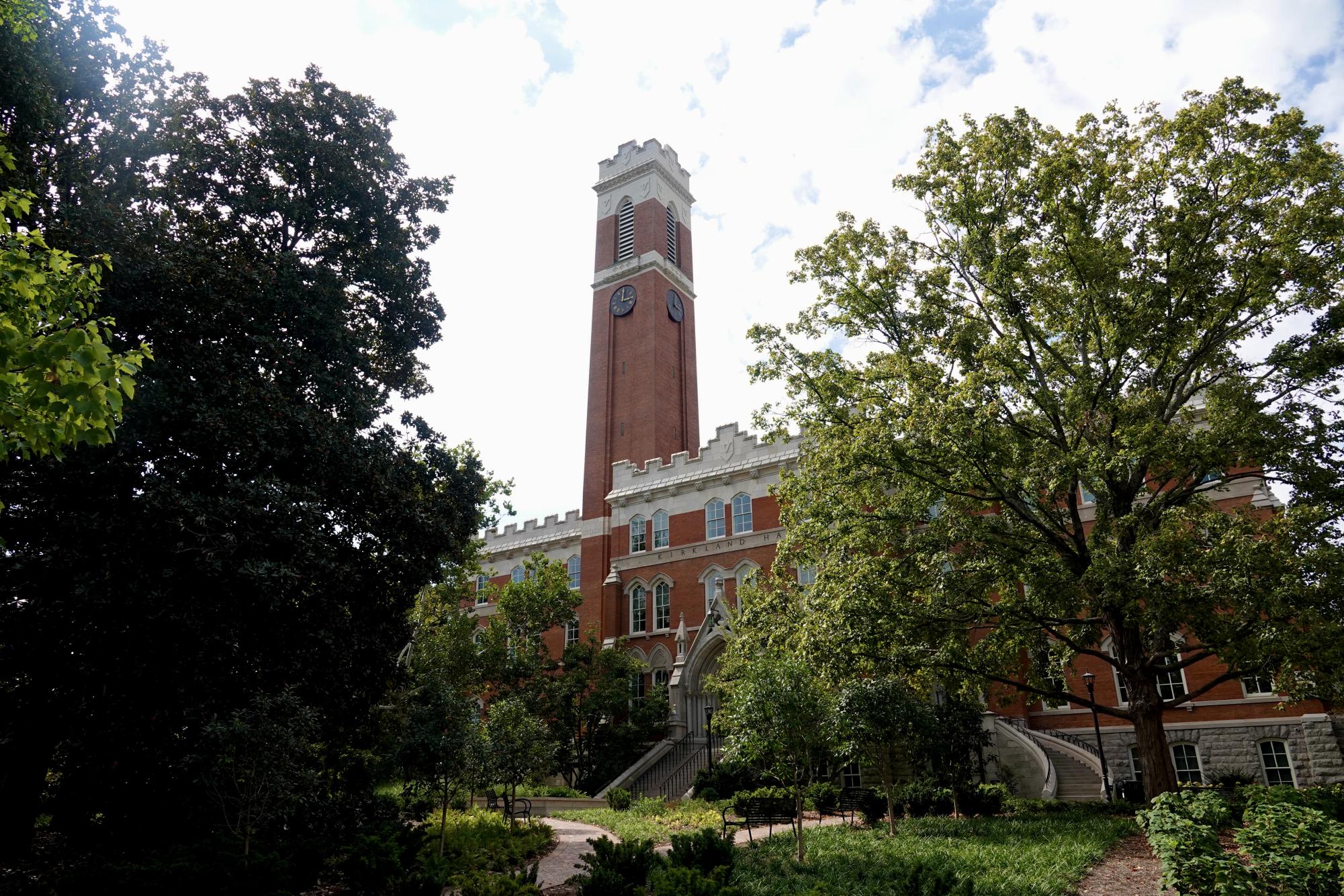
Such brazen attacks on our community’s values and its members demand a brazen reply. The only reasonable response to such an unreasonable document is for the Chancellor to print it out, set it aflame and allow Kirkland Hall’s automatic sprinkler system to cleanse him and the university of its barbarous stink.
But no. Our school’s top man chose instead to “provide feedback.” And then, to present it to the world as if his gambit weren’t entirely obvious.
From this, it might be reasonable to conclude that either Diermeier is stupid, or he thinks we are. And Diermeier is not stupid.
Perhaps he assumes we won’t understand that it’s all a show. That when he could have joined a growing chorus of solidarity, he chose instead to do a solitary dance for the king. He chose to lend Vanderbilt’s well-earned legitimacy to an illegitimate process, on a public stage, for all to see.
And for what?
To appease Trump, of course.
And here’s where the fact of Diermeier’s intelligence makes his response so disheartening. I know I don’t have to educate a political scientist who grew up in West Berlin on the dangers of appeasement. And yet, just as a unified effort was closing the door (albeit temporarily) on the President’s abuse of our nation’s universities, Diermeier saw fit to shove a Commodore-sized boot into the fray, halting that momentum and all but rolling out a target on West End Avenue for future abuse.
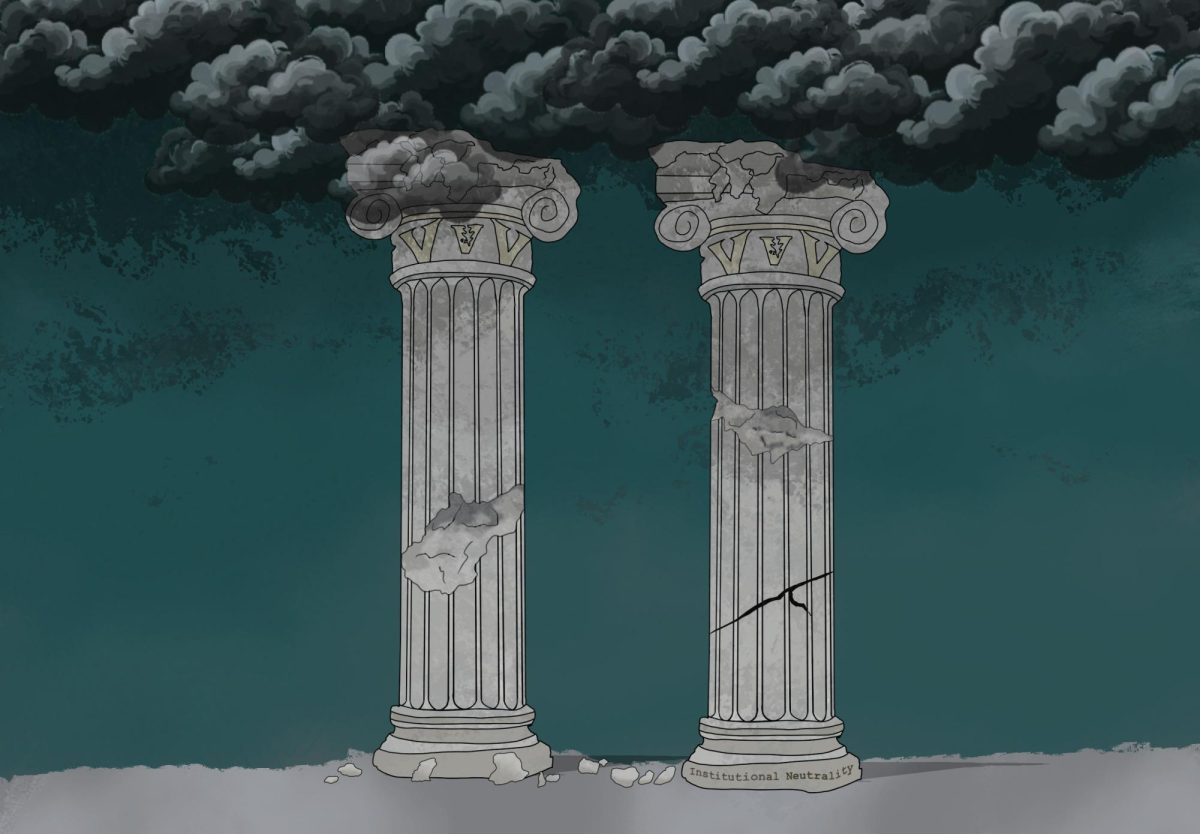
Perhaps to get ahead of any conservative detractors, the Chancellor spent a relatively generous 108 words defending his decision to share feedback with the administration at all (instead of, I suppose, silently submitting), given the university’s usual commitment to “institutional neutrality.” Compare this, for example, to the mere 64 words he gave to the aforementioned assertion of Vanderbilt’s values.
And therein lies the ultimate irony: he could have used “institutional neutrality” as an airtight public rationale for rejecting the compact outright. Given Diermeier’s seeming reluctance to defend our community’s international or transgender students’ right to learn in peace on the merits, he could’ve simply responded that the university’s stalwart dedication to institutional neutrality, I don’t know… “prevents it from signing a list of standards proposed in our highly-polarized political climate by any administration, regardless of party.”
See how easy that was? And to think, I only have a bachelor’s degree in political science, unlike the Chancellor’s Ph.D.
But then again, mine’s from Vanderbilt. The living legacy of Cornelius himself. The Harvard of the South. An institution I hope to be proud of again, someday.







william r. delzell • Feb 25, 2026 at 10:35 am CST
Whose side is Diermeier on? Donald Trump’s or Vanderbilt’s? He needs to decide where his true loyalties lie. Is there any way that disgruntled faculty, students, staff, and almuni can engineer his removal and replace him with an Alexander Heard-like chancellor who really cares about Vanderbilt’s mission?
Bill Delzell
A&S-1974: History major.
Taylor • Nov 14, 2025 at 1:27 pm CST
Read to filth, no notes. Diermeier needs to “Dare to Grow” a backbone, and actually stand up for something besides athletics.
Bree • Nov 13, 2025 at 7:53 am CST
Thank you for writing this!
Hod Eckel '92 • Nov 5, 2025 at 11:52 am CST
This is an excellent letter. I give the Chancellor the benefit of the doubt in that he trying to do right by Vanderbilt, but his response did gloss over an invitation for Vanderbilt to be a signatory (complete with White House ceremony for signatories. The UVA cover letter is identical to the Arizona cover letter. It is safe to assume the letter to Vanderbilt is similarly worded). He needs to be more clear with the Vanderbilt Community. He is playing a dangerous game here. Trying to find a middle lane will both alienate much of the VU Community AND amp up pressure from the White House, or, as you aptly put it – make us a “target”. Again, nicely done and thank you.
Summa 1998 • Nov 3, 2025 at 6:11 pm CST
In contrast to this unjustified screed, Diermeier’s approach has been measured, rational, and with an eye toward the best long-term interests of the university and its alumni. One need look little further than the deterioration of Harvard (of which I am also an alumnus) and others of the Ivy League to see the results of knee-jerk reactions to presidential inquiry. Diermeier’s tenure has been marked by multiple high points, not the least of which included the mature approach to the ‘sit in’ last year and the athletic program’s recent successes. Those of us outside California and more than 30 years old are, I suspect, generally happy with this approach, but we have the benefit of years of experience our younger alumni necessarily lack.
Commodore 86 • Nov 3, 2025 at 11:17 pm CST
Summa, it is not in the University’s best interest trade its soul for preferential treatment for Federal research funding. First, Federal research funding should be based on academic merit, not on caving into the demands of any political party. This is being said by a 65 year old Vanderbilt faculty member/alumnus who has worked with colleagues from around the world who recognize the value of science being merit-based. Despite what you wrote, I am not “generally happy” with this approach, nor are hundreds of Vanderbilt research faculty with whom I interact every day.
Robin Raborn • Nov 3, 2025 at 3:36 pm CST
Agree! I will be dropping Vanderbilt from my estate plans. I will not be the only alum making that change. One must take a clear, strong stand against authoritarian rule. Dictators begin by attacking the press, the universities, the arts, history and then local rule. I worked for President Reagan in the White House OMB and as Assistant Secretary at HUD. The MAGA administration has nothing in common with that Republican Party.
Robin Raborn, BA 1975
John E. Ingle • Nov 3, 2025 at 11:58 am CST
I’ve never met Diermeier, and I respect his erudition and his office. But his letter to the Vanderbilt Community was an embarrassment to me as an alumnus member of that community. And it shuld be an embarrassment to Diermeier, for the reason set out in the guest essay. If he wants to follow the lead of Trump and his Education Secretary (I call her the “rasslin’ lady” in recognition of her fine resume as an educator), he should acknowledge his capitulation and do what Texas did instead of putting out a nonsense statement. My guess is that he pleased no one with that foolish attempt to please everybody.
Andrea McDonnell • Nov 3, 2025 at 5:21 am CST
He’s cravenly trolling for dollars from the uber-wealthy Trump fans on the Board of Trust…since Vanderbilt just had to pay a whopping $55 million to cover up the federal antitrust crimes committed by Zeppos, who repeatedly favored the children of the rich in VU admissions. For more on that important case, just Google ‘Henry v. Brown,’ currently underway in Chicago.
Vandy Sheep • Oct 31, 2025 at 6:26 am CDT
Thank you, Charlie, for putting in words what many faculty, staff, and alumni have been thinking. Diermeir made a very dangerous political decision for our community and has also demonstrated a very dangerous character, willing to spin the truth in an attempt to achieve his own motives.
Does anyone have ideas on what we can do because it seems that the Board of Trust is asleep at the wheel.
John Long • Oct 29, 2025 at 2:13 pm CDT
Well written. The Chancellor’s incoherent, convoluted remarks about the “compact” were an embarrassment. His failure to reject it outright treats it as though it were a serious, good-faith proposal by a normal administration. But then a normal administration wouldn’t insist on shielding “conservative ideas” from “ridicule.”