
Growing up in the San Francisco Bay Area, I only saw my father for two hours a day and my mother for three hours a day. I ate with my father while he drilled me with math practice before school, and I did not see him again until late at night, exhausted from a 14-hour shift at his restaurant. My mother worked night shifts at a hospital, so I only saw her getting ready as I was about to go to bed and make my lunch for school with black spots below her eyes early in the morning when I woke up. These routines were necessary to afford living in the Bay Area, one of the most expensive places to live in the United States.
When I received my Vanderbilt acceptance email, I was overjoyed until I looked at the financial aid I received: $0. Only after I emailed the financial office twice did I receive a small, $3,000 National Merit scholarship to count toward the exorbitant $94,274 cost of attendance. I was elated by my acceptance but also devastated at the thought of paying that much for an education. My mother had to work an extra four hours on top of her already burdening nine-hour shifts to afford to send me to Vanderbilt. I worked at a restaurant all day the entire summer, serving food and being yelled at by customers. Moreover, two months into college, my parents’ home country, Nepal, went up in flames, both politically and physically. My father sent a good chunk of our savings to friends and family whose villages were destroyed and whose lives were ruined.
I contacted the financial aid office again, earnestly begging them to help my family during these difficult times. I have heard stories of how my friends received financial aid because of how circumstances changed within their families across the globe, and I realized that this situation fit into that category. All I received back was a three-sentence email explaining that I was still ineligible for need-based assistance based on my College Scholarship Service profile. I didn’t even receive an apology. I applied for a number of jobs on campus, just to be met with rejections left and right.
“Demonstrated Need.” Such a beautiful phrase, isn’t it? Vanderbilt claims to meet 100% of demonstrated need, and yet the demonstrations are displayed in ink on a file as income. Nothing more. No circumstances, no context. My family is doing all it can to thrive in the Bay Area. However, Vanderbilt doesn’t seem to keep this in mind from their review of the CSS profile.
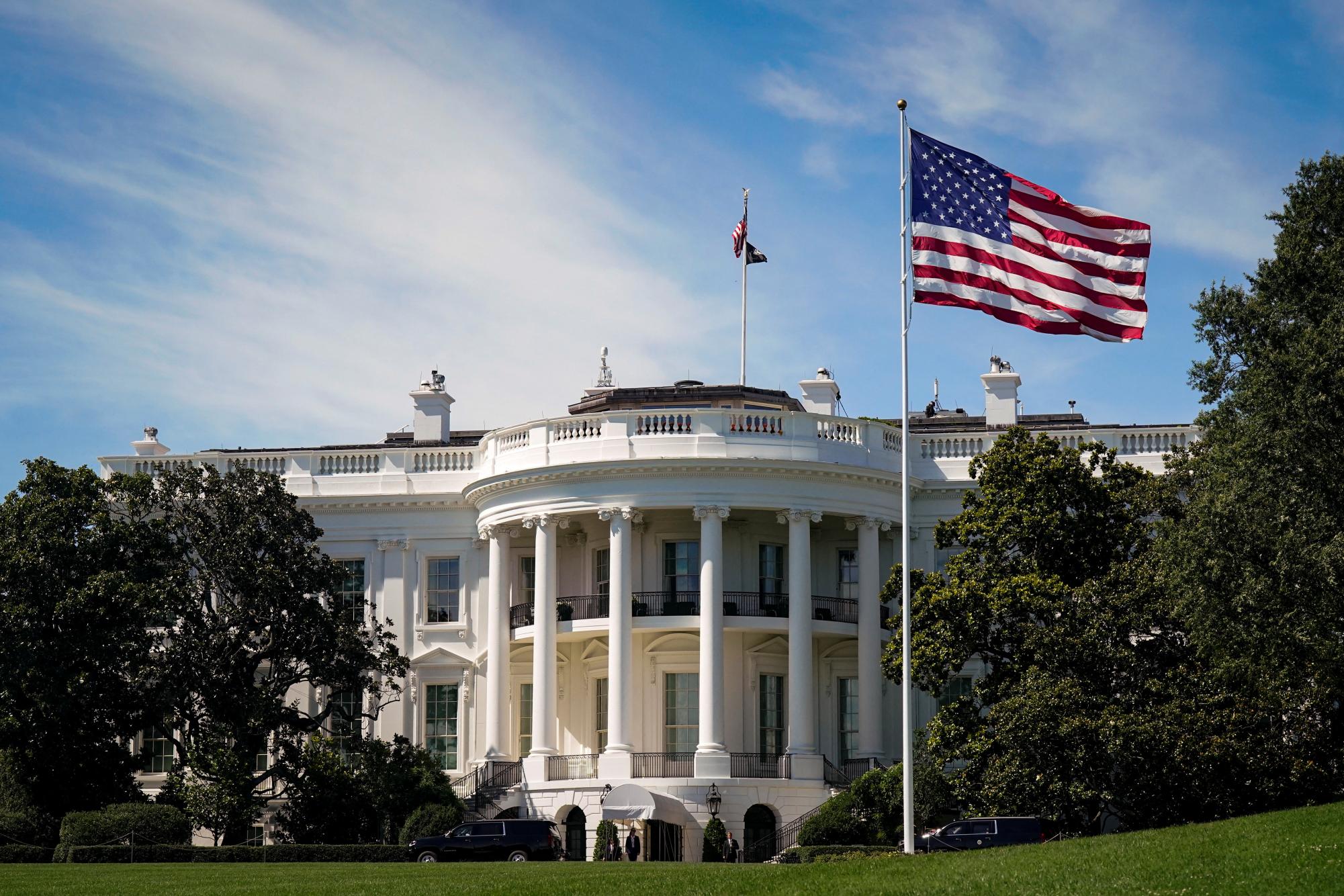
Then came the “Compact for Academic Excellence in Higher Education,” which offered schools multiple benefits in exchange for agreeing to a set of guidelines outlined by the presidential administration. These guidelines included a full tuition freeze for five years and free tuition for students studying “hard sciences.” Upon further investigation, I realized Vanderbilt’s endowment didn’t meet the threshold for granting free tuition to students studying hard sciences.
However, there was still the tuition freeze. If Vanderbilt signed this compact, which it has not yet done, at least my parents won’t have to work even harder to catch up if Vanderbilt hikes up their tuition in the foreseeable future. Instead, we can continue to strategize how to pay for my tuition, and I can work extra jobs to pay off that tuition. It seemed like the perfect plan.
Believe it or not, a number of students face similar circumstances to me. They barely exceed the threshold to receive aid from any university, only to be from extremely expensive places that demand citizens have a high amount of wealth. This compact is the sole lifeline for these students at Vanderbilt. If Vanderbilt signs the document, then a financial weight will be lifted from their shoulders, and they will be able to study without worrying about tuition increasing.
Vanderbilt would also benefit greatly from the compact. The university would have more money for research projects and more funds for developing our campus, with a prospective campus in West Palm Beach, Florida, being mostly supported by federal and state funding. Labs would be more robust and could conduct further research. If Vanderbilt does not sign this compact, the loss of federal funding could mean increased tuition. This increased tuition cost would spell disaster for students like me.
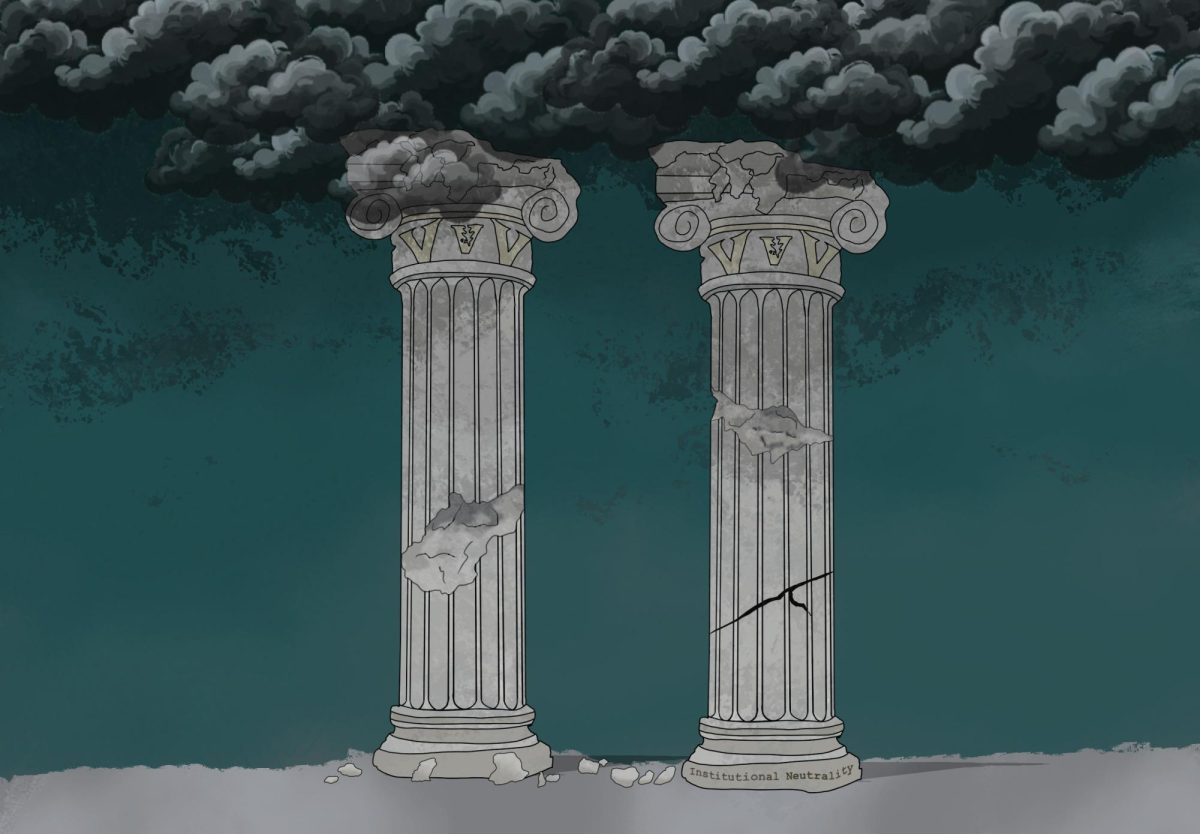
A common concern with signing the compact is that it would entail “selling our integrity.” This issue would easily be ironed out if Vanderbilt negotiates with President Donald Trump about the stipulations of compact. Chancellor Daniel Diermeier has mentioned how the university is in talks with the Trump administration to iron out differences within the compact and shared a commitment to free expression on campus, so it seems unlikely that he will settle for a compact that restricts free speech. Why would he when Vanderbilt skyrocketed up to No. 7 in the most recent Foundation for Individual Rights and Expression rankings of universities in freedom of speech?
The messages in the compact that aren’t aligned with Vanderbilt’s principles can be negotiated so that all parties can benefit. Even if the initial offer of the compact said that the compact was largely in its final form and only limited feedback would be considered, there would still be room for feedback. One principle of contention between Vanderbilt and the compact is the issue of free speech, where the compact describes how universities need to “[abolish] institutional units that purposefully punish, belittle, and even spark violence against conservative ideas.” Vanderbilt’s principles directly go against this statement, and this would be brought up to the Trump administration. Moreover, if Vanderbilt is still in talks with the Trump administration more than a month after the proposal date, then it is clear the Trump administration is still open to ideas.
Some who refute the compact claim we shouldn’t even think about signing it because of its potential harm to free speech on campus. They say we shouldn’t even negotiate because of the censorship potential the compact carries. However, in the silencing of ideals, is it justified that students, or the parents of students, toil day and night just to send themselves or their children to a prestigious institution? The compact serves as a gateway for some students to go to class every day without worrying about tuition prices increasing in the future. By signing the compact, there is also potential for tuition to decrease because of the increased federal funding our university would receive. And yet, opponents to this compact want to take this opportunity away and not even negotiate with the president about it.
Vanderbilt, look at your students who just barely make the cut not to receive financial aid. They are mostly all as hard-working, determined and intelligent as your students who receive financial aid. By not signing this compact, you are putting these students’ lives under more pressure. You are exhausting students and their parents from their wallets, when you can easily sign a paper that would alleviate this stress for us. I sold the last year of my childhood for money. My parents sold the last 20 for my education. A good number of other students also are facing similar circumstances. Thus, Vanderbilt, negotiate with our president. Sign this compact in such a way that we can still speak our minds without worrying about tuition.






Grad Student • Dec 17, 2025 at 4:03 pm CST
Some questions everyone reading this needs to answer:
What evidence is there that the Trump administration negotiates in good faith? Has any academic or cultural institution successfully negotiated with him before and come out on top?
Have benefits to university students like tuition freezes or better pay for hourly jobs historically happened due to negotiations with presidential administrations? When has this worked before? How have any tuition freezes or reductions or eliminations in students fees actually been achieved in the US? Have administrators ever willingly done this at any institutions? Tuition absolutely is too expensive–let’s think critically together about what works and really answer these questions.
What is there to negotiate about free speech or keeping our minority studies programs and centers open? Is government-defined free speech something we want to negotiate around? Is government control of who can attend our universities something to negotiate? Is government control of what we can teach, read, and learn at our university something to negotiate?
Answer these questions.
Recent Vandy Alum • Dec 8, 2025 at 10:32 am CST
I have to echo what everyone else is commenting. I feel for the financial distress expressed in this article, but a private university charging $95k a year for tuition is a systemic issue that signing this compact will do nothing to alleviate. For reference, the top 10% income bracket in the US is still only $180k/yr. Tuition without aid at Vandy has never been affordable for anyone outside of the elite and will not be more affordable just by freezing tuition, or receiving more money from the government. What guarantees do we have that students would reap that financial benefit anyway? Additionally, the author fails to generate sympathy via his personal story. Opportunity Vanderbilt is an incredible program that has provided remarkable aid for families making under $150k a year. My family made $200k a year and had assets (cash savings, we own our own home, and own a business) and I still only paid $18k/yr for tuition after aid. I’m not a Vandy glazer, but genuinely, the financial aid is pretty good here, so for the author to have received $0 in aid… there is something they are leaving out of the story. It’s not my intent to invalidate the struggles of students. However, more context is needed if we are to sympathize with the author in pursuit of claims that we would all be better off signing an agreement that is essentially the death of academia.
Summa 98 • Dec 8, 2025 at 10:17 pm CST
Kudos to this author for daring to stand up against the waves of predisposed Redditors for whom anything other than blanket obeisance to Mamdani-esque platitudes constitutes some kind of moral failing. Author, you are a true American, and I honor your family’s work that enables you to succeed. The current wailing towards entitlement is out of touch with most Americans, and you argue articulately instead for hard work as a mechanism for rising up – and anchoring down. To others who have found clever ways to conceal family income (one I knew had millions invested in heavy equipment) so they aren’t lost in the doughnut hole – it was happening 30 years ago, and it happens today, but it’s nothing to brag about.
An international student • Dec 8, 2025 at 10:32 am CST
The arguments presented in this article are honestly ridiculous, but I want to give credit to the commenters who addressed them well. What I want to highlight though is how insane it is, especially coming from a brown person yourself, that you are willing to sacrifice international and immigrant students, just like your parents, from having an equal opportunity to attend a “prestigious school” just so you can supposedly benefit from a tuition “freeze.” As one commenter pointed out, universities like Vanderbilt can easily just hike up housing and meal plan costs to make up for it lol.
It’s honestly just insane to see brown people, who should understand the importance of equal opportunity, selling out their own identity and aligning themselves with people like Diermier and Trump. This is coming from a brown person, too, btw.
It’s incredibly short-sighted to prioritize certain groups over others in this way. Many of us were able to access these opportunities because of policies that allowed us, often as immigrants or children of immigrants, to attend these institutions in the first place. The idea that we should “freeze” tuition for the benefit of a few, while hurting the most marginalized groups—international students, first-gen students, queer students and people from immigrant families— is deeply selfish and individualistic.
Aansh Khanal • Dec 8, 2025 at 9:10 pm CST
I think you made your point clear about the color of my skin.
International students make up 10.2% of Vanderbilt’s population. Trump’s policy caps international student admissions at 15% of the student body. We are not decreasing international student enrollment. In fact, we have the liberty to increase the amount of international students we bring into the school. Thus, there is no sacrificing the enrollment of international students.
Equal opportunity has existed and will exist at Vanderbilt. The Vanderbilt administration has made it clear that equal opportunity is a priority, and logically this would mean negotiating with Trump’s compact and shutting down any parts of it that are considered unequal. I do not agree with Trump’s compact in regards to undermining diversity in any shape or form. However, I have evidentiary faith that the university administration sees this, and will address this issue during negotiations.
Lastly, as I had mentioned before, the harming effects of the compact like hurting marginalized groups can and will be addressed by the Vanderbilt administration, since it is in their best interest to promote diversity on campus. Policies like Opportunity Vanderbilt will still exist. In fact, increased federal funding would mean that there would be more opportunities for these communities, and not just to “benefit the few.”
Vandy Grad Student • Dec 4, 2025 at 7:18 pm CST
The arguments presented here are ridiculous. A few thoughts:
Yes, college is far too expensive, especially at “elite” private universities like Vanderbilt. However, Vanderbilt is perfectly capable of lowering the cost of attendance on its own without agreeing to any deal with Trump, let alone one that would suppress free speech and throw our international and trans colleagues under the bus.
As for any threat to our federal funding, it’s hard to imagine that we should be worried when Penn, MIT, USC, Dartmouth, the University of Arizona, the University of Virginia, and Brown have all rejected the compact. They stand to lose as much as Vanderbilt if their funding is cut off, yet they have all said no.
Additionally, what is the upside to signing? We’ve only heard vague promises of preferential treatment when it comes to federal funding. If funding were to increase after signing, how much money would be worth giving up our free speech rights, the incredible contributions of our international colleagues, or just the basic dignity of queer people on this campus? I can’t think of a number. Even if we did capitulate, does anybody want a university system where research and student aid funding are dependent on anything other than intellectual merit and the financial needs of students? I certainly don’t.
As for Aansh’s personal story, I struggle to grasp how signing the compact would meaningfully change his situation as he explained it. Yes, a tuition freeze would help, but the benefit would be a drop in the bucket relative to his $91,274 annual cost of attendance. Plus, a tuition freeze still allows for increases in fees, housing, and meal plans, so the university could still raise those prices. Especially if international student enrollment is cut, Vanderbilt will need to make up that revenue from somewhere else.
Vanderbilt is only able to charge so much because students and families believe in its reputation. How much will that reputation be worth if we sign this compact? How much respect will anyone have for Aansh’s political science degree if he earns it from a university where criticizing conservative ideas is forbidden?
Aansh Khanal • Dec 8, 2025 at 9:30 pm CST
Thank you for your comment. I can see you invested some time into this.
While it is true that Vanderbilt is capable of lowering the cost of attendance on its own (and I will forever cherish the day it does), historical evidence shows that Vanderbilt is not lowering the cost of attendance, and instead drastically increasing it. Thus, the probability that Vanderbilt would lower cost of attendance on its own is extremely slim.
The universities that you have mentioned will suffer because their funding has been cut. We don’t have to go through with the same action as all other universities. Yes, they do stand to lose as much as Vanderbilt, but Vanderbilt doesn’t have to match the same fate. Vanderbilt can enjoy more federal funding.
Vanderbilt wouldn’t sacrifice the contributions of marginalized communities for money. It is in their best interest to keep free expression and speech on campus, as I have explained in my article. The Vanderbilt administration will negotiate with our president to mitigate and even negate attacks on free expression. The upsides to signing the compact is written all over my article for you to read.
Vanderbilt’s cost of attendance in 2021 was $79,538. Now, it is $94,142. Historical evidence shows that the tuition for Vanderbilt will increase at a rate the same as, if not more than, the rates we see right now. The benefit wouldn’t be a “drop in the bucket.” The benefits would be a massive financial burden being lifted from our shoulders when we check the financial aid portal for the next year. The fact that increases in fees, housing, and meal plans would match tuition prices is unreasonable. Housing, fees, and meal plans altogether costs $26,340. This would have to be raised more than threefold in order to meet the price for tuition. Vanderbilt’s revenue can be met through the federal funds that we would be allocated. Furthermore, international student enrollment will not be cut. Vanderbilt’s international student population is 10.2%. The compact cuts the international student population at any given university at 15%. In fact, Vanderbilt has the liberty to increase its international student population.
It is illogical to claim that Vanderbilt’s reputation will decrease tremendously the moment Vanderbilt signs the compact. There is no evidence or instance of when a university signs a presidential agreement, and then instantly becomes forgettable. If you find evidence for this, by all means please send it over.
Trying to understand • Dec 11, 2025 at 8:25 pm CST
I am confused by your opinion on Vanderbilt’s integrity and commitment to its students wellbeing. You seem to believe that Vanderbilt will increase tuition at any cost, at the detriment of its students, especially marginalized ones, but also that it “wouldn’t sacrifice the contributions of marginalized communities for money.” Which is it?
Your concerns about paying for college are incredibly real and widely felt. I am curious why you have so much faith in Vanderbilt to stand up for its marginalized students in these Trump negotiations when you have pointed out multiple times that Vanderbilt is “exhausting students and their parents from their wallets” and didn’t give you more than 3 sentences in an email shutting you down when you asked for help.
Sara Koons • Dec 4, 2025 at 10:49 am CST
I think Vanderbilt should sign this contract with President Trump’s administration. The only speech that has been stopped in colleges is Conservative speech and Christian beliefs today.
Sign the contract with President Trump’s administration and show the world that you believe in true freedom of speech for ALL and not just woke DEI and gender ideology lies.
Good luck to all the young people who want to work hard and have a great education.
It saddens me to think that the education unions have destroyed young people from learning math, reading, science and true American history for years. Now students math scores in high schools are below 8th grade levels, and some as low as 4th grade levels. The reading scores for high schools graduates is the same sad low scores. We the tax payers have given more money to education every year , but the leftist Teachers Unions are not teaching our students, they are just trying to indoctrinate them on their left wing ideology.
May God help us get back to the truth and basics of teaching math, reading and history and sciences.
Stating the Obvious • Dec 5, 2025 at 6:31 pm CST
There is no attack on conservative speech or Christian beliefs — that is a fiction spread by the right-wing propaganda machine that you clearly have fallen for hook, line, and sinker.
Jacob • Dec 8, 2025 at 10:56 am CST
According to the US’s national literacy institute, “The nexus between poverty and literacy is pronounced, with these two challenges often interlinked. In impoverished regions, educational opportunities are frequently scarce, exacerbated by the necessity for struggling families to prioritize immediate income generation over sending their children to school.”
Some of the states with the highest literacy rates (Massachusetts) are, perhaps in your interpretation, in the grips of “left wing ideology.” While some of the states with the lowest literacy rates (Mississippi) are, possibly, safer spaces for “Conservative speech and Christian beliefs.”
There does not seem to be a strong connection between “left wing ideology” and illiteracy.
JH • Dec 3, 2025 at 7:15 pm CST
What an atrocious article.
Khanal seems to think that signing the compact will help students like him (not a single mention of actual low income students) pay the cost of a Vanderbilt education, but there is no real difference between a $95,000 cost of attendance staying frozen or rising to, say, $98,000 over four years. It’s still exorbitant, and signing the compact won’t fix that.
Furthermore, this idea that Diermeier, who has shown himself to be a weak man and a poor leader, can “fix” the compact with Trump is laughable. We know the president is a liar and a crook– there is no way to trust him or hold him accountable for any compromises he may make.
Lastly, Khanal fails to consider that whatever money he may save from a tuition freeze will be lost tenfold through the sheer reputational damage the university will face from turning into Trump U. The president is already extremely unpopular, and in just a few years and with a new administration, Vanderbilt’s capitulation would turn our diplomas into very expensive toilet paper.
Aansh Khanal • Dec 4, 2025 at 5:03 pm CST
Hi JH, I understand your concerns, and I appreciate you taking the time to read my article and respond so thoroughly. I think a large part of your reasoning seems driven by emotion and politics over practicality.
This article mentions purely the economic benefits of students like me would receive if our chancellor signs this compact. Your comment focuses heavily on the political implications of signing the compact, which the article makes no mention.
In your first paragraph, you say how the author doesn’t talk about actual low income students. There is a program called Opportunity Vanderbilt that guarantees a free cost of attendance to Vanderbilt for families with a household income of 150k or below. Plus, you are heavily implying that the extra $3,000 in the hypothetical you provide would not have an impact on these households. Moreover, Vanderbilt’s tuition 4 years ago was $79,538. Now, it is $94,274. The likelihood is high for this tuition to keep rising in the future 4 years as well. Please do some quick google searches before making these claims.
Your second paragraph goes in depth explaining how our chancellor is incompetent, and so is President Trump. However, there is no attack on the content of the compact itself. Just of the people who are involved within the affairs of the compact. Of course, the chancellor will negotiate in the best intentions of the school with the president. Let us try to steer clear of individual political beliefs.
Your next argument depends on the “we vs. them” mentality. You are trying to prove how Vanderbilt would pay for reputational damage due to the signing of the compact. However, this is already flawed, because of the “we vs. them” argument. There is no evidence that states a trump-backed school would suffer reputational damage so great, that students would need to pay large amounts of money just to recuperate. The world isn’t black and white, which includes the implications of the compact.
JH • Dec 5, 2025 at 6:29 pm CST
I’m not sure why you chose to skip over the political implications of signing the compact, but let me be clear — they far outweigh the supposed economic benefits. You cannot use hypotheticals about the past to support hypotheticals about the future. The face remains that freezing the cost of attendance at around $94,000 does nothing for low-income families, for whom even a half of that sum is still a gargantuan amount.
It is a fact that the attacks on academic freedom and free expression in the compact, and the public allegiance pledged to the Trump regime through signing it, would severely damage our reputation. There would be little separating your (prospective) Vanderbilt degree from a degree from Bob Jones University.
Aansh Khanal • Dec 8, 2025 at 8:49 pm CST
Thank you for your additional comments JH,
Actually, if you read my response relatively well, low income families go to this school virtually for free, because of Opportunity Vanderbilt. The supposed hypotheticals of the past aren’t hypotheticals; they are evidence that Vanderbilt will raise their tuition. Every single year since 2016, Vanderbilt’s tuition has been raising. I even linked the source to my article. Plus, there are plenty of families that do not fall into the low income bracket and still have to pay this sum. Again, this is linked directly in my article.
I agree that there are attacks on academic freedom and free expression on this compact, but the Vanderbilt administration can negotiate and minimize these risks on free speech. There is little to no evidence supporting the fact that signing this compact will bring our reputation down to the point where our school isn’t recognized anymore. I haven’t talked about political implications because there are none; it is absurd to think that a prestigious university like Vanderbilt that signed an agreement with the president will automatically be a no-name university. If you have strong evidence supporting the statement you made, I will be more than happy to concede.