

The Vanderbilt chapter of Tikkun Olam Makers hosted their annual Makeathon from Oct. 24-26 at the Wond’ry. TOM is a global movement that works with “Need Knowers” — community members living with disabilities — to provide them with the tools they need for a more independent lifestyle.
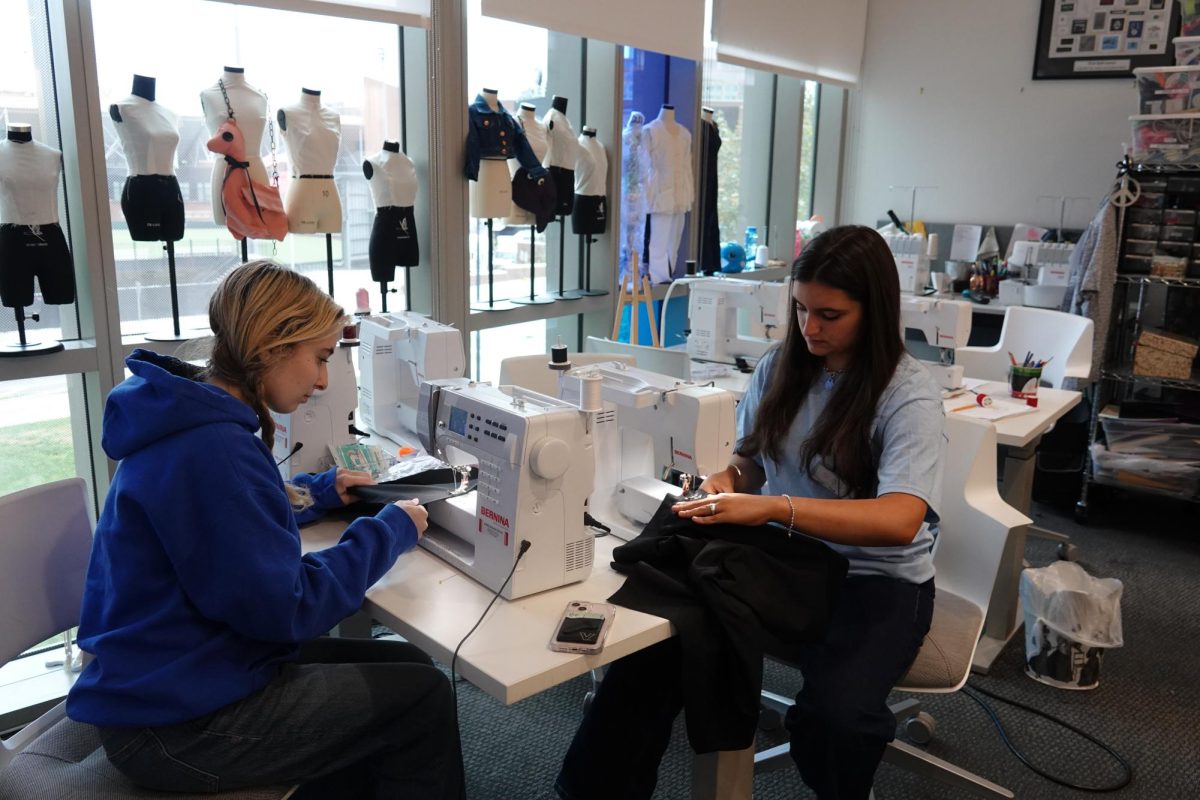
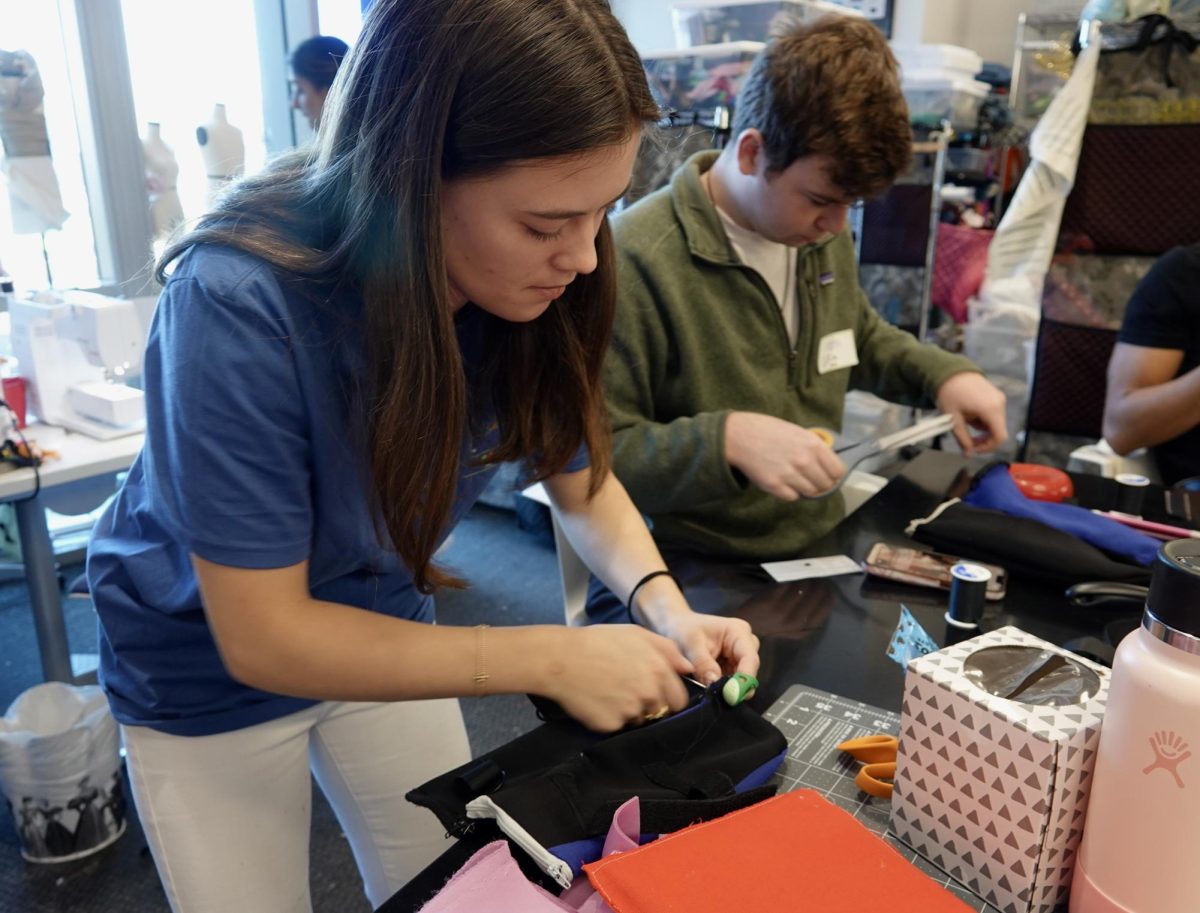
Thirteen teams, or “makers,” were each assigned a “Need Knower,” ranging from young children to adults, whom they spoke to before the Makeathon so they could understand their unmet needs. The teams then worked throughout the weekend to design and build solutions that were custom-tailored to their “Need Knower’s” goals. The teams used the resources of the Wond’ry to create working prototypes of each solution.
Junior Kalyn Day, a “Need Knower” recruitment chair, described the various ways in which the club finds candidates for makers to work with.
“We go to rehabilitative hospitals and Facebook pages for disabled children and we’re Zoom calling all these people and talking through what problems they face in their daily lives and [whether] we think there’s something we can address,” Day said.
Day’s group worked with a Vanderbilt Football alumnus who was left paralyzed from the neck down after an accident. He has been a “Need Knower” for three years, and despite a group in the past making him projects that allowed him to live a more independent lifestyle, he continues to return as a “Need Knower” because he hopes to become less reliant on his caregiver.
Another member of Day’s group, junior Ryan Michael Nuera, said his team designed their solution so it would increase independence and accessibility for their “Need Knower.”
“We wanted to make a device that’s Alexa-controlled. When we say ‘Alexa, open the door,’ it’ll use the Wi-Fi receiver to turn the motor on to open the door,” Nuera said.
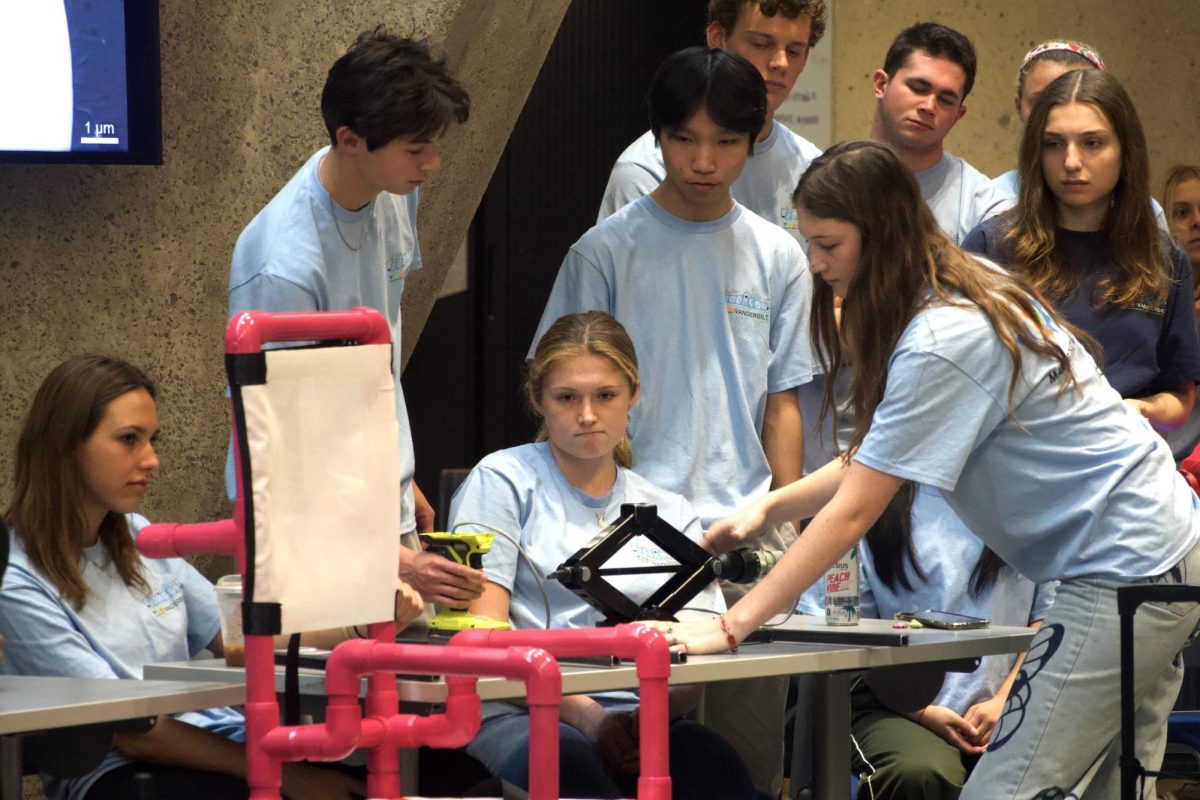
Junior Rylen Hunt, a lead for another group of makers, said that the biggest first step in creating a design is to talk to the “Need Knower” as much as possible to understand the challenge from their perspective.
Hunt’s group worked with Elena, a young girl who is nonverbal and a horseback rider. Since her ability to communicate relies on her use of a tablet, she was unable to communicate while on horseback during her weekly rides. The group created a tablet holder that can attach to the front of a saddle to resolve this issue.
“We created something so that she could be more independent while on horseback,” Hunt said. “It’s a big part of her life, she rides once a week.”
Another group made an attachment to help an 8-year-old girl named Stella transfer into her off-road wheelchair. Senior Maddie Jones presented the project as well as an additional prototype the group designed for a table that can attach to Stella’s wheelchair. With the attachment, Stella can now get into the wheelchair by herself.
“She’s a very active gal, so we wanted to make it easy for her to get into this chair a little bit more independently when she’s ready to go for many adventures that she wants to go on,” Jones said.
Chandler Barnes, a 2018 Vanderbilt engineering graduate and “Need Knower,” said he does not have control over his legs and core and as a result has found it difficult to complete everyday activities.
“I have no control over my core or legs and I’ve had a lot of difficulties, especially as an engineer — someone who likes to DIY and solve problems — not able to find even accessible devices that are kind of right for me and the things that I want to do,” Barnes said.
Barnes’ team made him a claw and shearing device so he can continue his hobbies and to help his wife around the house.
“[My wife] and I love to do things like gardening, taking care of our house, I like to help her as much as possible,” Barnes said. “It’s similar to a lot of themes here around independence, you’re not feeling like a burden.”
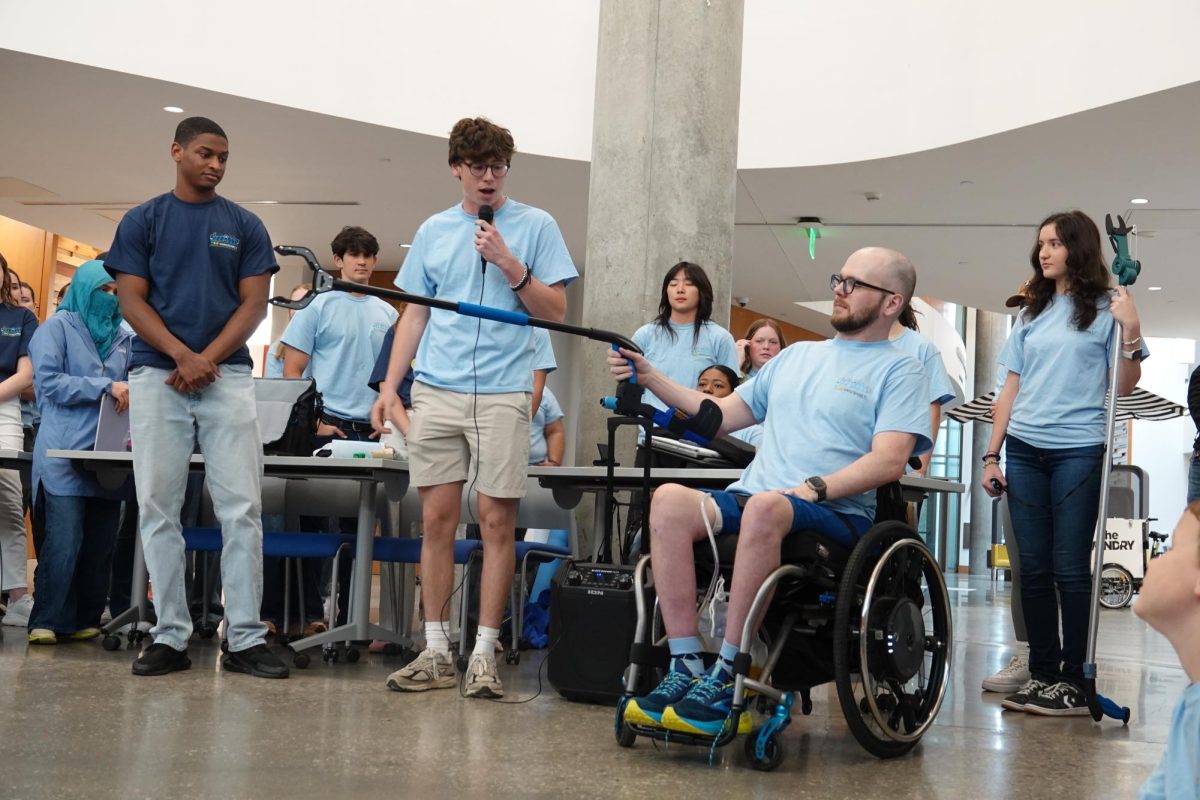
During the final showcase, the 13 teams presented their prototypes to each other and the “Need Knowers” and their families. Each team discussed their “Need Knowers’” interests and how the teams’ designs will help them continue to enjoy them.
First-year Kyuhyun Kim joined TOM this year and said he plans to participate in Makeathon again in the future.
“I thought [Makeathon] was a good way to meet new people and to make a meaningful contribution to the community,” Kim said.
After the showcase, Jones said that the event was an important opportunity for “Need Knowers” and engineers to practice their skills for a worthwhile purpose.
“The chance to design personalized assistive solutions uniquely to an individual is incredible — and the fact that it’s provided free of cost makes it even more impactful,” Jones said.
Faculty adviser Kevin Galloway said one of the most rewarding parts of Makeathon is the potential for prototypes created during the event to be built upon and refined in the future to help more people.
“A lot of what’s made here doesn’t end up being perfect,” Galloway said. “But everyone here signs an [intellectual property] waiver, so it’s all open source. Anyone can build off of it and improve upon them.”
Galloway also emphasized how the club gives members an experience that is applicable to the workforce for engineering and other industries.
“I think it’s really great they get experience working with understanding client needs, prototyping designs and engaging with the community,” Galloway said.
Junior Tessa Mahoney, president of TOM, said that she has enjoyed seeing everyone’s projects come to life and the executive board’s work in coordinating the event.
“I’ve been working on this since my freshman year. [I] found out about the club on my first day of school and I loved it,” Mahoney said. “Being able to teach people engineering skills and teamwork and ingenuity is incredible, and it’s amazing to see upperclassman helping underclassmen.”