
“There are Asian people in Oklahoma?” — is a common first question I get when I reveal my hometown of Tulsa, Oklahoma. “Oh god,” (grimace) comes the almost automatic second response.
Given Tulsa’s history, I can’t blame people. For me, those assumptions weren’t abstract; they played out in my everyday life.
My high school years were rough. As you may have already guessed, it was partly — mostly — due to my ethnic background. As a junior in university, I thought I had already buried those memories, but an Instagram reel quickly unearthed them. My high school’s Chinese Club was promoting itself without a single Chinese student in sight.
The comments were just as confused: “Where’s the Chinese?”
Another comment asked more hilariously, “Are the Chinese in the club with us?”
That moment wasn’t an exception; it reflected a larger reality.
Asian people occupied a strange space in my alma mater’s social hierarchy. Our identities served as punchlines, and in order to bid for a spot in the in-group, you had to mock the same community that raised you. Like the missing Chinese students of Chinese Club, your inclusion was in name only.
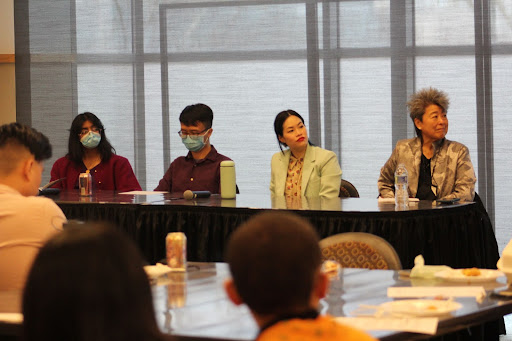
By the time I left Tulsa, I learned to expect that kind of environment. When I stepped foot on Vanderbilt’s campus as a first-year, I expected the same macro-aggressive attitude I had grown accustomed to. However, I was met with radical inclusivity and representation. In between class, I attended advocacy panels hosted by Vanderbilt’s Asian American Student Association and happily substituted meals at Commons for (free) catered food.
For the first time, advocacy didn’t feel defensive — it felt collaborative. I stopped bracing for prejudice and started participating in pride. Beyond AASA, cultural organizations across campus made Asian identity visible — not niche, not performative, but celebrated.
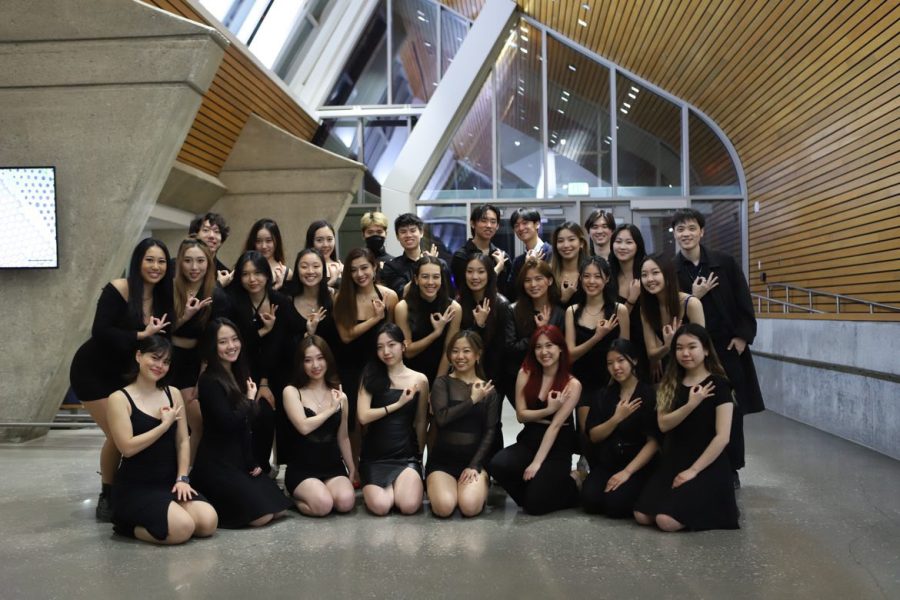
Nowhere is that more evident than during one of my favorite times of the year: the annual Lunar New Year Festival showcase. Hosted by AASA, LNYF features a variety of acts from different cultures. Every winter, LNYF transforms the stage of Langford Auditorium into something radiant: dance, music and stories stitched together across culture. Each year, I’ve attended, and each year, I leave with a sense of awe and warmth.
This year, I experienced it from the other side of the stage. I was given the opportunity to star as an emcee in the skits shown between the performances. Going with the show’s theme of “Reignition,” our team wanted to write a story that tackled difficult topics impacting the community. With more lighthearted debates on “performativity” and matcha as our vehicle, we worked hard to weave in moments that touched on relationships, and ultimately, what it meant to be Asian in America.
As the actor portraying Mia’s (the main character) mom, I had the daunting task of helping write and deliver scenes that emotionally anchored the story. As a character, Mia’s mom was a mirror of the team’s own stories and above all, a love letter to the immigrant experience. She was written to be blunt, sometimes pushing too hard. At her core, however, was a deep desire to connect with the daughter she had fought so hard to raise.
The after-show feedback we received on scene nine, with Mia and her mom, as well as the show overall truly made the long writing and rehearsal sessions worth it. Moreover, the process itself allowed me to reflect on my time before and at Vanderbilt as an Asian American. And that reflection led me to a more complicated conclusion: Vanderbilt University and its community do a great job of supporting the Asian students on campus, but I think they can do more. Although I’ve personally never experienced overt anti-Asian sentiments on campus, I’ve come to realize that my time in Tulsa has desensitized me to more covert instances.
That tension became clearer to me through someone else’s experience. I often think back to an anecdote a friend shared of her first couple of weeks on campus as a first-year, and one of the reasons she ultimately transferred out of Vanderbilt. Coming from a more diverse area, she explained that her identity as a minority didn’t even occur to her until she got to Vanderbilt, where she then, for the first time, experienced her first microaggression. Most notably, conversations surrounding where she’s really from, an experience I had mistakenly assumed was a common canon event in every Asian American person’s life.
My friend’s story especially stuck with me because for her, being othered was newfound territory that instantly raised red flags. For me, who grew up in the South, it was the norm — which is why her reaction felt unexpectedly validating. I had grown both hyperaware of prejudice and numb to it at the same time. In her position, I might have dismissed the incident with, “I’ve endured worse in high school,” and carried on. She, however, recognized it as a red flag and as a sign that Vanderbilt might not be the right place for her.
I, on the other hand, am here to stay. But I no longer confuse survival with belonging. If Tulsa taught me how to withstand being othered, my experiences at Vanderbilt are teaching me that I deserve more than endurance. So, the next time someone asks, “There are Asian people in Oklahoma?” I might still say yes. But I might also tell them about Tulsa’s thriving Zomi refugee community and about the Vietnamese families who have built businesses and temples there for decades. I am not an anomaly. I am part of a history they simply haven’t learned yet.