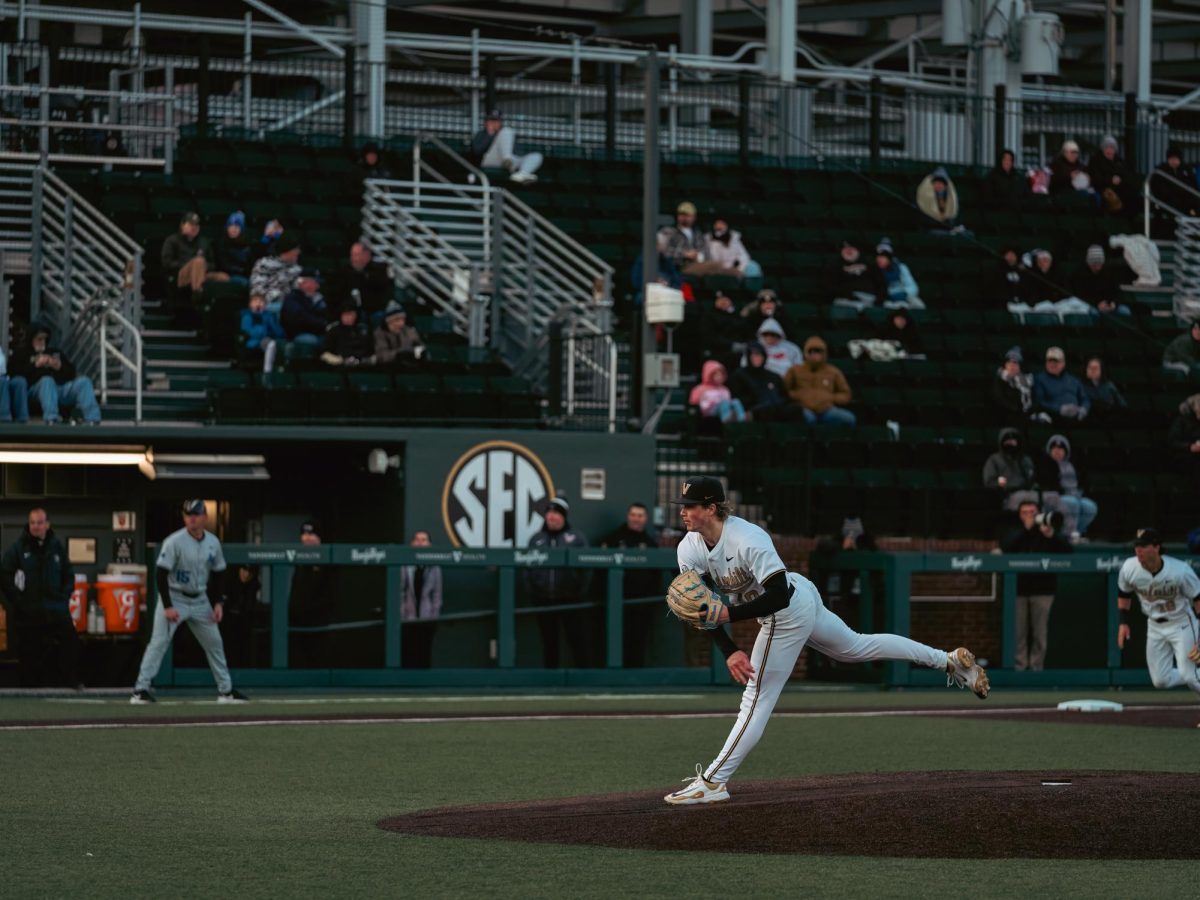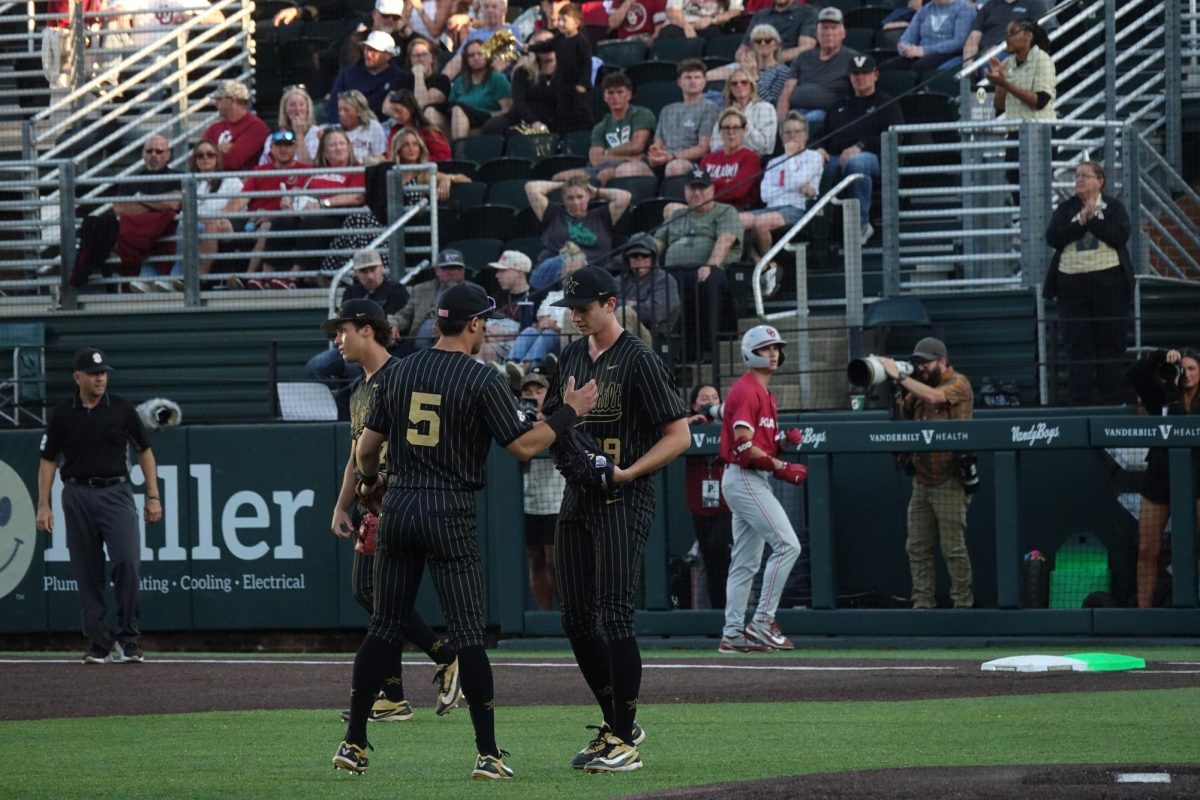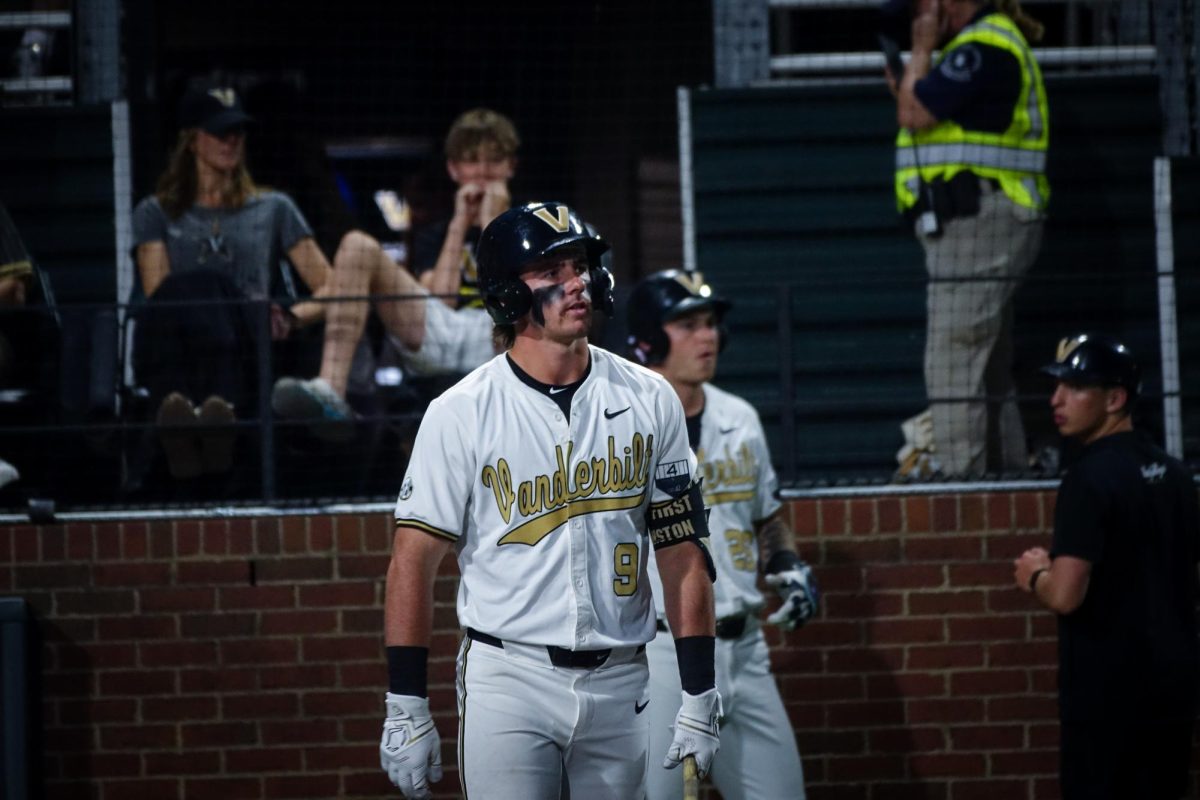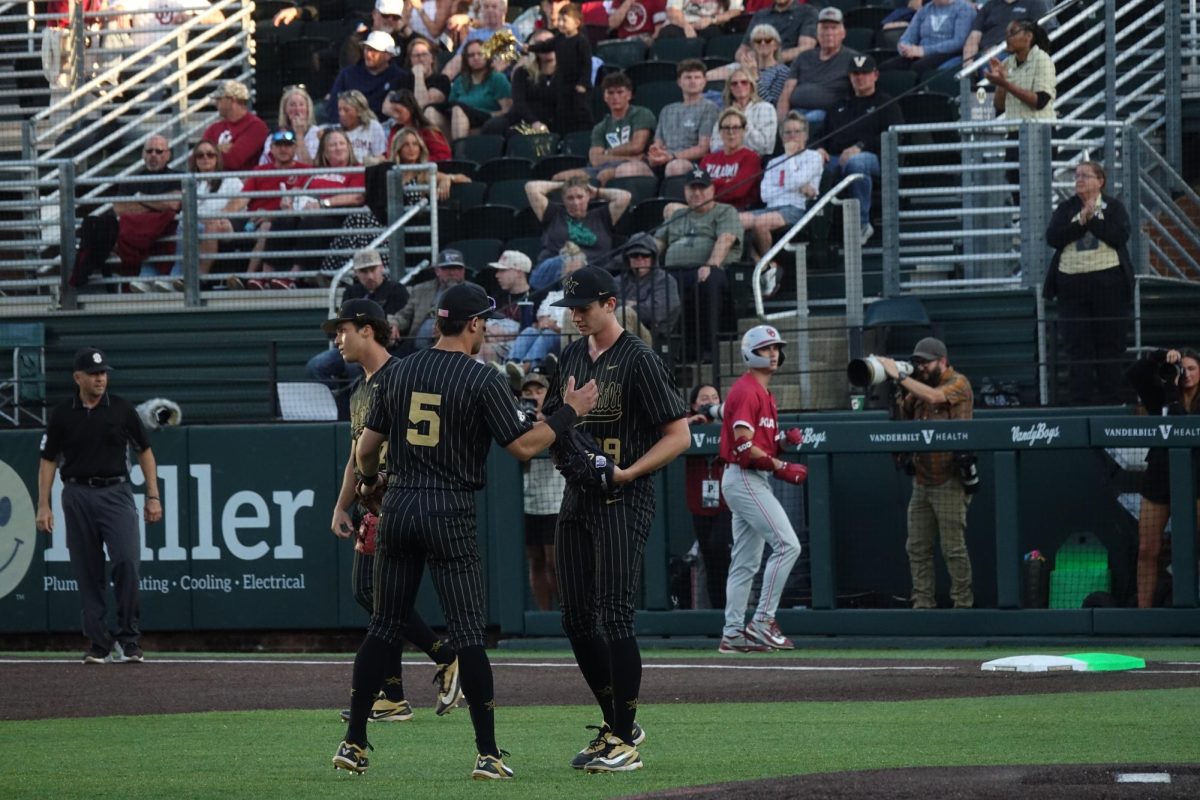


Mississippi State swept Vanderbilt Baseball over the weekend, and the Commodores are now 13-12 on the season and 2-4 in SEC play.
The Bulldogs’ SEC home opener brought out the best of Starkville, with more than 14,000 fans packing both the Friday and Saturday games, which ranked as the fifth and seventh-most attended on-campus baseball games in NCAA history.
With the abundance of eyes and edgy atmosphere, Vanderbilt never mustered up any momentum throughout the series and failed to take a lead in the series once. The Commodores had won the past seven matchups against Mississippi State before these three games, but for the first time since 2000, the Bulldogs swept Vanderbilt Baseball without much trouble.
In the series opener Friday, the Commodores lost 4-2 and were let down by a lack of timely hitting, as they loaded the bases in the fifth and sixth innings but failed to get a run in either frame. On Saturday night, Mississippi State cruised to a 7-2 win behind a 14-strikeout performance by Tomas Valincius. The Bulldogs then secured the sweep by scoring in every inning and run-ruling Vanderbilt 17-7 on Sunday. Vanderbilt totaled 15 hits across the three-game series, which was 4 fewer hits than Mississippi State had in Sunday’s series finale alone.
2005 was the last year that Vanderbilt didn’t make a regional. The Commodores’ backs are against the wall and need to turn things around fast if they hope to maintain their chances of potentially being an at-large bid.
Starting pitching woes continue
In their six SEC games so far, Vanderbilt has surrendered 59 runs. Against Mississippi State, the Bulldogs had a staggering 36 hits, 28 runs and 6 home runs during the series. Last year, Vanderbilt’s pitching staff had a combined 3.80 ERA, and this year, that number has jumped up to 5.58.
Connor Fennell, the Commodores’ ace and Friday night starter, has seemingly regressed from last year. Fennell’s problem has been surrendering the long ball. In 2025, Fennell gave up nine home runs over the entire season — albeit he earned a starting job later in the season — compared to this year, where he already has seven home runs allowed.
Vanderbilt is also lacking reliable second and third starters in the rotation. Austin Nye is dealing with a bicep injury, and there hasn’t been much of an update or insight into his return. Wyatt Nadeau has emerged as the Saturday starter, and against LSU March 14, Nadeau struck out 10 over 7 innings of three-run ball. However, on Saturday night against Mississippi State, Nadeau allowed five runs in only four innings of work.
The search for a third starter has not been promising either. Nate Taylor drew the start in Game 3 of the series against LSU March 15 and allowed six runs in his short one-inning stint. Tyler Baird started against Mississippi State on Sunday but didn’t record an out and was pulled after giving up five runs in one inning of work.
Vanderbilt desperately needs a few pitchers, on a relatively young staff, to step up in order to bounce back in the second half of the season.
Lack of timely hitting
Throughout the season, the Commodores have struggled to hit in key situations.
“We just haven’t been able to move the ball and get the timely hit,” Tim Corbin said after Vanderbilt’s loss to Central Arkansas March 3.
Over the weekend, this problem continued for Vanderbilt as, during the first two games of the Mississippi State series, the Commodores were 2-of-19 at the plate with two outs. Furthermore, in Game 1 of the series Vanderbilt loaded the bases in both the fifth and sixth innings down by three but failed to drive in a single run.
However, on Saturday, the problem for the VandyBoys was getting on base as Tomas Valincius threw 7 innings of two-hit ball and recorded 14 strikeouts.
From time to time, Vanderbilt’s offense has struggled to deliver the timely hit, and in Game 1 against Mississippi State, that was the difference in the game.
Vanderbilt offense still slugging
The ball may not be falling how Vanderbilt wants, but the offense is still slugging and hitting exceptionally well. After going down 6-0 in the first inning in Game 3, the Commodores hit three home runs in the top half of the second inning to cut the lead in half, and Ryker Waite added another home run in the fourth inning. Although the pitching wasn’t able to keep Vanderbilt in the game, the Commodores have the ability to power their way back into any game, no matter the deficit.
Home runs have been the savior for Vanderbilt’s offense as the team is second in all of Division I in home runs hit. The VandyBoys are actually only 10 home runs behind their combined season total from last year. Furthermore, the Commodores’ slugging and on-base percentages are both significantly higher in 2026 than in 2025.
The offense has the ability to compete against any pitching and do a lot of damage. If Vanderbilt can start hitting better in key situations, the sky is the limit for this offense and poses a threat to any pitching staff moving forward.
Colin Barczi’s return
Barczi last played February 18, as he missed over a month due to a shoulder injury. This weekend’s series was Barczi’s first games back, and he looked really sharp at the plate.
Barczi was the DH in all three games and reached base twice in all three affairs. Barczi picked up four hits and two walks over the weekend, which forced the coaching staff to move him up from sixth in the lineup on Friday to third on Sunday.
Moving forward, Vanderbilt’s lineup is already dangerous from the top-to-bottom, and the return of Barczi extends an already deep order.
After winning two out of three against LSU the weekend prior, there was hope that a turnaround was coming for the Commodores. This weekend, the team couldn’t carry their momentum over and now have a slim margin of error the rest of the way to keep their hopes of being an at-large bid for an NCAA Regional.
The VandyBoys are back at home on Tuesday to take on Tennessee Tech before a crucial weekend home series against Tennessee, another SEC foe who is struggling, starting March 27.