



Editor’s note: This article mentions rape and sexual violence, which may be disturbing to some readers.
Jess Michaels delivered a lecture in Sarratt Cinema Feb. 23 to a crowd of approximately 300. She spoke on her recovery following her assault by Jeffrey Epstein and strategies for supporting other survivors of sexual violence.
Michaels began the lecture by contextualizing the trauma she had suffered at the hands of Epstein in the 1990s.
“In 1991, the law decided whether a rape happened based on one question: How much did the victim resist? That same year, I was raped by Jeffrey Epstein, and I didn’t scream, and I didn’t run and I didn’t fight. I was a strong, independent, successful, 22-year-old professional dancer traveling the world,” Michaels said.
Michaels then described the psychological changes she experienced after the assault and discussed how survival instincts shape immediate reactions to perceived danger.
“I genuinely believed that instinctively, I would have fought if something ever happened, until it did, and I didn’t. For decades, I thought that meant something was wrong with me. I lost trust in myself, my ability to take care of myself, and that makes it nearly impossible to feel safe in the world,” Michaels said. “But then neuroscience taught me something different. I didn’t lose willpower that day that I was raped. I lost access to willpower, and that understanding changed everything for me.”
Michaels expressed that what she most wants the audience to take away from her speech is the nature of survival and her conceptualization of consent.
“Consent isn’t just an enthusiastic ‘yes’. Consent requires the ability to refuse without fear,” Michaels said. “If you can’t safely say ‘no,’ then your yes isn’t a choice, it’s survival.”
Michaels also shared the discoveries she made through her research and advocacy for sexual assault survivors.
“In the first 24 to 72 hours after an assault, a survivor’s nervous system is deciding, ‘Am I safe? Is anything else going to happen?’ And if in those first three days that person is surrounded by safety, trust and support by a known, trusted peer, their nervous system can begin to downshift out of survival mode,” Michaels said. “The studies are crystal clear, consistent safety, trust and care for up to 90 days can greatly diminish the rates of post traumatic stress disorder in sexual assault survivors. And this is crucial.”
Senior Oseremhen Ewaleifoh described her main takeaway from the event.
“I think one thing that we can all take away from this, even if we are not victims, [is] instead of [observing these survivors with] a microscope and trying to find out what exactly happened, we could all show each person, each survivor, each victim [that we can] be a listening ear [for] them. I think that is something a lot of people want,” Ewaleifoh said.
Senior Claire Loi explained that the discussion was meaningful to her, having personally felt unequipped to support her friends.
“I have friends that [were] sexually assaulted, and I feel like they regret that I didn’t [act] the way that I was supposed to. And I think after listening to [Michaels’] talk, I have more [of an] idea of what I should do next time and how I should help out when people are needed. I just feel like everybody should download the #withyoutoo app and try to help out because we are the voices, and we are the generation that can really help change the world,” Loi said.
Michaels said she created the aforementioned #withyoutoo app to build a support network for survivors of sexual assault. The app is intended to be a “sexual assault first-aid kit” that creates a 90-day care plan.
First-year Yeydi Torres shared why she thought the event was important, especially on a college campus.
“I thought it was very necessary. I think there’s a lot of stigma around this topic and this conversation, and I think it’s very important to just educate [the] youth and then also educate a large population of the student campus.”
Junior Whitney Bowers expressed how Michaels’ discussion on justice resonated with her and gave her an understanding of what we can expect from the future.
“I really like what she said about her definition of justice not necessarily being people being arrested or people losing their jobs or anything. [Something] I thought was interesting [was when] she said that she doesn’t really think [justice being carried out is] going to happen in our lifetime, and that’s the saddest part about it,” said Bowers. “It’s set up in such a way that if it did happen, and people were actually punished for their crimes and received the punishment they deserve, society and our government would probably collapse. I think she’s right about that.”
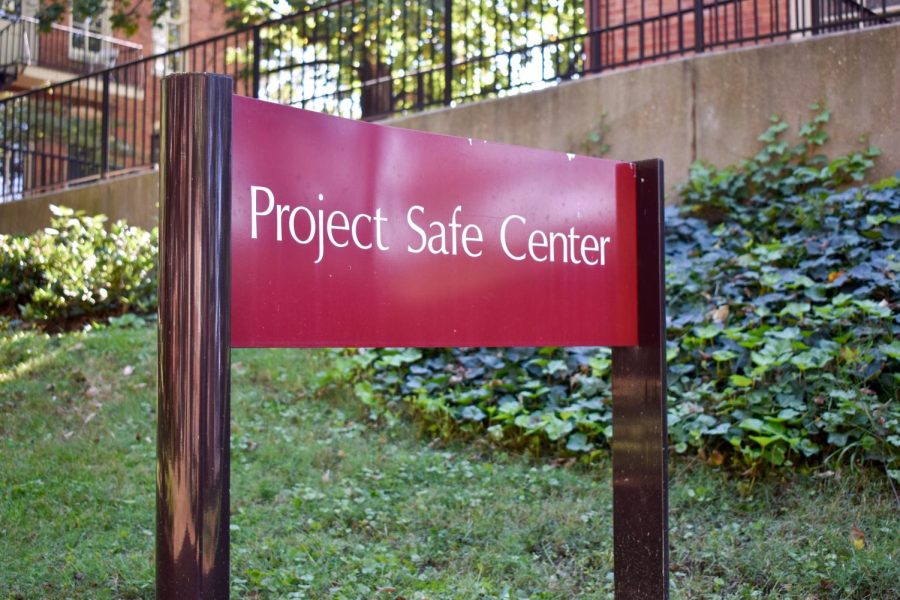
Please reach out to Project Safe at (615) 875-0660 for additional support or to report an incident. For emergency 24-hour resources, please contact Nashville Sexual Assault Center Hotline at 1-800-879-1999, Vanderbilt University Medical Center Emergency Services at (615) 322-0160 or Vanderbilt University Police at 911 or (615) 421-1911.

Lynn Mora • Feb 26, 2026 at 6:31 pm CST
Jess Michaels is brave and I’m sure I’m not the only person who is grateful for her speaking out. I’m a sexual abuse survivor, also. Even though we have different perpetrators, I’m so appreciative of Jess and her fellow survivors for shining a light on this issue in general so people are made aware of the damage it causes in people’s lives. I hope all the men in this horrible Epstein web are exposed and fully prosecuted. I, for one, week rejoice when they’re all behind bars.