

After establishing itself as the nation’s premier men’s basketball conference in 2024-25, the SEC has entered this season with greater parity and fewer nationally dominant teams. Last season, multiple SEC programs occupied the AP Top 10 and the conference ultimately produced the national champion in Florida. This year, however, no SEC team has cracked the top five, reflecting a shift in national perception of the league’s standing.
Despite the absence of a clear national frontrunner, the conference remains highly competitive. The 2025-26 SEC season has been defined more by parity than by overwhelming frontrunners. Florida and Arkansas have separated themselves as early leaders, but a tightly packed group — including Vanderbilt, Alabama, Kentucky and Tennessee — remains firmly within reach of the conference crown. While the top of the conference has been less dominant, the SEC’s depth continues to define it, with teams throughout the standings capable of challenging contenders and reshaping the conference race as the regular season enters its final stretch.
Frontrunner
The Florida Gators have emerged as the SEC’s lone frontrunner, separating themselves from the rest of the conference through consistency, interior dominance and defensive activity. The Gators lead the conference standings at 11-2 in SEC play amidst an ongoing six-game unbeaten run and have established themselves as the most complete team on both ends of the floor.
Florida’s success begins in the paint. Center Rueben Chinyelu leads the team with 12 rebounds per game, anchoring a frontcourt that allows the Gators to control possessions and limit second-chance opportunities. Florida averages 46 rebounds per game as a team, one of the strongest marks in the conference. This interior presence is complemented by defensive pressure from the backcourt, where guard Boogie Fland averages two steals per game while also serving as a key facilitator.
Offensively, Florida relies on balance rather than isolation scoring. Forward Thomas Haugh leads the team with 17.5 points per game, but five players average double figures, allowing the Gators to generate consistent production without relying on a single offensive focal point. This depth, combined with their rebounding advantage and defensive discipline, has allowed Florida to separate from the rest of the conference and establish control of the SEC race entering the final stretch of the regular season.
Dark Horses
While Florida has created separation atop the standings, Alabama, Arkansas and Tennessee remain firmly in contention, each sitting at 9-4 in SEC play. These teams have demonstrated the offensive firepower and defensive capability necessary to challenge for the conference crown.
Alabama has emerged as one of the SEC’s most dangerous offensive teams, driven by elite guard production. Labaron Philon Jr. leads the Crimson Tide with 21.8 points and 5.0 assists per game while shooting over 50% from the field, making him one of the conference’s most efficient scorers. Alabama averages an astounding 92.7 points per game as a team and features multiple double-digit scorers, allowing it to maintain offensive pressure throughout games. Forward Aiden Sherrell anchors the defense with 2.3 blocks per game, providing interior protection that complements Alabama’s high-powered offense.
Arkansas has relied on elite guard play and offensive efficiency to remain among the conference’s top teams. Freshman guard Darius Acuff Jr. leads the Razorbacks with 22.3 points and 6.2 assists per game while shooting over 50% from the field and 44.3% from 3-point range. Arkansas averages 89.8 points per game as a team, reflecting its ability to generate consistent offense. Forward Trevon Brazile provides defensive stability, leading the team in rebounds (7.2), blocks (1.7) and steals (1.6) per game, giving Arkansas balance on both ends of the floor.
Tennessee has maintained its position near the top of the conference through balanced scoring and interior strength. Guard Ja’Kobi Gillespie and forward Nate Ament lead the Volunteers with an average of 18.1 and 18.2 points per game, respectively. Tennessee’s frontcourt presence, highlighted by Felix Okpara’s 1.4 blocks per game, has provided defensive stability and rebounding strength. With multiple scoring options and defensive versatility, Tennessee remains well-positioned to challenge Florida for the conference lead.
With only two games separating Florida from this group, the SEC title race remains open. Alabama, Arkansas and Tennessee possess the offensive efficiency, defensive production and star-level guard play necessary to close the gap as the regular season enters its final stretch.
Letdowns
The Kentucky Wildcats have had a tough season. Although they entered the season ranked No. 9 in the Preseason Coaches’ Poll, they have simply not lived up to those expectations. Sitting at 17-9 and 8-5 in the SEC, the Wildcats sit outside the top 25 in KenPom’s overall efficiency ratings. After John Calipari’s departure from Kentucky in April of 2024 to join the Razorbacks, the Wildcats haven’t been the team we all know them to be, and the blue blood just seems to be fading.
The biggest issue for the Wildcats has been identity. Previously, teams under head coach Mark Pope built a fluid offense centered around ball movement and offensive efficiency. His high-octane offenses and strong home records were one of a kind, boasting an impressive 66-12 home record during his time at BYU. And if there’s one thing we know about Pope from his previous coaching jobs, it’s that his teams shoot a lot of 3-pointers, and they shoot them extraordinarily well. In 2020, Pope’s BYU team led the nation in 3-point shooting at 42.3%.
However, this year’s group seems to be a bit lost. Sitting at sixth in the SEC in 3-point percentage (35%), the Wildcats have yet to truly develop their on-court presence. With great pieces like Malachi Moreno, a monster on the boards, Otega Oweh, a senior floor general and the key to Kentucky’s offense and freshman potential in Jayden Quaintance and Jasper Johnson, the Wildcats seem to have the pieces and the potential, but they can’t seem to capitalize and get something going. With the No. 1 fan attendance in the SEC, though, Wildcat fans’ spirits remain high. But until this group finds a clear identity and a consistent rhythm, the Wildcats will remain a talented team searching for itself rather than national contenders.
After a Sweet Sixteen appearance last year, the Ole Miss Rebels have taken a huge step back. Entering 2025-26, ranked No. 32 in the Preseason AP Poll, Ole Miss was expected to be a legitimate contender. Now, it sits dead last in the SEC in scoring with just 74 points per game and has one of the lowest team field-goal percentages in the conference at 43.9.
For the Rebels, the biggest issue is simple: they can’t generate buckets. Their defense has been great, but it can only carry a team so far. With their recent loss to Texas A&M, the Rebels are now 11-15 and 3-10 in conference play, with eight consecutive losses — six of which came by double digits.
Roster and rotation inconsistency have taken a real toll on the group. It is often unclear what lineup to expect from the Rebels, and that unpredictability has clearly hurt their chemistry and unity on the floor. For a team that was a national contender last year, now sitting at one of the worst teams in the SEC is nothing short of a disappointment, and it almost feels like the season for the Rebels is already over. With March Madness and the end of the regular season nearing, time is running out for Ole Miss to turn things around.
Surprises
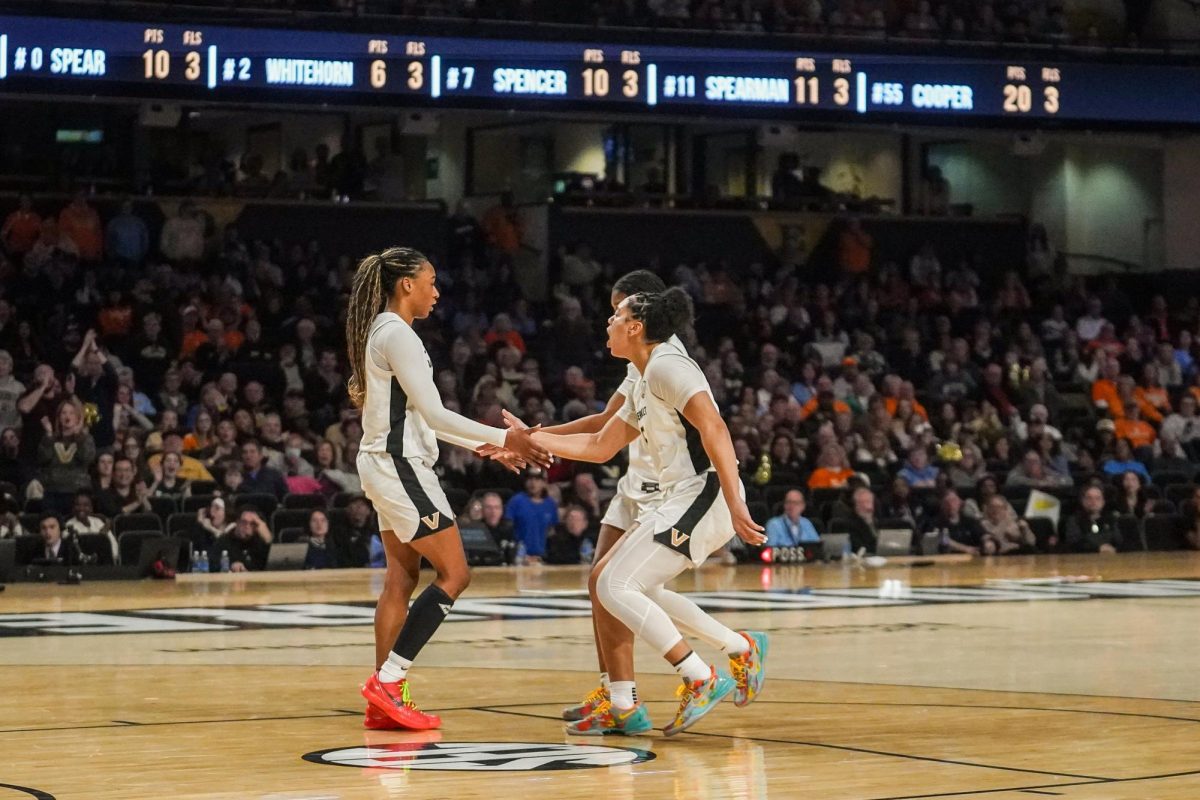
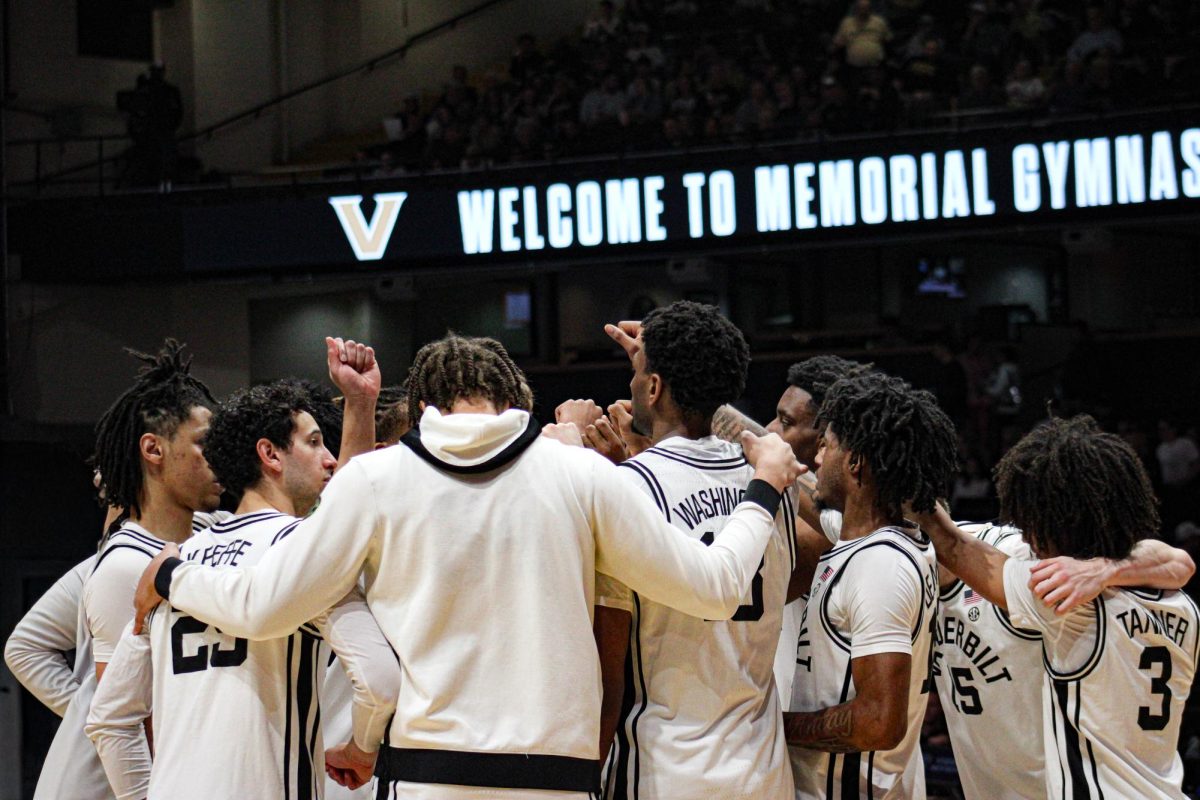
How about those Commodores? Vanderbilt now sits at No. 19 in the AP Poll with a 21-5 record and 8-5 in conference play. Despite recent injuries to Duke Miles and Frankie Collins, the Commodores have been able to maintain their high-motor backcourt and do what they do best: score, score and score.
With Miles and Collins on the sideline, all eyes are on Tyler Tanner. Averaging 18.3 points per game, Tanner has stepped up as the clear leader of this offense. But let’s not forget about Tyler Nickel. The senior is averaging 14.8 points per game while shooting an astonishing 44.2% from 3-point range, marking himself as one of the best shooters in the nation. Together, the two Tylers are combining for 33.1 points per game.
What makes Vanderbilt even more dangerous is that its defense has been consistently improving. Leading the SEC in steals per game, the ‘Dores generate defensive turnovers and turn them into their bread and butter. These fast-paced transition buckets make them a threat on both ends of the floor. This team has continued to stay motivated through a bumpy road and continued to perform, proving themselves as legitimate national contenders.
That said, there is still work to be done. For all the Commodores’ offensive explosiveness, they remain inconsistent. Their struggles with defensive rebounding and interior defense have left them vulnerable against bigger and more physical teams. If they can tighten up their interior defense, the Commodores have a chance to be one of the best.
Nobody saw Texas A&M coming. After being picked No. 13 in the SEC’s preseason poll and coming off a loss in the Round of 32 to Houston last year, the Aggies have been one of the most surprising stories in college basketball. Under first-year head coach Bucky McMillan, a 42-year-old who was coaching high school basketball in 2020, the Aggies sit at 18-8 overall and 8-5 in conference play.
McMillan’s old-school offense has this team playing together in a way nobody expected. They’re leading the SEC in assists with one of the highest assist-to-turnover ratios in the conference, have the second-best 3-point percentage in the SEC at 36.7% and are one of the best scoring offenses in the entire country. Through a willingness to play together and their high motor defense, the Aggies are doing what needs to get done: being scrappy and hitting shots. After snapping a four-game losing streak against Ole Miss, Texas A&M appears to have regained momentum.
That said, the Aggies still have some work to do. They continue to struggle with scoring in isolation and have yet to truly prove themselves against ranked competition. But for now, “Bucky Ball” is working, and the rest of the SEC is starting to take notice.