
When [Emma Craft’s] daughter got cancer at the age of eight, Craft believed that it was God’s will,” an attorney said in front of the Advisory Committee on Radiation Experiments. “It wasn’t until recently that she came to believe, based on the medical evidence that’s been published, that this tragedy happened for no reason; that it wasn’t an act of God. It was the intervention of humankind, and it was done without her personal, without her consent.”
Between 1945-47, experimenters at Vanderbilt administered “cocktails” containing radioactive iron to roughly 829 pregnant women, in partnership with the Tennessee Department of Health. The stated purpose was to examine iron absorption during pregnancy, with radioactive iron used for traceability. However, the subjects likely did not know what they were ingesting.
“I remember taking a cocktail,” One former participant later testified. “I don’t remember what it was, and I was not told what it was.”
The consequences were devastating. Four of the subjects’ children (then-fetuses) developed cancer, a rate significantly higher than average. For context, about one in 1,000 American children under 15 developed any form of cancer in the 1960s. Yet by 1969, three of the 829 subjects’ children had already died.
However, this study didn’t come to wider attention until decades later. In 1993, Albuquerque Tribune reporter Eileen Welsome uncovered previously classified government-sponsored radiation studies that had occurred across the United States. Her Pulitzer Prize-winning work on the subject pushed President Bill Clinton to create the Advisory Committee on Human Radiation Experiments to investigate the nature of these experiments.
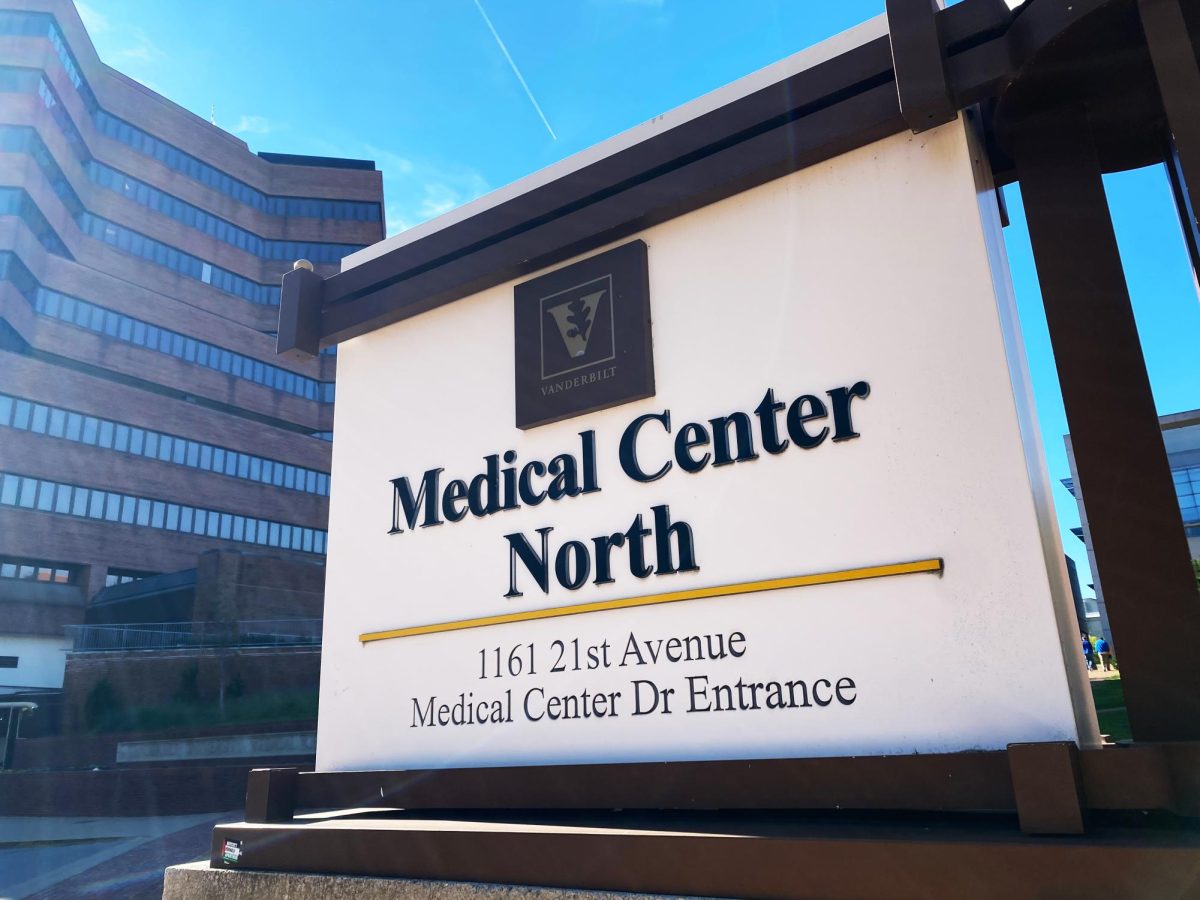
Following these revelations, several women — former subjects — came forward in a 1998 class-action lawsuit against Vanderbilt. This group included Craft, who had lost her 11-year old daughter to cancer. Vanderbilt denied any wrongdoing. Vanderbilt’s then associate vice chancellor of health affairs, Dr. Joseph C. Ross, claimed the researchers had administered what they thought was a safe dose at the time.
“While it would not be acceptable today to give radioactive isotopes to pregnant women, it is also clear that this was carefully evaluated at the time, and there was a feeling then it was safe,” Dr. Ross said. “We want to be as helpful as we can, but to create the feeling that we’ve done something wrong, we don’t want to do that.”
Even if this statement is true, it’s clear that the experiment was not consensual, calling the researchers’ ethics into question. Although the negative effects of radiation were already well-known in the 1940s, it is possible that the researchers had thought the specific dosage to be safe. A nutritionist who worked on the original experiment also claimed the women knew about and consented to the experiment, despite evidence to the contrary. As mentioned earlier, a woman testified to being given an unknown cocktail with no context. Additionally, Vanderbilt officials could “find no records” that the subjects had been informed of possible health risks. Note that the concept of informed consent, a basic tenet of experimentation ethics, had already been well-established at the time of the experiment.
Eventually, the women received a $10 million settlement from Vanderbilt. While a hefty sum, none of that money could compensate for the lives of the children who’d perished from radiation complications.
To take a broader perspective, the Vanderbilt study was not the only human radiation experiment that took place at a university. Throughout the years of the Manhattan Project, institutions such as the University of Chicago injected plutonium into unknowing subjects to test the effects of radiation. Beyond World War II, similar radiation experiments continued at universities that included Massachusetts Institute of Technology and Columbia University. Like with the Vanderbilt case, all of these studies were government-sponsored.
Within the United States, it’s easy (and desirable) to assume that consequences from the atomic age only affect foreigners. The atomic bombs were dropped in Hiroshima and Nagasaki, and the Chernobyl disaster occurred in Ukraine. Watching “Oppenheimer” won’t teach you that the Manhattan Project involved nonconsensual experimentation on U.S. citizens. As such, we must remember that we are not the exception.
It is also important to note that these experiments primarily involved test subjects from historically disadvantaged groups. In the Vanderbilt study, the subjects were working-class white women. At MIT, researchers fed radioactive metals to mentally disabled children. At the University of Cincinnati, experimenters tested on “poor, uneducated and mostly African American patients.” These examples reflect a broader trend of scientific research built on the bodies of the oppressed.
Despite the scope of these experiments, it’s remarkably difficult to find information about any of these studies. Most sources I found on the Vanderbilt case were a few newspaper articles from the 1990s and some academic research papers — nothing targeted at today’s public.
“Most of the original documents from the experiment have been lost or inadvertently destroyed,” Vanderbilt said.
As such, I had to dig deeply while conducting research for this article. I also didn’t see official acknowledgement of the study from the Vanderbilt administration. Finally, the case itself is obscured from common knowledge; when I pitched this article to my peers at The Hustler, none of them had heard of the experiments.
I understand that, especially at older universities, controversies are bound to arise. But if Vanderbilt truly wants to become a leader in academia, it cannot simply paper over the past and move on. For the sake of all who have been sacrificed in the name of science, we must acknowledge past injustices to forge a better future. After all, “Dare to Grow” means nothing if we ignore humanity in favor of progress.






Robin Munson • May 30, 2026 at 9:25 am CDT
This is so disturbing and confirms my thoughts that the powers that be DO NOT CARE about us. Look at all the children with cancer and what it costs our insurance companies!! Maybe all the shots they hive our children are laced with something similar. This is horrific 😡
Tracie Shafer • Apr 30, 2026 at 4:20 pm CDT
My mother in law was one of the fetuses in the experiment. She survived and lived to her 70s but was plagued with mystery health issues and multiple cancers. She went on to have 6 children (my husband being the oldest) and all 6 have had health issues of various kinds. My husband died at age 53. They should have continued longitudinal studies on this and other cases like it. They’ve already ruined lives; they may as well follow the generations and look at gene mutations. Instead, offspring have suffered with mysteries that no one has been able to help them with.
I remember when the settlement happened. My husband’s grandmother & mother got about $29k. $10m is a lot until you split it 800+ ways and was ultimately of no consolation.
Oh, and one of the larger contributors to this experiment: Monsanto. Big surprise.
Stevenson Squirrel • Feb 16, 2026 at 10:44 am CST
The case was heavily reported on in the late 90s when it was being litigated. Vanderbilt University issued an apology as part of the settlement.
[“School Apologizes for Secret Study” LA Times July 28, 1998]
I’d post a link but the comment system does not allow them.
There was a description of the settlement and mention of the apology by Vanderbilt Vice Chancellor for University Relations and General Counsel Jeff Carr in the Vanderbilt Register as well. The original post is from 1996 but it was online as recently as 2015. It was lost when all the old campus news was wiped from the website at some point.
I can’t post the link but search archiveDOTorg for news.vanderbilt.edu/archived-news/register/articles/index-id=3503.html”
Jackie Johnson • Feb 16, 2026 at 10:18 am CST
wow, this is just horrible… Cant believe that was happening. Good for you to dig deep and inform people about that!!