

For many college students, the Super Bowl isn’t just about football; it’s about being with friends and sharing a moment with millions across America. This year, that moment carried extra weight.
When Bad Bunny took the Super Bowl halftime stage, the moment felt bigger than music. In a political climate where Latino communities, particularly immigrants, continue to face dehumanization and erasure, his appearance on one of the largest stages in the world felt incredibly relevant.
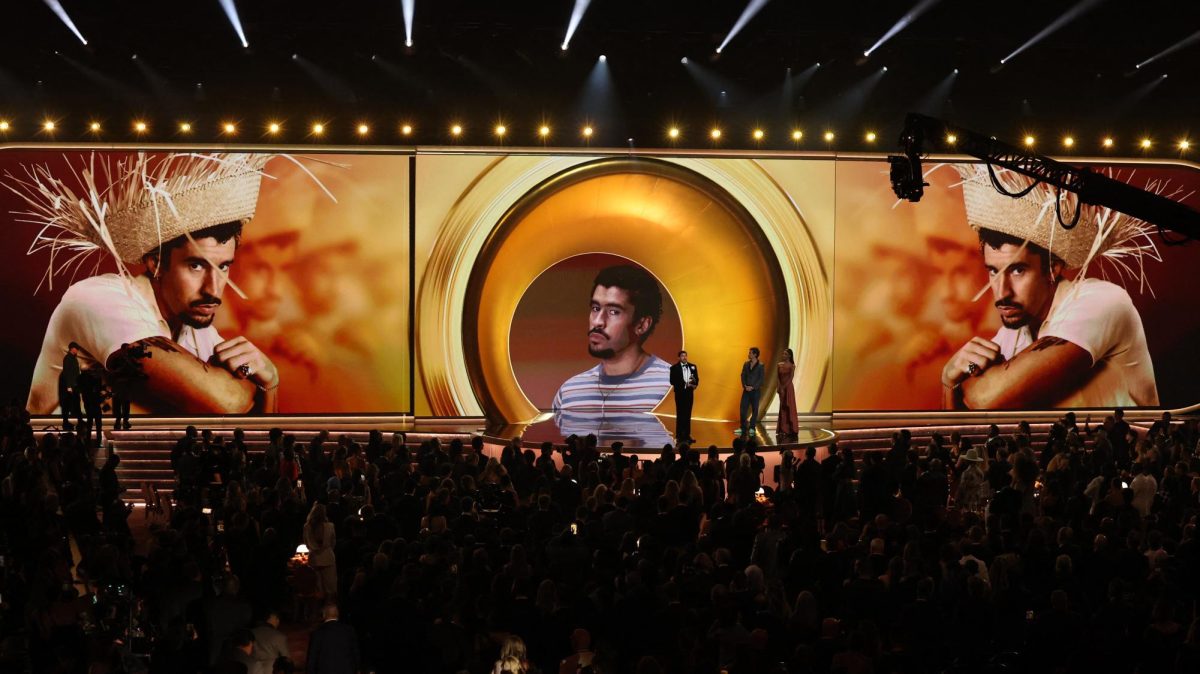
Bad Bunny, born Benito Antonio Martínez Ocasio, has long used his platform to advocate for immigrant rights and center Puerto Rican identity in mainstream spaces. His recent Grammy Album of the Year win and acceptance speech further solidified his role as a cultural figure shaping global conversations. With six Grammy Awards, 17 Latin Grammys, 16 Billboard Music Awards and a history as the most-streamed artist in the world, his influence stretches far beyond music charts and into everyday conversations on campus.
For many students, watching Bad Bunny’s rise over the past decade has felt deeply personal. From his early days marked by a shaved head and outlandish glasses to becoming a household name whose music now fills countless dorm rooms and campus parties, his success feels shared.
That sense of connection was reflected on campus as Latino student organizations came together to celebrate the moment collectively.
“The goal of [the ALAS x Alpha Psi Lambda Super Bowl Watch Party] was to bring the broader Latino community together in celebration of Bad Bunny,” senior and president of Alpha Psi Lambda Jasmine Chuc said.
That excitement wasn’t limited to organized watch parties. For many students, Bad Bunny was the main event of the night.
“I’m genuinely only watching the Super Bowl for the halftime show. I don’t even like football, but I love Bad Bunny,” second-year doctoral student Elsa Landeros said.
Our review
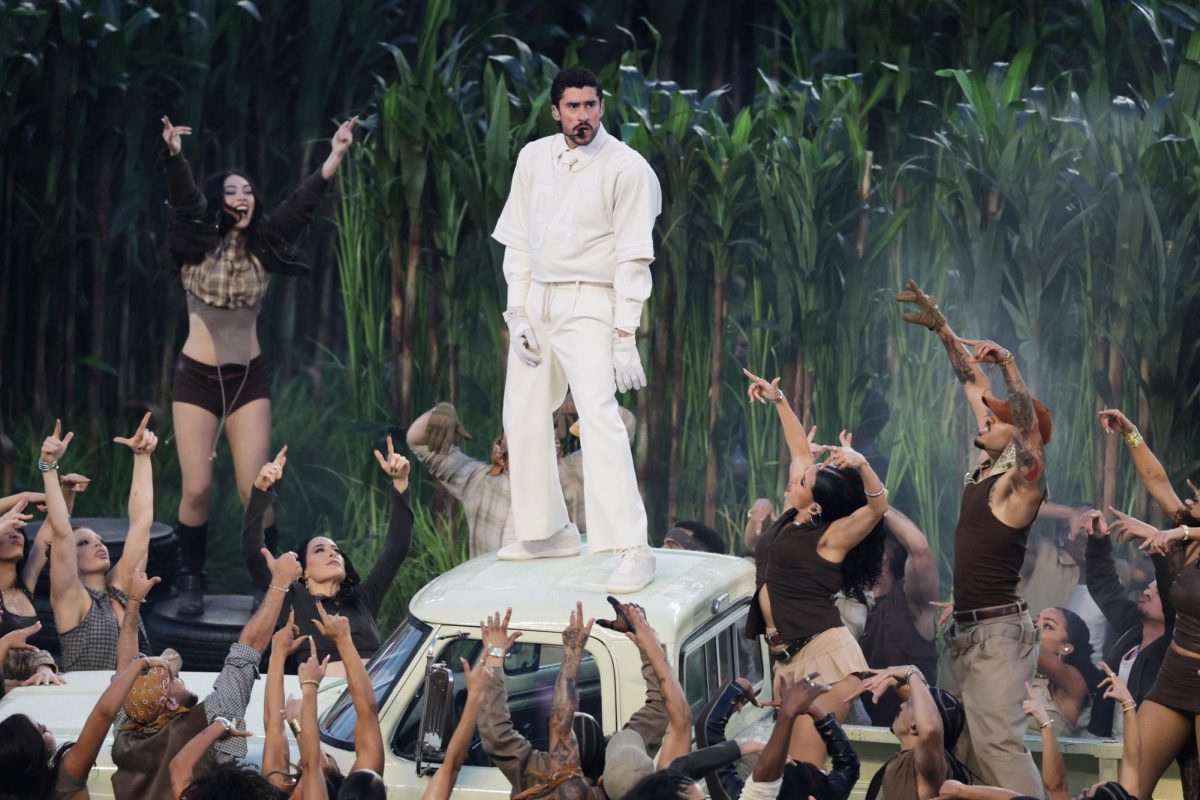
Crowded around the TV with friends in campus suites and off-campus apartments, we waited in anticipation as the performance began, and it immediately delivered. Bad Bunny came out looking incredibly good (as expected) in an all-white outfit, with “Ocasio” across his back.
He opened with “Tití Me Preguntó,” walking through a field of grass that paid homage to Puerto Rico’s agricultural history and the labor of farm workers. The visuals were stunning but also intentional. As he moved through the field, the set filled with familiar cultural moments: a coconut stand, older men playing dominoes and a jewelry vendor who handed Bad Bunny a ring. That ring is later passed to a young man proposing to his girlfriend, transitioning seamlessly into “Yo Perreo Sola.”
The performance shifted into a star-studded dance sequence in front of the iconic casita. Songs like “Party” and “EoO” followed, and their infectious beats had us on a high.
As “Monaco” played in the background, Bad Bunny paused to speak directly to the audience: “Nunca deje de creer en mí. Tú también deberías creer en ti,” Spanish for “I never stopped believing in myself. You should believe in yourself too,” according to our translation. That short speech ensured we left our respective watch parties feeling more inspired than when we walked in.
For Latinos, Bad Bunny’s entire show was filled with all sorts of “easter eggs” that served as snapshots of the Latino culture and traditions with which we grew up. Several of these moments were brief and cleverly tucked into his elaborate, eye-catching sets, making them feel almost like inside jokes for those of us who could relate to the experiences.
One of the most unforgettable of these came when a real wedding took place onstage, set to “Baile Inolvidable.” Hidden behind the crowded celebration and dancing, a child lay asleep across three chairs pushed together, a clever call back to a common childhood experience that felt so unmistakably Latino.
Bad Bunny brought the energy of the performance right back up as “NUEVAYoL” was performed, with a massive team of dancers taking the spotlight. The backdrop, which featured a “marqueta” and barber shop on the corner of a block, perfectly reflected the landscape of predominately Latino communities in New York City.
Beyond just this relatability, Bad Bunny also used his performance as a political statement. He performed the song “El Apagón,” which translates to “power outage” in English, on top of an electrical pole over a grassy field. The scene called attention to the frequent blackouts and electrical grid issues, largely ignored by the continental United States, that Puerto Rico faces.
Rumors swirled for days prior about potential guest artists who could appear in Bad Bunny’s performance. Some of our own predictions ranged from fellow Puerto Rican artists such as The Marías and Rauw Alejandro to massive Latin music stars like Karol G, Daddy Yankee and even Cardi B. No one predicted it to be none other than Lady Gaga who appeared, looking stunning in a blue dress. Hearing her sing “Die With a Smile” with a salsa twist was an unexpected crossover that somehow won the crowd over.
Hands down the most heartwarming moment of the night came as Bad Bunny handed his Grammy to a little boy who sat around a TV with his parents watching his acceptance speech. At a time that feels particularly dark for Latinos living in the United States, the scene felt like a beacon of hope, showing the younger generation that they could overcome hardship and soar to great heights.
He also paid homage to the previous generation of Latin artists who blazed a trail for him as he brought out Ricky Martin, a fellow Puerto Rican, to perform his own song “LO QUE LE PASÓ A HAWAii.”
The most powerful message of the whole performance came at the end of the show. Instead of choosing to feed into the hate and division into which the internet has attempted to warp his performance, Bad Bunny preached acceptance. The jumbotron in the stadium displayed the message “The only thing more powerful than hate is love” as “DeBÍ TiRAR MáS FOToS” played. He concluded by saying “God Bless America” as people displayed flags representing every nation in Latin America. His message was clear: Latin Americans are just as American as anyone else in the U.S., and we should all try to love each other a little more.
Student reactions
Several Latino students at Vanderbilt applauded the performance, highlighting how its intentional and carefully crafted cultural moments helped them feel represented and prideful of their heritage.
“Having him shout out the Americas brought a lot of warmth and hope into my heart,” sophomore Keyla Suarez said. “He perfectly highlighted both the shared struggles felt in many Latin American countries and redefined what it means to be American.”
Senior Charlize Porter expressed similar sentiments, expressing excitement at seeing her Puerto Rican identity and culture pushed into the mainstream.
“To have my culture represented on such a large scale and to see so many people connecting with it in their own ways has been so amazing to see and I think really instills the message of community and treating each other with kindness that the performance was aiming for,” Porter said.