


Let’s talk numbers.
Aside from baseball, basketball is widely considered the sport most reliant on advanced statistics and analytics. College basketball is no exception, as programs around the country use a variety of analytical sources to accumulate deeper insights into lineup analyses, team statistics and player breakdowns. According to many of the most prominent analytics sites, Vanderbilt Men’s Basketball is one of the best teams in the nation.
The Vanderbilt Commodores have been analytics darlings during the nonconference slate of the 2025-26 season. Analysts such as Ken Pomeroy, Evan Miyakawa, Bart Torvik and others have taken an objective look at how the Commodores have fared thus far. And by nearly all of their metrics, Vanderbilt has been dominant.
Of course, analytics aren’t everything — head coach Mark Byington and his squad will be evaluated by their record, the strength of their opponents and the most general metric of all: the eye test. While the NCAA Selection Show doesn’t take place until March 15, every game until then matters.
Statistics are important, but they don’t always tell the full story. For this season’s Commodores, though, they just might. Without further ado, let’s break down some of Byington and Co.’s biggest strengths as the team prepares to face its first SEC opponent.
Pouring it on
These ‘Dores can score. Through 13 unbeaten nonconference games, Vanderbilt ranks 10th out of 365 teams nationally with an average of 94.2 points per game. Scoring offense alone, however, can be misleading, as it can be skewed by pace, opponent quality and other contextual factors. A more reliable metric is offensive rating, which measures a team’s offensive output over 100 possessions while adjusting for opponent strength. Vanderbilt ranks eighth in offensive rating according to KenPom, fifth according to Torvik and third according to EvanMiya. Averaging these three sites — often considered “the big three” of college basketball analytics — Vanderbilt comes in at just over fifth when ranking the country’s best offenses.
There are a handful of other statistics that further illustrate the Commodores’ offensive dominance this season. Efficiency matters just as much, if not more, than volume, and without a doubt, Vanderbilt excels at both. It ranks seventh nationally in effective field goal percentage — which adjusts standard field goal percentage to value 3-pointers more heavily — at 59.9% according to KenPom and Torvik. The Black and Gold aren’t just efficient shooting from beyond the arc, though, as they rank fifth in 2-point percentage at 62.8%.
One more metric to highlight comes from EvanMiya: a statistic called “the kill shot”. Kill shots are defined as double-digit scoring runs where the opponent does not score. These runs are especially important when it comes to SEC play and March Madness, where games are often decided by the slightest shift in momentum. Vanderbilt is tied for 10th nationally with 16 kill shots through its first 13 games.
It’s clear that this year’s Commodores can put up points, but how effective are they at preventing opponents from doing the same?
Stealing dreams and blocking hope
Fortunately for Byington, defense hasn’t been much of a concern either. While Vanderbilt isn’t quite as effective on the defensive side of the ball as it is on offense, it’s still shown an impressive ability to slow its opponents’ scoring attacks down. Defensive rating, which measures a team’s points allowed over 100 possessions, has the Commodores ranked 14th on KenPom and 18th on Torvik and EvanMiya. They also limit opposing teams to a mere 44.5% effective field goal percentage, showcasing the team’s ability to smother the opposing team’s shooters.

More advanced defensive metrics further highlight how impressive the ‘Dores have been on both sides of the ball. According to KenPom, Vanderbilt is the best team in Division I in block percentage, which measures the share of opponents’ shots that a team blocks per game. Led by Jalen Washington, who averages 1.4 blocks per game, the Commodores block 4.9% of their opponents’ shot attempts per game.
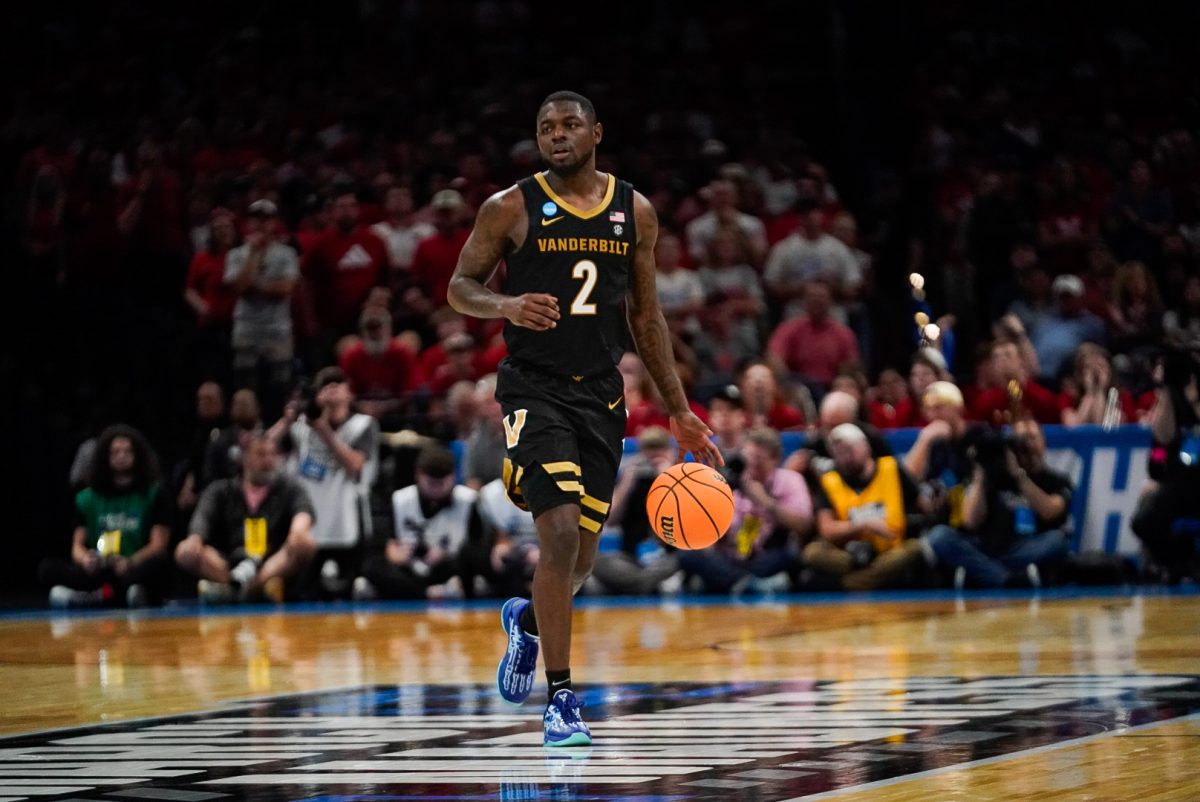
Steals, the other key defensive measurable, are another area where Vanderbilt thrives. With Duke Miles averaging 2.8 steals per game, Tyler Tanner bringing in 2.7 and Frankie Collins stealing 2.4 basketballs per contest, the Commodores have the three best “thieves” in the SEC and rank first in the conference with 10.6 steals per game. KenPom takes a deeper dive into Vanderbilt’s ability to force turnovers by looking at steal percentage, measuring the percentage of opponents’ possessions that end in a steal. Byington’s squad places ninth nationally, stealing the ball away 6.8% of the time. Miles and Tanner both rank in the top 15 individually across the country in this statistic, with 5.2% and 5.1%, respectively.
Forcing turnovers is one thing, but teaching a team discipline and protecting the ball is another.
Spreading the love
Byington has been extremely successful in coaching his team to pass the ball without turning it over. The Commodores rank 10th in the country in assists per game at 19.9, reflecting the team’s willingness to share the ball. Their assist percentage — the share of made field goals that were assisted — is 60.8%, which ranks in the 91st percentile. Despite this pass-heavy offensive scheme, Vanderbilt turns the ball over just 10.6 times per game. Even better, when calculating the proportion of these two statistics, the team’s 1.88 assist-to-turnover ratio ranks in the 98th percentile nationally.

Digging deeper, the ‘Dores are the 25th-best team in the country in turnover percentage, with just 14.2% of their possessions ending in turnovers. Vanderbilt also excels at limiting disruption, with its defensive steal percentage allowed ranking ninth in the nation. Similarly, Vanderbilt ranks 22nd of all Division I teams in defensive block percentage allowed.
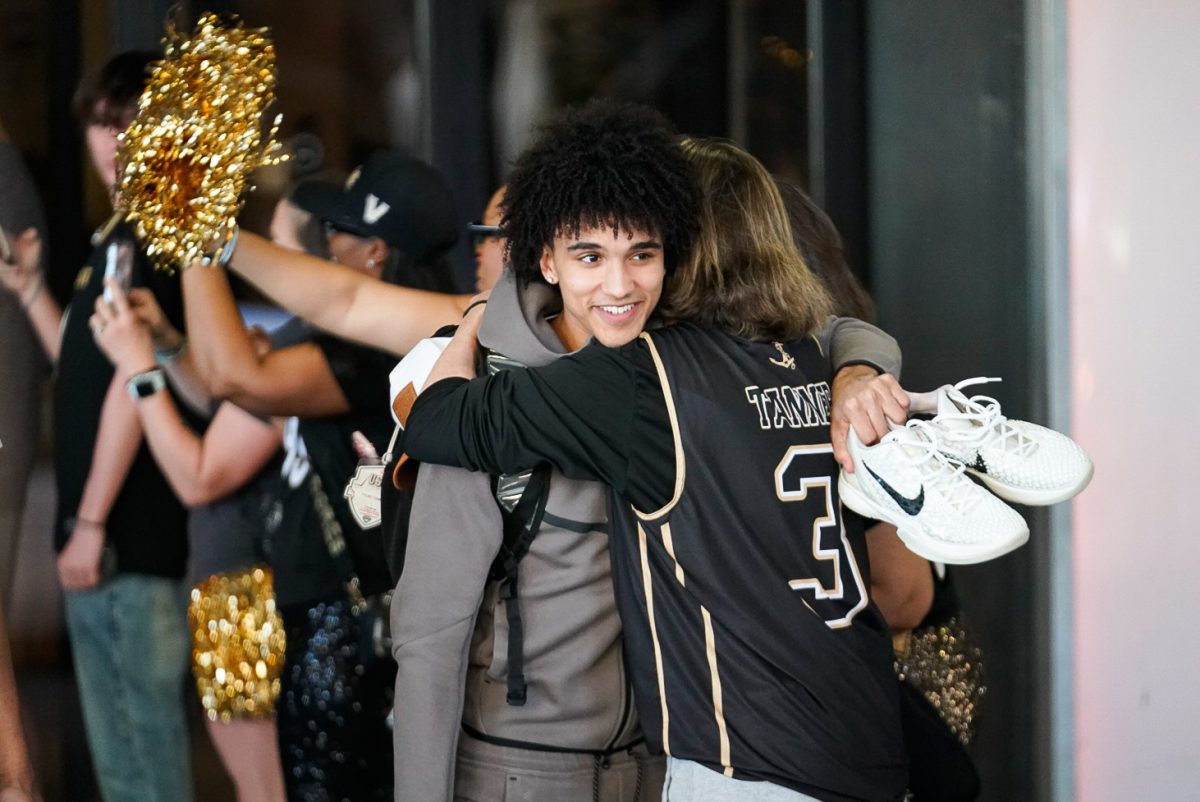
Tanner and Miles, who both excel on the defensive side of the ball, also show immense value as playmakers. Tanner boasts a 27.8% assist rate, which is an estimate of the percentage of teammate field goals that a player assisted while he was on the floor. This ranks in the 91st percentile and is backed by a 3.15 assist-to-turnover ratio, which ranks in the 94th percentile, according to CBB Analytics. Miles isn’t too far behind Tanner, as he ranks in the 88th percentile in assist rate (24.9%) and in the 91st percentile in assist-to-turnover ratio (2.8).
Tanner and Miles have gotten their well-deserved flowers for their performances during the 2025-26 campaign so far, but several other key contributors deserve recognition.
Highlighting the standouts
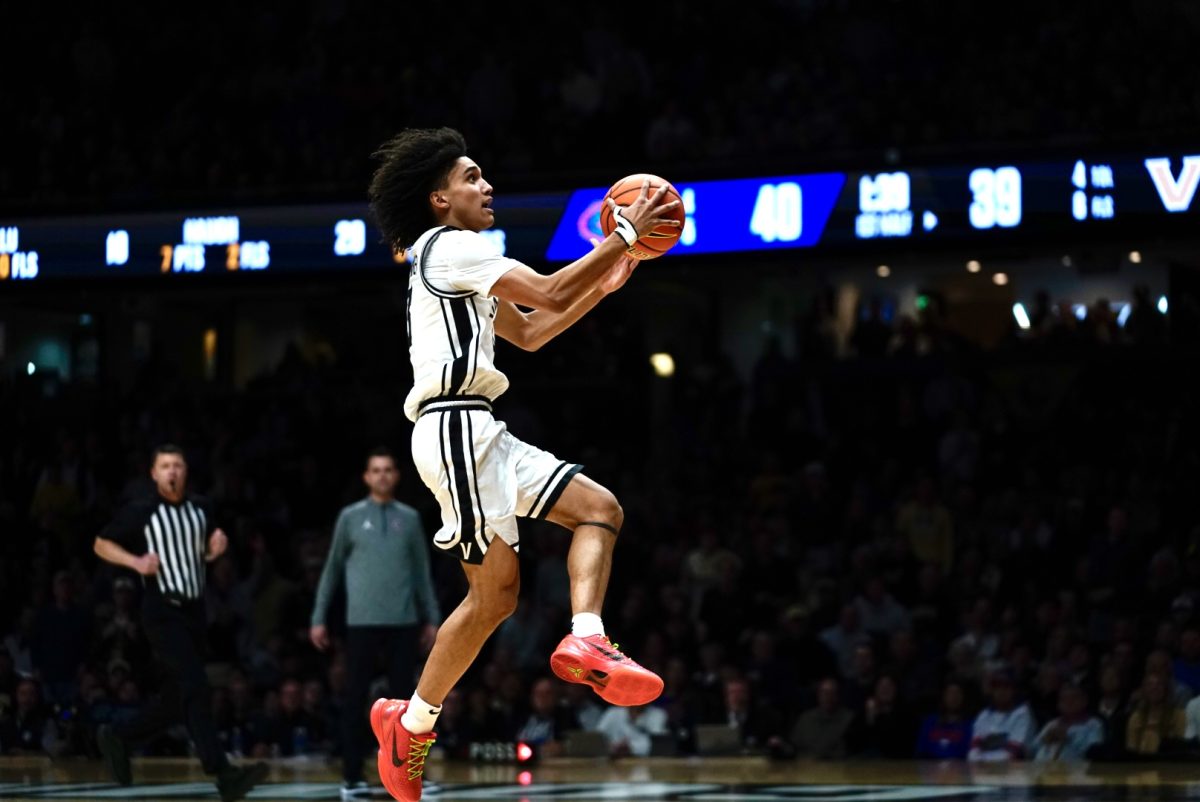
Where else to begin but with Tyler Nickel, who has been one of the best individual offensive players in the entire country. Nickel’s 144.2 offensive rating ranks 10th among all players in Division I, while his 71.8% effective field goal percentage also ranks 10th nationally and his 72.8% true shooting percentage ranks ninth nationally. Nickel is shooting 48.5% from three this season (92nd percentile) on 7.6 attempts per game, equating to 3.7 3-pointers made per game — the most in the SEC. The Harrisonburg, Virginia, native is a one-man wrecking crew that defenses will fear all season long.
Devin McGlockton has been equally impactful, even though it might not always show up in the box score. The 6’7 center has an offensive rebound percentage of 12.8%, ranking 109th out of 2308 eligible players, highlighting that McGlockton is one of the most effective offensive rebounders in the country despite his size. He also boasts a 2-point percentage of 78.5%, good for eighth in the country. Vanderbilt may be undersized, but with McGlockton in the paint to secure rebounds and rarely miss shots, the team’s lack of height may not be so detrimental.
A transfer from UNC before the season, Washington had a slow start to his Vanderbilt career. He has quickly turned it around, though, becoming a key bench contributor to a highly successful Commodore squad. Washington plays very similarly to McGlockton, and as a result, the pair’s advanced statistics are very similar. Washington ranks 29th nationwide in two-point percentage at 73.6% and has an offensive rebound percentage of 9.6% (307th out of 2308). While he may be slightly trailing McGlockton in these two metrics, he brings a shot-blocking ability that McGlockton can’t quite match, ranking 63rd in the country with an 8.3% block percentage, making him a big contributing factor in the Commodores’ defensive success.
While Tanner has already gotten his love, he ranks quite highly in an overall impact metric that cannot be overlooked. According to EvanMiya’s Bayesian Performance Rating — defined as “the ultimate measure of a player’s overall value to his team when he is on the floor” — Tanner is the sixth most impactful player in the entirety of Division I Men’s Basketball.
Tyler Tanner clips vs. Memphis.
Of the 319 high major players since 2008 who were Tanner’s height (6’0”), he is:
– #1 overall in dunks per game (by 2x)
– #1 in block rate (easily)
– #2 in steal rate
– #3 in TS%
– #14 in assist-to-turnover ratio
How much is “but he’s 6ft” worth? pic.twitter.com/ze94sYN31U— Matt Powers (@DraftPow) December 30, 2025
This team is full of players who can stuff the stat sheet and contribute to winning. With all these standout performers, it’s no surprise that the Commodores are 13-0 to start the season.
Chasing greatness
It’s certainly a nice pat on the back for Vanderbilt to be so highly valued in advanced analytical metrics, but that’s not the team’s goal. Its historic start is merely a stepping stone for the success it desires as the season rolls on.
Still, it’s impossible to ignore the success and recognition of the Commodores’ season so far. The team currently sits at No. 11 in the AP Poll, No. 7 in the NET Rankings, No. 8 on KenPom, No. 5 on Torvik and No. 8 on EvanMiya. Averaging those five platforms’ rankings out, and the Vanderbilt Commodores are around the eighth-best team in all of college basketball.
Even ESPN bracketologist Joe Lunardi is buying stock in the ‘Dores, currently placing them as the No. 2 seed in the Midwest Region as an automatic qualifier.
Vanderbilt has now swapped spots with Houston to claim the 2 seed in the Midwest region of @ESPNLunardi‘s latest bracketology.
The Commodores are predicted to be a top-8 team in the country come March, and to automatically qualify for the tournament as champions of the SEC. pic.twitter.com/pcOh3pvucA
— Tristan Rutman (@tristanrutman1) December 24, 2025
As the late great Kobe Bryant once said, “the job’s not finished”, and Byington has higher aspirations for his team than just projections. A solid but not incredibly challenging nonconference slate (ranked 143rd in nonconference strength of schedule according to KenPom) has fueled skepticism surrounding the Commodores’ success. Byington’s squad will look to prove the critics wrong in SEC play, which will be a proper litmus test for how far Vanderbilt can go this season.
Vanderbilt will face its first conference opponent against South Carolina at Colonial Life Arena in Columbia, South Carolina, on Jan. 3 at 1:00 p.m. CST.
These stats were recorded as of Monday, Dec. 29, 2025. Any changes to the metrics may not be up to date in the article.