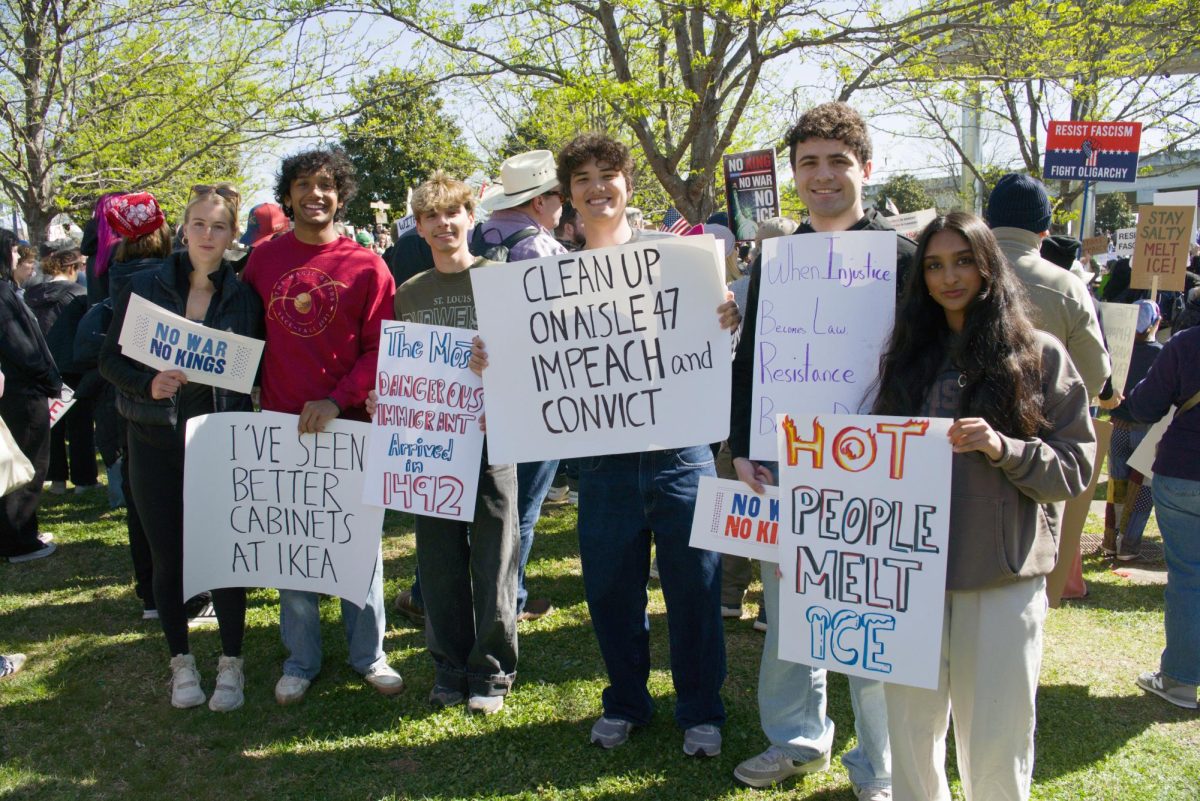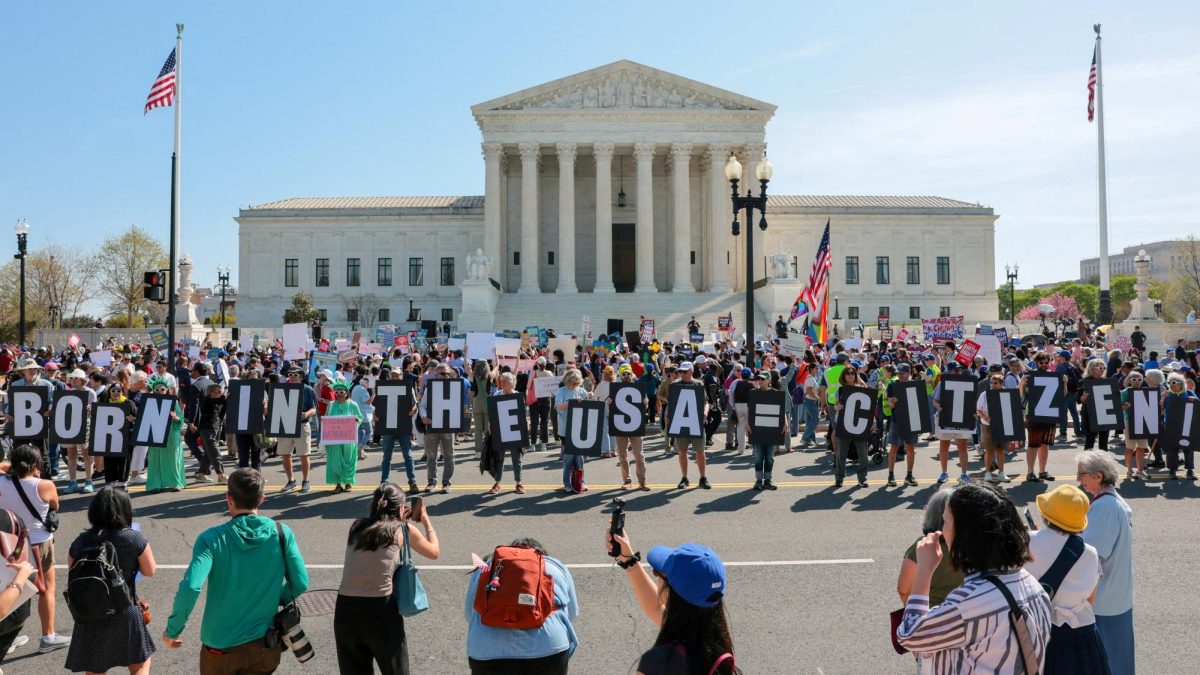

The second No Kings protest in Nashville began on Oct. 18 at 10 a.m. CDT at the Tennessee State Capitol building. Vanderbilt community members and people from the larger Nashville area gathered to protest what they believe are corrupt and authoritarian actions by the Trump administration. The protest lasted nearly three hours and 8,000 protestors were in attendance. No Kings protests also happened in many other cities, including Washington, D.C., Chicago and New York City.
The first nationwide No Kings protest took place on June 14, 2025. The second No Kings protests included over 2,700 protests nationwide with over 7 million people estimated to be in attendance. Several Vanderbilt students and alumni participated in the Nashville No Kings protest, with many expressing their concerns about the current administration.
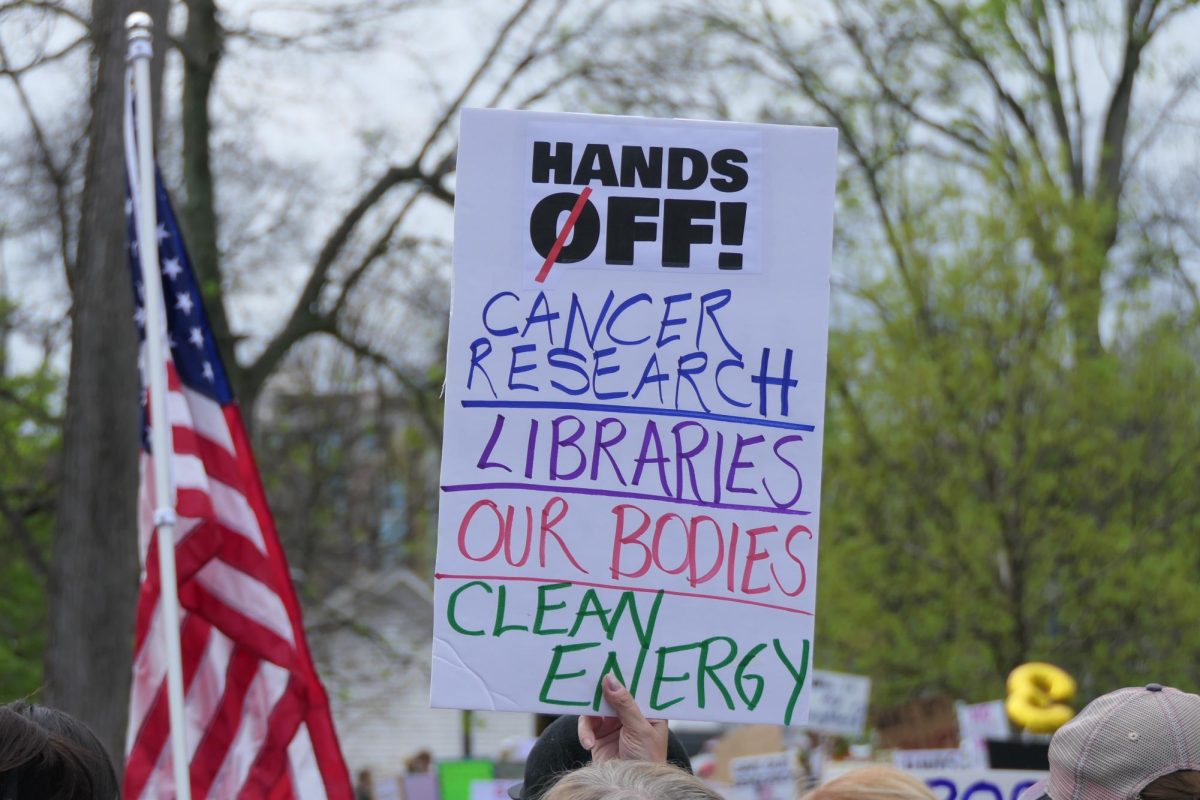
Musicians and speakers at the Nashville protest emphasized the need for action against the current administration. Protesters’ signs voiced their disappointment with the Trump administration’s immigration policies and approach to LGBTQ+ rights, among many other executive actions.
Pamela West (B.S.’84) was pleased with the protest turnout and expressed beliefs about defending rights and Vanderbilt.
“[The protest is] great! I am glad people came out,” West said. “We need to protect our rights, and we need to protect Vanderbilt.”
Nancy Nolan (M.Ed.’86), professor emeritus of counseling and psychology at Vanderbilt, said that she attended the protest because she was worried how the current administration will impact the future of the healthcare industry and funding cuts from healthcare services.
“Watching what is happening to people with disabilities and disability services, [I believe that] healthcare services are not going to be available,” Nolan said.
In an interview with The Hustler, first-year Makoa Lewis expressed opinions concerning autocracy and the importance of protests like No Kings.
“I think regardless of political ideology, anyone can agree that America shouldn’t have a king,” Lewis said. “I believe that it is important that people come out here and protest what they believe in. I think it is important that students get out and involved, because this is stuff that impacts them as well.”
In a message to The Hustler, junior and transfer student Carolina Kelly said her worries about the Trump administration’s potential impact on higher education was one reason why she attended the protest. She noted that Vanderbilt’s commitment to free expression played a role in her decision to commit to the school.
“I’ve seen what it is like to be at a university that is censored and that is one of the reasons I transferred to Vanderbilt,” Kelly said.
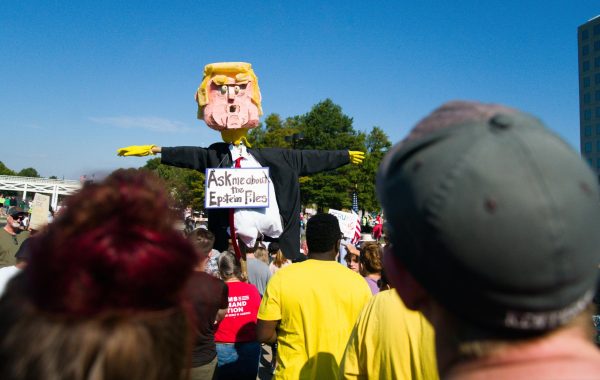
Kay Ferrell (MBA’95) said she enjoyed seeing the various signs at the protest, and that her favorite was one that said “Et tu Vandy,” referring to the phrase Julius Caesar allegedly asked Brutus as he was assassinated in 44 C.E.
“I’m in business, I know there are a lot of issues that have to be taken into account, and [Vanderbilt] has already taken such a big hit with the cutback in funding. But these universities have to stick together,” Ferrell said.
Tristan Call (Ph.D ’20), who held a tabling event at the protest, said he was at the protest to boycott Avelo Airlines, an American airline company which has been contracted by the United States government to conduct deportation flights.
“It would be really cool if Vanderbilt [students] would agree to not buy tickets on this airline,” Call said. “We want people to know that there are things that we can do because private companies are the ones that are doing the Trump administration’s dirty work.”

Call said that he was inspired by the number of people who attended the protest. He believes the Vanderbilt community should stand up against the Trump administration and support the Avelo boycott.
“Vanderbilt is the biggest employer in Nashville. It has an enormous amount of outsized influence in the city,” Call said. “Vanderbilt students and faculty are in an enormous position to be able to take leadership in spreading the word [about the Avelo boycott].”