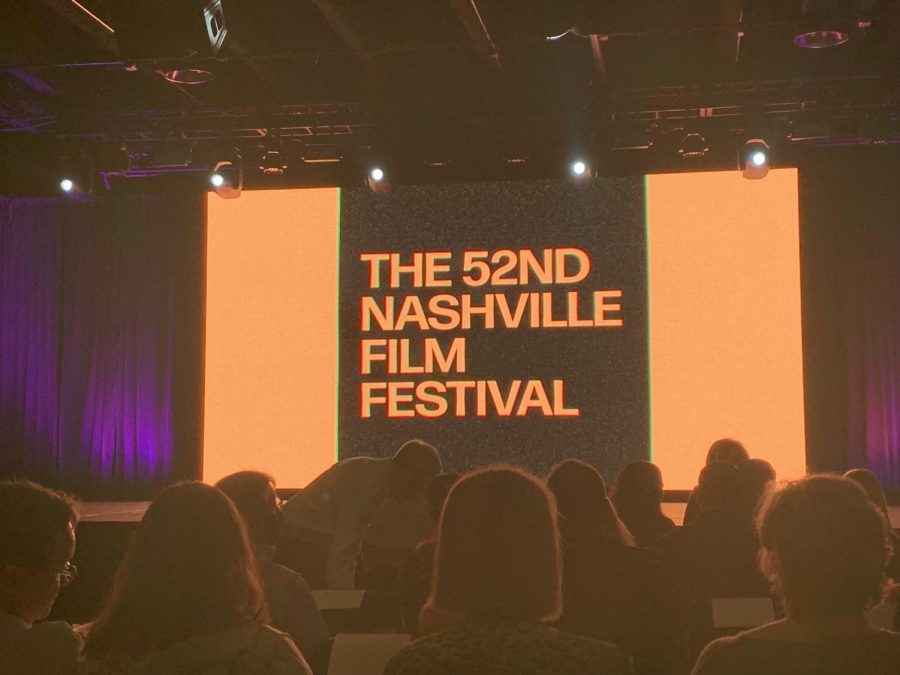


In its fifth screening on the film festival circuit, Karla Murthy’s autobiographical documentary, “The Gas Station Attendant,” stunned audiences at the Nashville Film Festival with a completely sold-out theater. With a Q&A following and preceding the film screening, Murthy and Rajal Pitroda, the film’s producer, gave the audience insight into the process of creating a documentary that not only educates but also commemorates the director’s father, H.N. Shanta Murthy.
“The Gas Station Attendant” is a time capsule of memories honoring the life of Shanta Murthy. Karla uses the film to show her father’s journey as an immigrant travelling from India and building his life in the United States, overcoming struggles in hopes of achieving the “American Dream.” It’s a heartwarming tale, and the accompanying voiceover and editing done by Karla Murthy herself drive home the idea that this is a love letter to her father.
What sets this movie apart is its use of found footage from the historical archives of India to the Murthy family’s home videos. Being let into some of the family’s most intimate moments brings the film down to earth. The home videos of Karla Murthy as a child and the introspective conversations between the father-daughter duo as adults truly captivate the growth and close bond the two had.
“The Gas Station Attendant” has already won a handful of awards. At the Sheffield DocFest where it premiered, it took home the “Special Mention Jury Award,” and here in Nashville, it earned the “Best Documentary Feature” award. The popularity isn’t just among the public but also with filmmakers and critics alike.
The Hustler secured an interview with Murthy herself to gain a better understanding of her process in the making of the film.
Karla’s background in becoming a filmmaker and the process of this film
Murthy said her background was traditionally in news and broadcasting. The transition she took toward documentary filmmaking was brought about from her work in news.
“Interestingly, my first feature film grew out of a news report I produced. I really felt the limitations of the news gathering process, only getting to spend a couple of days [on researching and reporting to then] turn that into a 10-minute piece,” Murthy said. “I kept imagining what it would be like to really capture the story over time. I ended up filming for three years for the feature version of the story. Of course, with filmmaking, there is a lot more creativity, which is really what drew me to feature filmmaking.”
Murthy also shared the immense emotional and mental strain the filmmaking process created, underscoring how deeply personal the project was for her.
“Making this film was like going to intense therapy for years. I’m so sick of thinking about myself now. On top of that, I had to keep switching hats, which was very tiring,” Murthy said. “It’s really challenging to make a film about yourself and try and be objective about it as well. I’m glad I did it, but I don’t think I’ll make another personal film for a very long time.”
Murthy’s relationship with her father
While balancing many themes throughout the course of the film, the dominant feature was the love between Murthy and her father. Despite being very contrasting figures, Murthy recognised that they both had unconventional paths.
“When I graduated [university], I couldn’t afford to go to graduate school. I ended up doing all kinds of jobs to support myself,” Murthy said. “Eventually, I got a production assistant job working in documentary. I think that ability to explore and not follow a usual path is something that I inherited from my Dad.”
“The Gas Station Attendant” is also a movie born out of grief and loss. Murthy explained how losing both her parents influenced her art.
“I do think when you lose a parent at a very young age, it becomes ingrained in how you see the world growing up. That loss — that this is how the world works,” Murthy said. “I think for me, I had thought I was going to die at the same age as my mother. She died in her 40s.”
The complex themes that Murthy tackles blend emotion and education together in a story that honors the memory of her father whilst also shedding light on the lives and struggles of immigrants as they pursue the American Dream.
“I really only focused on the personal. It was only when the film was done that I stood back and thought about how it fits in the world today. What makes this film newsworthy?” Murthy said.
This movie serves as an act of advocacy, amplifying the voices of immigrants who are too often silenced and discriminated against.
“I think we can really change how people see immigrants and migrants using these kinds of deeply personal stories to create empathy,” Murthy said. “So, while it’s not overtly political — well, maybe in a few places — it’s more about getting get to know someone.”
Reflecting on the film and next steps
Karla Murthy’s next steps for her career include continuing to promote “The Gas Station Attendant,” including working out plans for PBS to screen the film.
“I definitely want to continue with documentaries,” Murthy said. “But I do have a screenplay I want to write that grew out of real events. I would love to do a narrative film one day.”
For Murthy, the true measure of the film’s success lies not in the critical acclaim it has received, but in its potential to encourage societal development and progress.
“One of the best outcomes of the film has been someone who saw the film and told me he started seeing his local gas station attendant differently — because he saw my father in him,” Murthy said. “And he started asking the gas station [attendant] questions about his life, tried to get to know him better. That’s the goal of filmmaking for me.”
“The Gas Station Attendant” represents hope for greater awareness and education around humanizing key workers and immigrants who support our daily lives. Karla Murthy’s film is not only an act of appreciation but also an invitation for others to cultivate empathy in a world that often feels increasingly unkind.