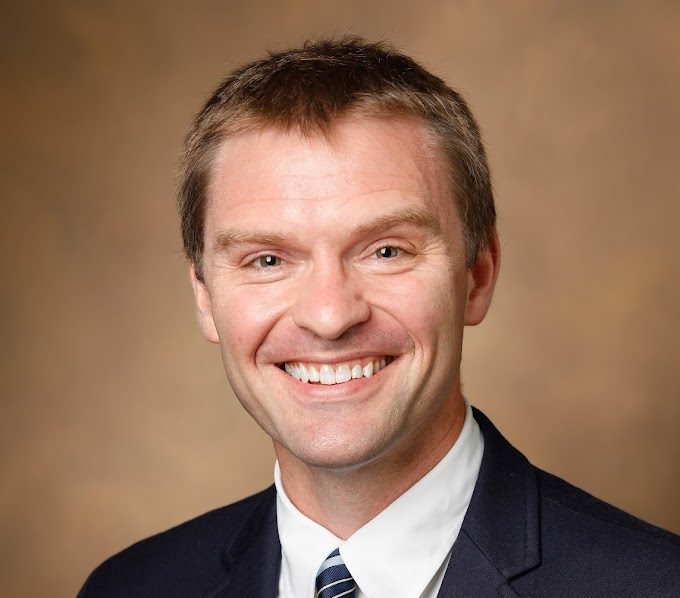

Dr. Justin Gregory is the current field medical director for Autoimmune Type 1 diabetes at Sanofi, a multinational pharmaceutical and healthcare company. Prior to joining Sanofi, Gregory completed his pediatric endocrinology fellowship at Vanderbilt and practiced as a physician scientist at Vanderbilt University Medical Center for 15 years.
Gregory’s career journey from Vanderbilt to his work in Type 1 diabetes offers valuable insight into the disease, particularly as he works to raise awareness of an often overlooked reality: Type 1 diabetes can develop silently before symptoms appear, and early detection through screening is possible, yet not widely used.
Gregory first detailed his early life, when he learned that he had Type 1 diabetes, a chronic autoimmune condition where the immune system destroys insulin-producing cells in the pancreas, resulting in little to no insulin production.
“My whole life, I had wanted to become a fighter pilot, and I was fortunate enough to go to [The Air Force Academy],” Gregory said. “One of the cool things when you’re a cadet is you get to fly gliders, and I noticed we would go up in these gliders, but the problem was I would get up there and have to urinate really badly. This cycle kept happening over and over again. Little did I know, that’s a classic symptom of Type 1 diabetes.”
Gregory continued by describing how his diagnosis ultimately played a role in his decision to pursue medicine.
“When you’re 19, that’s a pivotal time in your life. Then all of a sudden, the Air Force says [I] can’t fly. It was a real crisis time, but I found that my heart was pulled towards helping people that live with the same condition that I have,” Gregory said. “I thought maybe I should be a pediatric endocrinologist [and] I wanted to continue using that mechanical engineering part of my brain. That’s what drew me to Vanderbilt for my training.”
Gregory also talked about his process of getting a master’s degree at Vanderbilt in metabolic physiology, and how it allowed him to apply his interests from his earlier flight training days to his practice of medicine.
“It’s a lot like what you do in mechanical engineering. I was getting to have the part of me that wanted to help people with diabetes, as a pediatric endocrinologist, but a part of me that thought like an engineer, as a metabolic physiologist, and Vanderbilt was such a good place for me to learn to do that,” Gregory said.
Gregory then discussed how his own experience with Type 1 diabetes has influenced his clinical practice with patients.
“What’s helpful is when your doctor can start to talk about what your treatment looks like and then at the end, you could say, ‘I know this is a lot of information. It’s okay to feel overwhelmed, but I want to also encourage you from personal experience that this is not going to control your life,’” Gregory said. “I can tell you from experience that with time and deliberate effort that this isn’t going to seem as overwhelming as it seems now. That rapport that you have, when you share the same condition, goes a long way with patients and their parents.”
Gregory also emphasized the importance of college students taking ownership of their health, especially after graduating, and looking into preventative practices such as diabetes screening.
“I think [graduation] is a critical time to start thinking, ‘I’m going to [need] a primary care physician, have a good relationship with that physician and think about trying to be as healthy as I can be,’” Gregory said. “That’s also a good time to consider screening for Type 1 diabetes, especially [for] someone who has a family member with Type 1 diabetes. It’s also important to know 90% of people diagnosed with Type 1 diabetes don’t have anybody in their family that has Type 1.”
Gregory added that autoimmune diseases can increase the risk for Type 1 diabetes, and certain symptoms such as increased thirst or hunger are indicative of the disease.
“We would rather identify [Type 1 diabetes] through a screening blood test before you get to where your body is no longer producing insulin. But if you do get to that point, it’s important to know some symptoms are increased thirst, increased urination and weight loss,” Gregory said. “People who have autoimmune conditions should have a conversation with their primary care doctor about screening for Type 1 diabetes.”
As for people who may already be diagnosed with Type 1 diabetes, Gregory emphasized that it does not have to take over your life.
“I think that [Type 1 diabetes] sounds scary when you’re thinking about [having] to take shots.
It seems like I’m going to be taking a harpoon to my body multiple times a day, every day. Even though it sounds overwhelming, it is a condition that people can thrive with.” Gregory said. “We’ve even had Olympic athletes who live with this condition. It’s a condition that does not keep you from doing many of the things that you want to accomplish in your life.”
Based on his own changes in his career path, Gregory concluded the conversation with some advice for recent Vanderbilt graduates.
“Be patient with yourself and pursue what [you are] there to do in that day to the best of [your] ability. Over time, what you feel called to do becomes apparent,” Gregory said. “Focus on the day that you’re given and being as good as you can be on that day. As time goes by, those big life career decisions become more clear.”
Gregory’s story reflects how a life-changing diagnosis can reshape a person’s path in unexpected ways. Through both his professional work and personal experience, Gregory said he hopes to encourage people to take charge of their health, seek support when needed and recognize that living with Type 1 diabetes can still mean living a full and ambitious life.