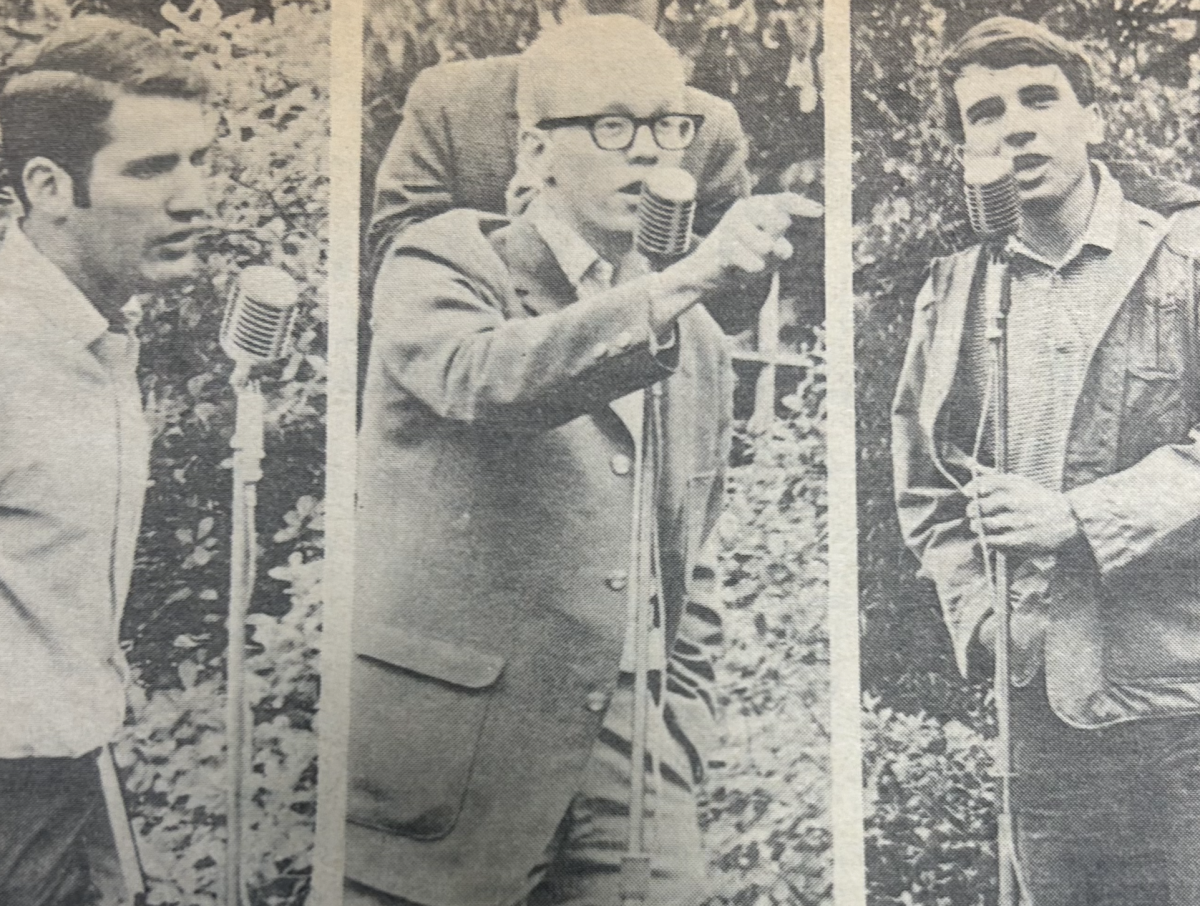

Today, starting college can be one of the most exhilarating yet frightening experiences a young person can go through. However, these feelings are not exclusive to today’s generation. Vanderbilt alumnus, U.S. Army Veteran and lawyer Doug Bates III’s (B.A ’69) origins at Vanderbilt in 1965 began with a sense of uncertainty yet led to a lifelong connection to the university and the friendships he made along the way.
In addition to our Vanderbilt connection, Bates and I also both attended the same high school and were raised in Centerville, Tennessee, a quaint, rural town located roughly an hour southwest of campus. As a young girl who always dreamed of attending Vanderbilt, I looked up to Bates as a Vanderbilt legend in our small town. Now, as a student here, I reached out to Bates to better understand the stories of those who came before and to remind me to make the most of my short time here.
At the age of four, Bates discovered Vanderbilt while sitting in his family’s living room and listening to the Vanderbilt vs. Tennessee football game of 1951. From that point on, Bates developed a love for the university. He attended many football games throughout the late 1950s and early 1960s, but it was not until his senior year of high school that he began seriously considering an academic career there.
“I remember being in my room, looking at material from colleges, and I thought. What the heck? I’ve always wanted to go to Vanderbilt,” Bates said. “Looking back on it, that’s where I always wanted to go. I had no idea what I was getting into.”
Upon arriving on campus his first year, Bates said it took some time to adjust to college life. He felt academic pressure to maintain his scholarship and encountered classes that particularly challenged him. One he remembers in particular is the French course he took to fulfill his foreign language requirement, a task many in the College of Arts and Science still face today.
“I had a tough time academically, and I had a tough time socially. The girls were all beautiful and smart. The freshman girls wouldn’t be caught dead dating a freshman boy,” Bates said. “They were out of my league, but were they really out of my league? No, but I perceived they were.”
While the very beginning of Bates’ Vanderbilt career had its share of struggles, there was a turning point that soon followed. On a rainy March afternoon during his first year, he took a solo walk to the baseball field and took a moment to stand there. There were no bleachers at the time, but there was a bench that held a few guys, one of whom got up and asked Bates if he’d like to join them. He did not realize that this man was no other than Rob Roy Purdy, the vice president of academic affairs at the time.
Bates joined them for a couple of innings while Purdy chatted with Bates about where he was from and what brought him to Vanderbilt. A few days after this interaction, Bates was walking on the main campus when he happened to cross paths with Purdy, who was walking up from Kirkland Hall. In that moment, two simple words would be said that would change everything.
“[Purdy] said, ‘Hello, Doug.’ And things turned around for me, both at Vanderbilt and in my life. I am not a shy person. I am not a person easily intimidated. But that year, I was shy and easily intimidated. I thought I was out of my element, but in that moment, it all began to turn around,” Bates said.
From that point on, Bates and Purdy formed a lasting friendship, which serves as a reminder of how impactful and fulfilling a friendship with someone beyond just classmates can be. However, Bates did not stop there; he strove to connect with others around campus. One in particular was Dean K.C. Potter, with whom he bonded and would go on to share a lifelong friendship. Bates’ friendships showed me that, as a current student, it is important not to be held back by fears or insecurities when it comes to connecting with all sorts of new people, even faculty.
Even going back to his very first night as a Commodore, Bates recalls approaching a student after an assembly at Neeley Auditorium. He walked up to Jimmy Martin, a fellow Tennessean from Gallatin, who became a lasting friend. After college, the two later bumped into each other while serving active duty in Vietnam. The two went on to practice as lawyers with each other and against each other. If it were not for Bates’s courage in simply introducing himself on the first night of their first year, this enduring bond would not have been formed.
Throughout the rest of his Vanderbilt career, Bates continued to connect with many other students, notably with his peers that he met through campus life, attending sporting events and in shared dorms. For instance, he became friends with Chuck Offenburger, former editor of The Vanderbilt Hustler, after living across the hall from him in the Kissam Quadrant during his sophomore year. Those little gestures and encounters led to everlasting friendships for Bates but can be applied to all of us as a reminder never to underestimate what seemingly minor moments can result in.
“I look back on those times with my friends, and I could almost cry. I miss my friends from Vanderbilt so much,” Bates said. “It’s the friendships that I have from Vanderbilt that are remarkable, and they remain that way to this good day. There’s just something unique about the relationships formed here.”
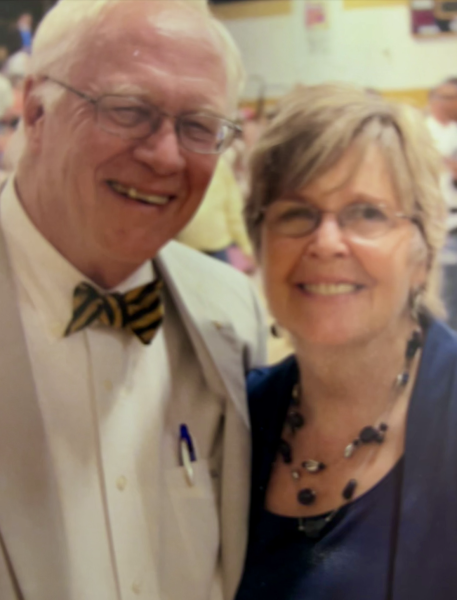
Bates and his wife, Molly, currently live in his hometown of Centerville, where he raised his two children and practiced law. Yet, to this day, he prides himself on being a Commodore. Regarding how he views his fellow Commodores, he shares a simple sentiment. “I wish you could look into my heart and see the pride and the love I have of being your brother,” Bates said.