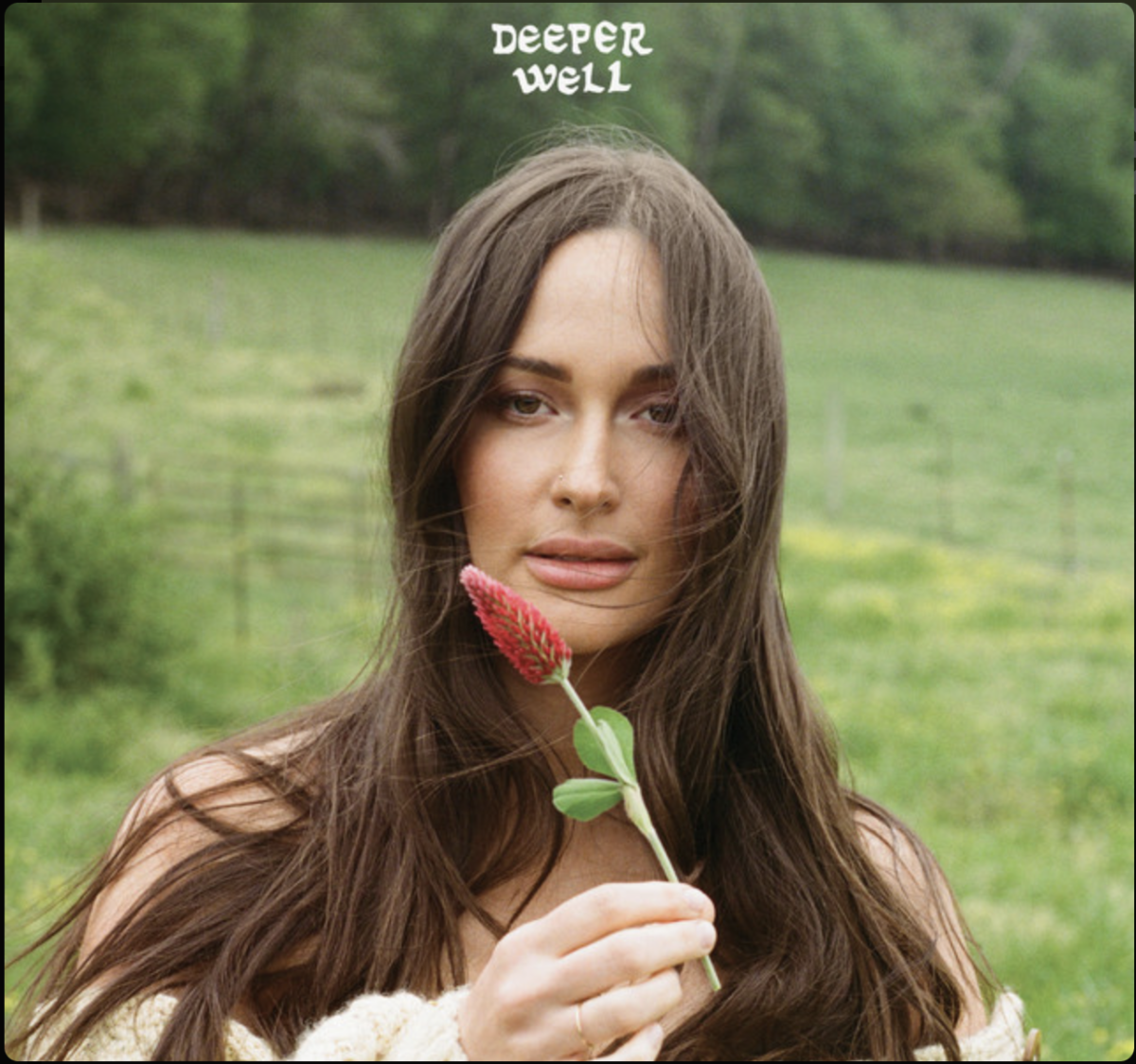


The Kacey Musgraves I first encountered was experiencing a whirlwind breakout sensation surrounding her 2018 album “Golden Hour,” which won Album of the Year at the CMA Awards, the ACM Awards and even the Grammy Awards, as well as being named one of the most influential albums of the 21st century. Since then, Musgraves has been divorced, released two albums and explored new corners of the country music genre in the spirit of “Golden Hour” — her two follow-up albums were oriented toward the pop and folk genres, respectively.
It is that spirit of creativity that has led me to fall in love with her expansive catalog of classic country hits and genre-bending experiments. It has also led to the May 1 release of “Middle of Nowhere,” her sixth studio album, which sees Musgraves looking back to the traditional country sound employed by her earlier releases, alongside musical elements ranging from Tejano music to surf music.
Thematically, “Middle of Nowhere” is about life in said place — whether that’s realistic or not. To Musgraves, the middle of nowhere represents somewhere to be lonesome, finding her own peace and getting better at being alone. But at its core, Musgraves’ return to form focuses on many more feelings, hidden beneath common Southern symbols like cowboys, coyotes and Texas.
“Middle of Nowhere”
As our journey begins, we start out “somewhere in the middle of nowhere” with the album’s title track. Musgraves uses this song as an introduction to this new location, which seemingly reflects the main themes of the album through concepts like a lack of cell service, no way of being fenced in and even no “reckless men who don’t know what they want,” suggesting this fictitious setting represents an isolation from romance.
“Dry Spell”
Musgraves changes directions and looks at her solitude in a different light on the album’s breakout hit, as she laments her dry spell of 335 days and being “lonely with a capital H.” The writing of “Dry Spell” is reminiscent of the quirky, yet clever lyricism utilized by Musgraves on her earlier outputs, with clear nods to the double entendres heard in songs like “Follow Your Arrow” and the laugh out loud comedic nature of others like “Biscuits.”
“Back On The Wagon”
After making light of her loneliness in humorous fashion, the feeling reverses as the journey continues with “Back On The Wagon,” a song about a romantic partner with alcoholic tendencies. The storyline changes alongside the relationship, as Musgraves sings about a variety of excuses used to defend her staying with her partner: being different than before, he’s changed this time around and, simply, being back on the wagon like the song’s title suggests.
“I Believe In Ghosts”
Musgraves moves into this surf rock-inspired song all about being romantically ghosted. Much like the joking nature implied by the song’s title, the singer talks about another Irish goodbye she experienced, but this time at an ironic time of the year: October. Musgraves unpacks the complicated feelings surrounding the impact of being ghosted, like her tears as a result of confusion and what to do with someone’s sweater after they seemingly disappeared off the face of the earth — or possibly just from her phone.
“Abilene”
Abilene is a real city in Texas, and Musgraves uses it as a setting for the story she paints of a woman who decided to leave her hometown without anyone knowing why or where she was headed. It centers around living in a small town, seemingly featuring thematic references to her song “This Town,” a song all about a small town and its tight-knit community. Musgraves closes the song by contemplating leaving Abilene herself but ultimately decides against it, saying she’ll never leave, a common trope of small-town life.
“Coyote”
Musgraves compares a coyote running down the highway with tears in its eyes to a past relationship, primarily because of the avoidant attachment style her former partner showcased throughout their relationship. Folk singer-songwriter Gregory Alan Isakov joins Musgraves in singing a handful of lines, likely representing the subject of the song and his hope of coming back into her life and trying again. Musgraves, however, doesn’t want to try again — she understands nothing is going to be different this time around.
“Loneliest Girl”
This song looks at the upsides of the prolonged loneliness Musgraves has experienced. She celebrates her ability to escape awkward conversations, another person’s drama and not losing any energy, all while presenting herself as “somebody who’s living the life.” Not only is this song incredibly relatable, but it’s well-crafted, reflective and carefree, easily becoming one of my early favorites.
“Everybody Wants To Be A Cowboy”
Accompanied by bluegrass guitarist Billy Strings, Musgraves sings about the recent trend surrounding the country lifestyle and its glamorization by people who she believes will never understand the true lifestyle of a cowboy or a cowgirl. While rhinestone, belt buckles and cowboy hats may be key accessories in today’s nightlife culture, especially on Broadway and other Nashville neighborhoods, Musgraves contrasts that connotation with the dirty and tiring aspects of being in a pair of boots.
“Horses and Divorces”
In a long-awaited duet with fellow country singer-songwriter and Texas native Miranda Lambert, the two sing back and forth about their past of saying things about and “s— talking” each other, but end up rekindling to discuss their similarities, including their shared love of riding horses and their past divorces. While many have compared this to Lorde and Charli xcx working it out on the remix, this isn’t a remix and the rivalry was far from one-sided, originating when Lambert recorded one of Musgraves’ earliest written songs, making this a highly anticipated collaboration that was well worth the wait.
“Uncertain, TX”
Country music legend Willie Nelson joins Musgraves for their second collaboration to sing about living in “the great state of confusion.” Musgraves and Nelson discuss the romantic partners who simply up and leave without warning, despite thinking they truly knew and loved them because of how small of a community they live in. Funny enough, Uncertain is a real town in Texas located near the state’s border with Louisiana, despite the name suggesting its fictitious state.
“Rhinestoned”
Musgraves evokes the pop country sound of 2018’s “Golden Hour” on this song all about a form of distraction from the pain of being recently heartbroken. While the object causing her and a possible new lover to get rhinestoned, as the title suggests, is unclear, it represents the feeling of finding something temporary to cling onto during hard times. It’s possible her new friend could be what makes her rhinestoned, or simply whatever brought them together.
“Mexico Honey”
Musgraves compares her lover to honey as she paints a picture of what seems to be the relationship she’s always wanted. After escaping from relationships with ghosting, alcoholic tendencies and being suddenly left, she finally gets her reward at long last. With instrumentation resembling Tejano music, “Mexico Honey” is part of this record’s celebration of Mexican culture and traditions, something she says has influenced the modern sound of country music.
“Hell On Me”
Musgraves continues her tradition of closing her albums on a melancholic note with a song all about looking back on a failed relationship. Here, the singer seems to analyze all the steps she took to change her relationship with a partner running from his demons amid her trying to be “[his] angel.” She initially places the blame on herself, but eventually recognizes that even though she has lost in a relationship once again, she cannot blame herself when she was the one experiencing the pain amongst the two of them.
All in all, “Middle of Nowhere” not only serves as an autopsy of a string of relationship failures and the choice to keep love at a distance as a result, but it also represents independence. Being in the middle of nowhere may feel stressful and confusing to many, as is sometimes described throughout this album, but it is also the place where you can feel truly free and live however you would like, which is the main hope Musgraves leaves you with as you disembark from your travels through Texas, Mexico and somewhere in the middle of nowhere.