


Perfection is incredibly difficult in college basketball. Still, head coach Mark Byington’s Commodores began their season flirting with it.
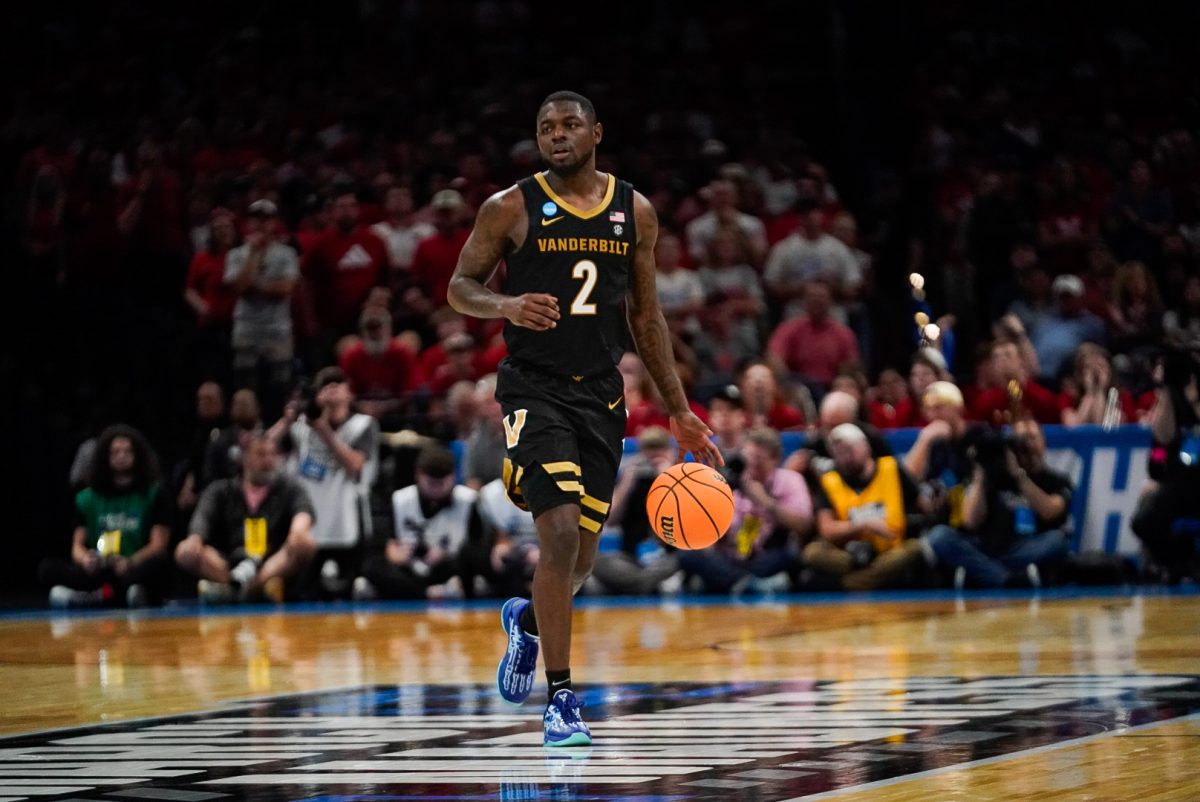
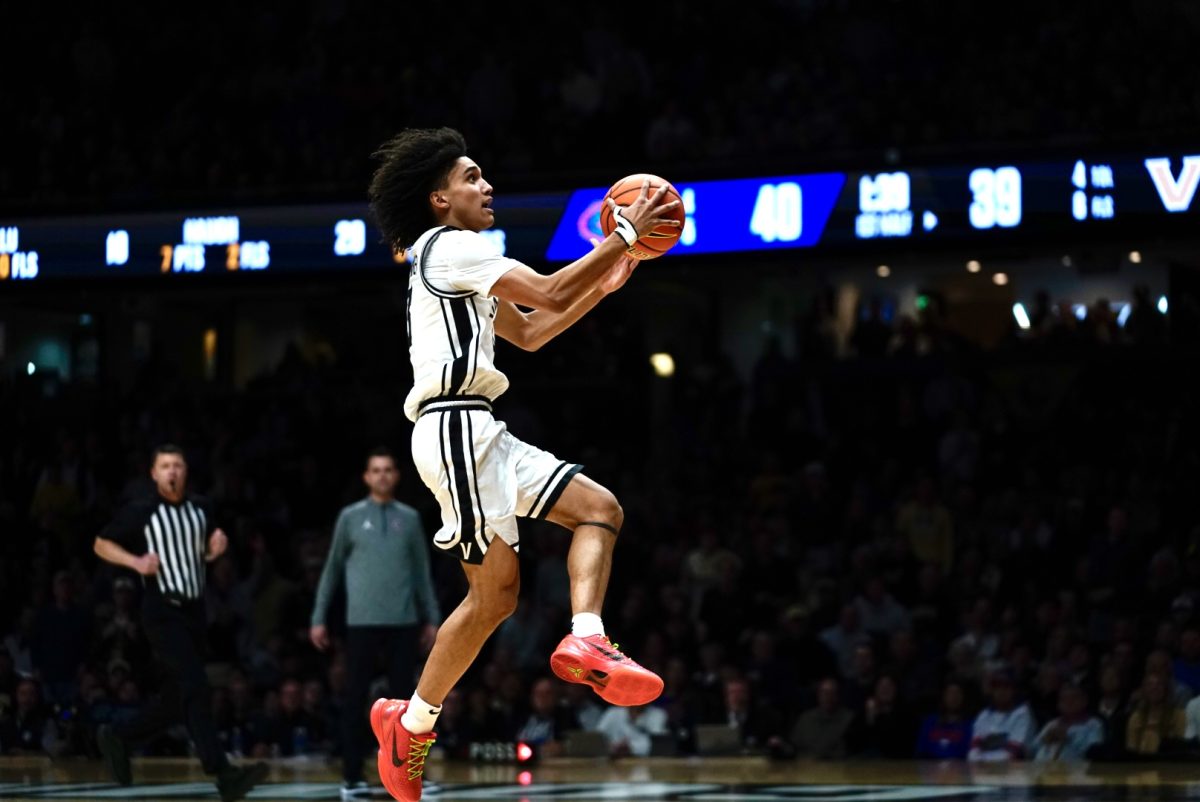
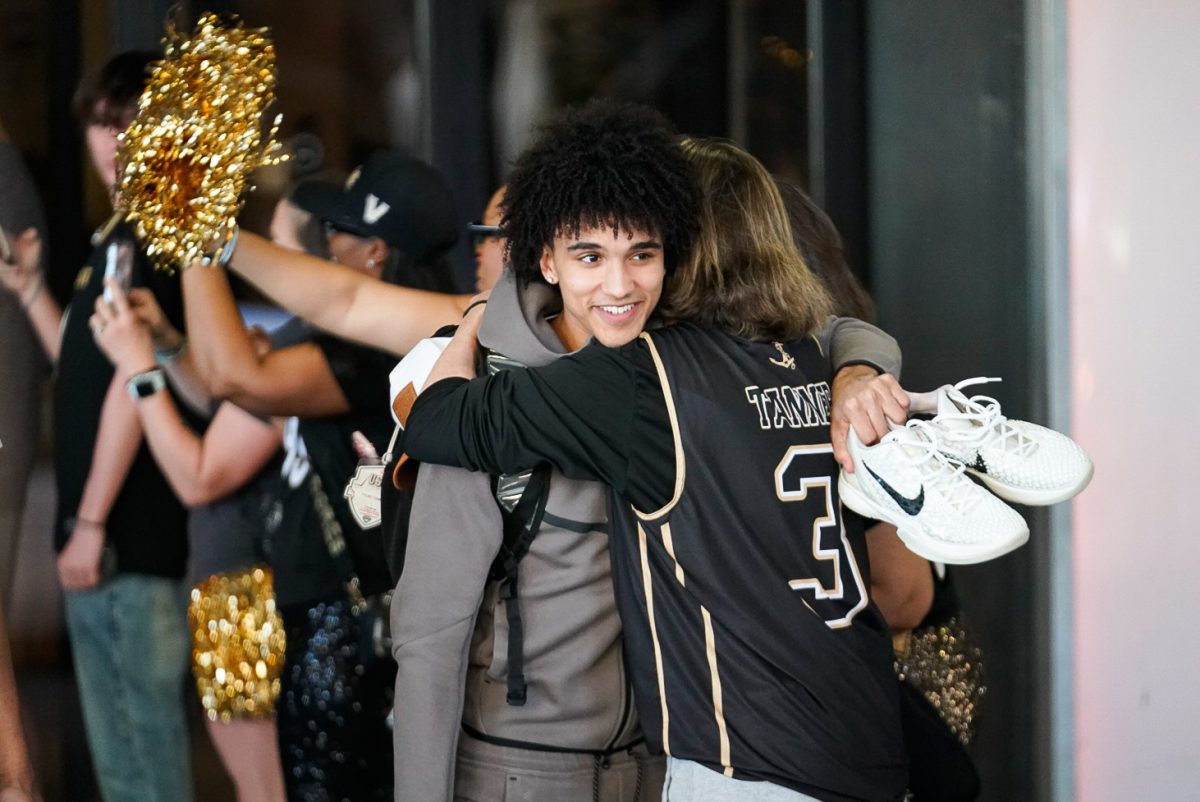
Vanderbilt opened the year with 16 straight wins, most notably defeating Alabama and LSU in front of a booming Memorial Gymnasium crowd. Sophomore guard Tyler Tanner delivered a string of dazzling performances during that stretch, earning both himself and the program national recognition.
It looked as though Byington’s Commodores were inching toward history until two weeks ago. Since then, they’ve strung together three consecutive uninspiring performances, marked by lackluster shooting and passive defense, giving way to a three-game losing streak. Vanderbilt fell on the road at Texas and Arkansas and suffered a home loss to Florida before recovering with a dominant victory over Mississippi State last Saturday.
Commodore Nation should not be rattled, though. The ’Dores are led by high-end talent and an experienced head coach, two stabilizing forces in the grind of SEC play. Their win against Mississippi State served as a gratifying response. The victory marked Vanderbilt’s largest margin in SEC play since 2022 and pushed the Commodores to 17-3 on the season. That record ties Vanderbilt’s third-best 20-game start in program history.
It is important, though, to dissect and diagnose the Commodores’ recent shortcomings, giving an analytical lens into upcoming high-stakes conference battles and the ensuing journey that March has in store for them.
Beaten to the ball
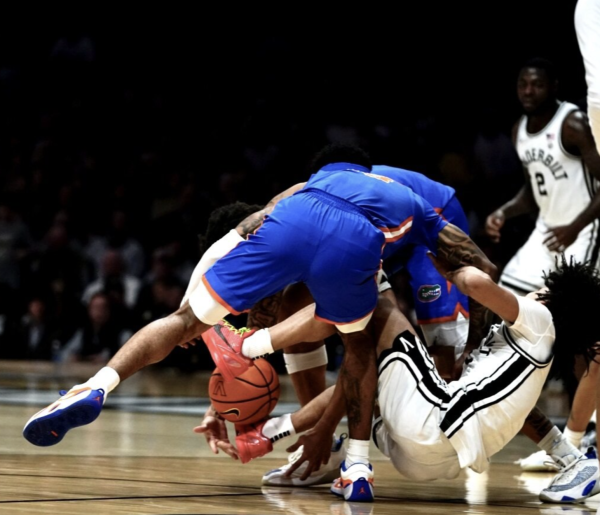
It would be neglectful to dismiss the serious height disadvantage the Commodores carry into most matchups. Vanderbilt’s starting lineup lacks significant size, with AK Okereke and Devin McGlockton both checking in at 6’7. Usually, the two forwards are physical enough in the paint to compensate for their inferior reach. That wasn’t the case last week, though. Vanderbilt was outrebounded by 14 against both Texas and Florida and by 12 against Arkansas. The trend finally reversed itself against Mississippi State, where the Commodores secured 36 rebounds to the Bulldogs’ 34.
A strong performance on the boards grants Vanderbilt a significant possession advantage. In each of its recent poor rebounding outings, the Commodores were also beaten decisively in second-chance points. Against Florida, Vanderbilt lost that battle 22-8. Against Texas, the margin was 10-4. Those gaps matter; large rebounding deficits create extra possessions and, more often than not, higher-quality scoring opportunities for opponents.
For a physical but undersized Vanderbilt team, avoiding domination on the glass is imperative. That task becomes more difficult when Okereke, McGlockton and sixth-man Jalen Washington are left to handle rebounding duties alone. When the Commodores secure a stop, guards Tanner and Duke Miles often leak out early to push tempo, occasionally neglecting to finish the possession. While Vanderbilt’s offense is nearly unstoppable in transition, rebounding must become a collective effort — one that secures possession first and denies it from opponents.
Cracks in the defensive foundation
Vanderbilt’s opposition has shot poorly this season. As of today, the Commodores’ opponents’ shooting percentage is 41.9%. In their three-game skid, Texas, Florida and Arkansas combined for a shooting percentage of just over 54%. Even with an inflated three-game stretch, the Commodores’ total opponent shooting percentage still ranks in the top seven in the SEC, proving how effective Byington’s defensive scheme can be.
Byington’s defensive scheme is a complex one. It’s built around a classic man-on-man defense, with quick guards like Tanner and Miles pressing aggressively. But Byington commonly incorporates zone and occasional presses, enticing teams to speed up and make rash mistakes. When done correctly, it allows for gaps in the offense, creating turnovers and leading to low-pressure breakaway moments and high-percentage shooting opportunities.
In theory, this scheme should be a consistent and reliable way to put constant pressure on very talented offenses. But a lot changes when Commodore players over-help in man-to-man defense. As Byington’s players crash and rotate onto the ball handlers, overeager commitments can lead to late rotations, leaving shooters uncovered on kick-out and swing passes. The resulting shots usually yield more frequent conversions, thus explaining the higher shooting percentage.
Byington must instill disciplined presence and controlled rotations with aggressive press. If the Commodores can stick to this, West End will see the strong Vanderbilt defense it is used to.
Flow dependent
The Commodores will always look to start hot. Vanderbilt’s most convincing wins have come when early defensive pressure sparks its fast break scoring. Byington loves to dictate pace, and his ’Dores are usually adamant about an intense and streaking rhythm. In its most recent matchup at Mississippi State, Byington’s squad started the game with a 22-4 lead in the first five minutes, building a 51-30 halftime advantage.
Byington’s system sharpens when the Commodores jump out in front. Tanner and Miles can quickly and freely press the ball. The tandem guards were instrumental in forcing 17 turnovers against Mississippi State on Saturday — Miles’ seven steals matched a record from 1998. With a hard-earned cushion on the scoreboard, Vanderbilt’s pressure can become a weapon, allowing the ’Dores to play the downhill basketball Byington wants.
The Commodores lose this identity when they start slowly. Playing from behind forces the Vanderbilt guards to dial back pressure and turn a proactive defense into reactive pressure. Without early momentum, Vanderbilt forfeits its ability to speed opponents up. The Commodores have struggled in slow-tempo, half-court games. They shot just 26.7% in the second half versus Texas, when the game slowed and possessions lengthened.
If the Commodores jump to a fast-paced start, they grant themselves a chance to dictate the pace for the game’s entirety, a trend that has benefited them immensely.
The Commodores look ahead to their matchup against Kentucky at Memorial Gymnasium hosted Tuesday, Jan. 27, at 8:00 pm CST.