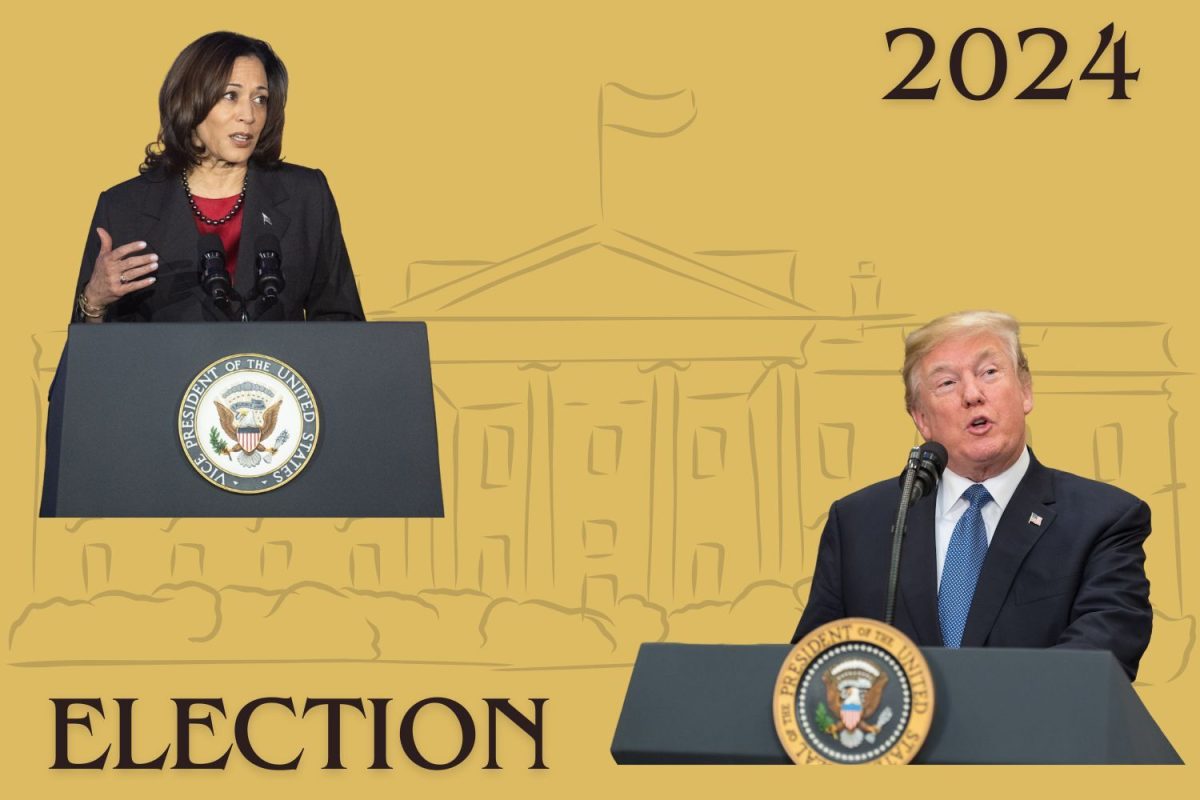
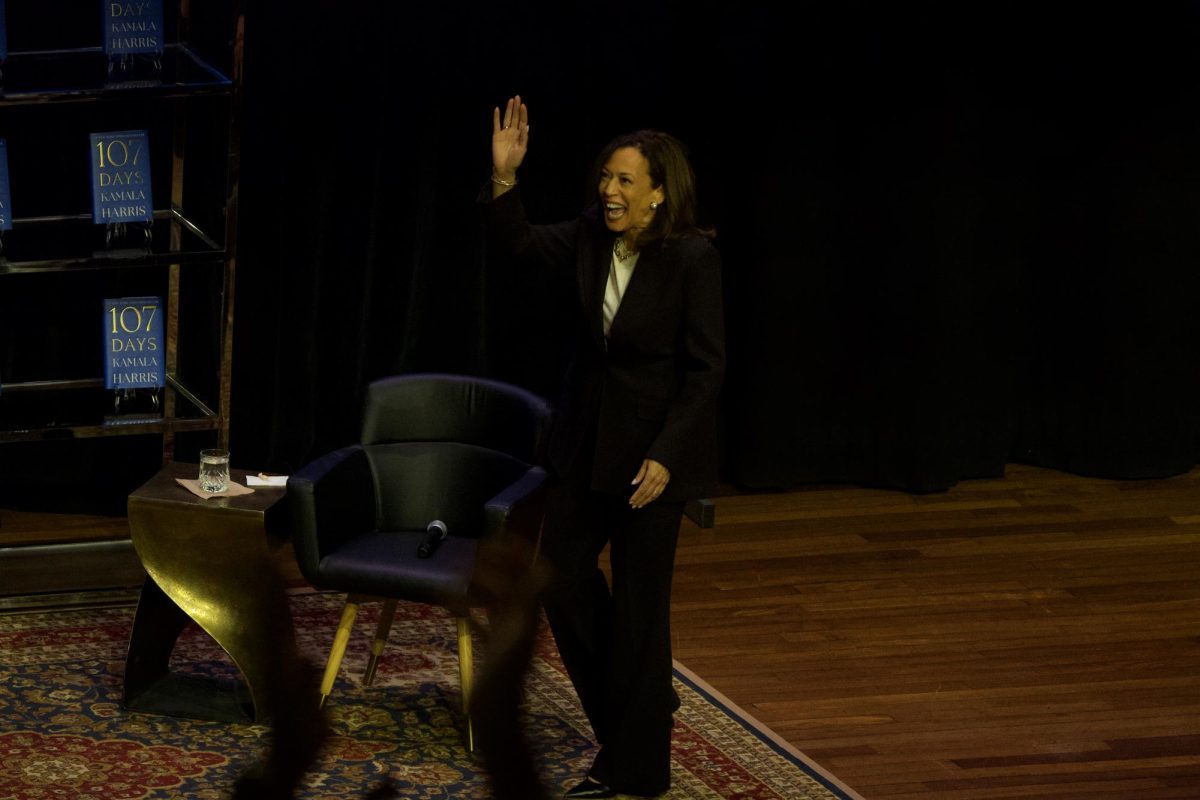


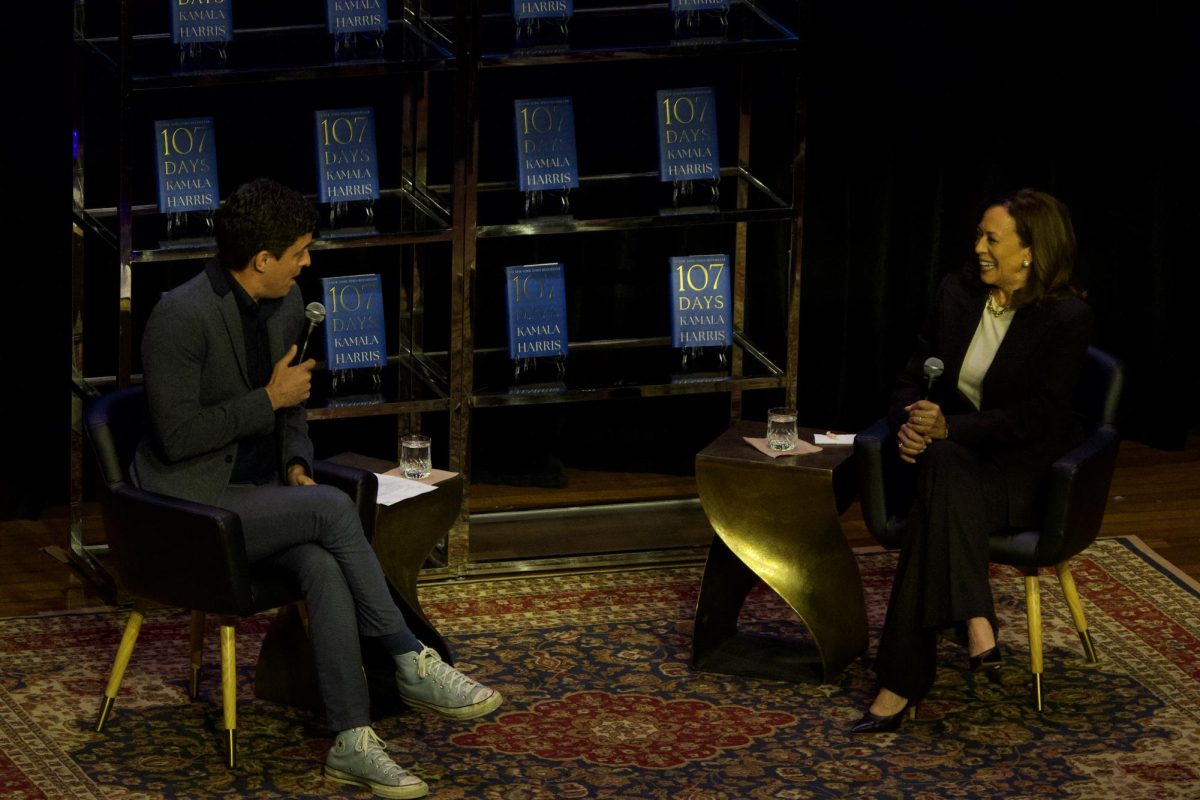
Former Vice President Kamala Harris visited Nashville, Tennessee, Nov. 18 while on her national book tour, drawing a full crowd to the historic Ryman Auditorium. The event combined a discussion of Harris’ new memoir “107 Days” with reflections on the 2024 presidential election and broader conversations about political polarization, misinformation and public trust.
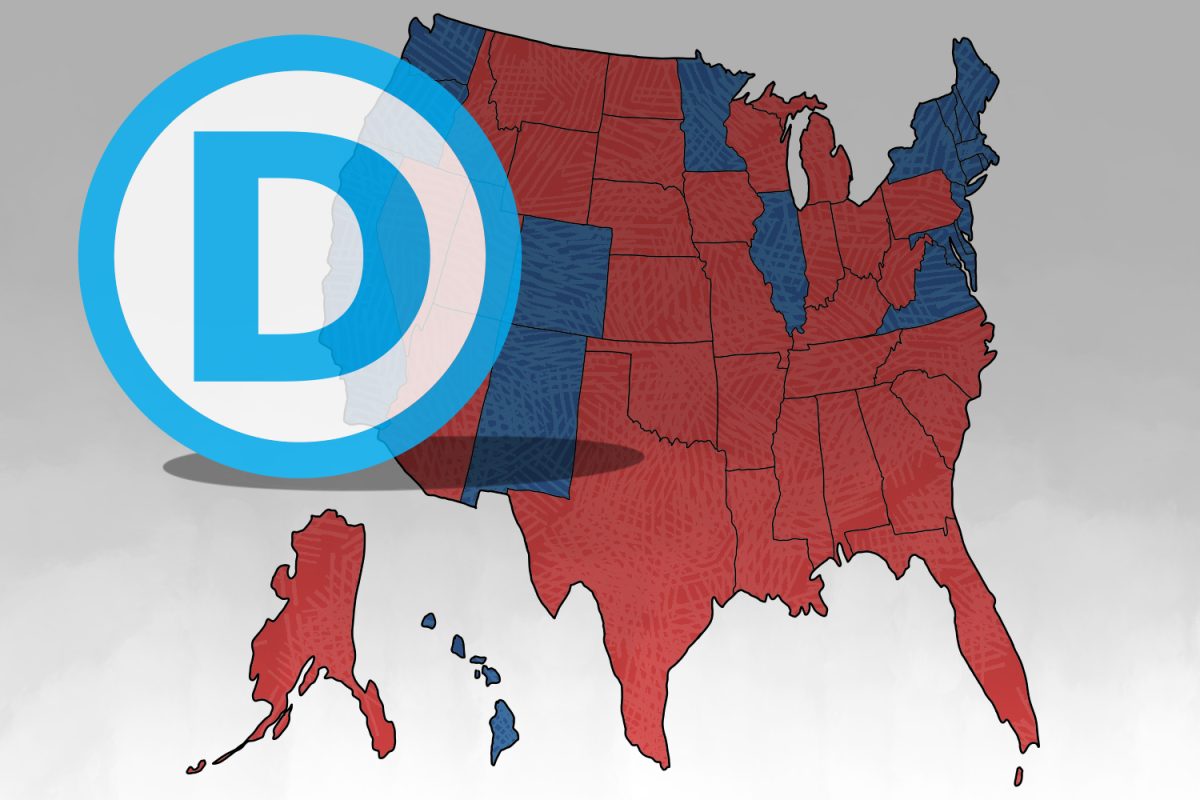
Lines for the event surrounded the auditorium before doors opened, which foreshadowed the amount of vocal support shown to the former vice president throughout the night, owing to Harris’ 60% vote share in Nashville during last year’s presidential election. Before Harris came to the stage, political commentator Tim Miller, the event’s moderator, spoke to the audience, and a video montage about Harris’ career played.
Following the video, the former vice president arrived on stage, as Victoria Monét’s “On My Mama” played. Harris and Miller began their conversation by discussing important news of the day. Harris discussed her disappointment with President Donald Trump’s meeting with a Saudi crown prince accused of reportedly approving the murder of an American journalist in 2018, as well as congressional proceedings surrounding files related to convicted sex offender Jeffrey Epstein and the resulting fallout between Trump and Rep. Marjorie Taylor Greene, whom Harris praised for standing up for victims of sexual assault.
“This is just a Marjorie Taylor Greene love fest,” Miller said. “Did you guys know you were signing up for that?”
Harris later spoke about the upcoming Dec. 2 special election for the United States House of Representatives in Tennessee’s 7th Congressional District — in which Vanderbilt is located — which has gained national momentum in recent weeks due to polls projecting a close race. Before her stop at the Ryman, Harris spent the day visiting the campuses of Fisk University and Tennessee State University, as well as campaigning with members of the Tennessee Democratic Party in support of state Rep. Aftyn Behn, the Democratic nominee in the special election. Harris emphasized the importance of this race when it comes to the Democratic response to the Trump administration.
“Who was fighting for affordable healthcare, so that premiums weren’t jacked up? The contrast is clear,” Harris said. “That’s why the special election here in two weeks will matter, that’s why the midterms will matter.”
Harris later reflected on what she described as the “107 days” she spent intensely focused on the final stretch of the 2024 campaign. She said she became acutely aware of the stakes during that period, praying each day that she was doing everything she could to meet the moment. When the election result became clear, Harris said she felt a profound sense of loss, comparing the experience to losing her mother and grieving for “everyone who would be harmed” by the outcome.
Harris described election night as one of the most difficult chapters to write in her book. She recalled repeating “my God, my God, my God” as she processed what the coming years might mean for the country. She also revisited the memory of Jan. 6, 2021, when she was evacuated from the U.S. Capitol during the certification of the 2020 election. Returning to that moment, she said, helped her shape the emotional throughline of her memoir — how shock and anger can eventually give way to purpose.
That sense of purpose, she explained, did not arrive immediately. Following the 2024 loss, Harris said she needed to take a moment before deciding how to reengage. What sustained her, she told the audience, was the idea that the fight is “for something, not against.” She encouraged listeners not to retreat from civic life or wait passively for crises to pass. Harris noted that meaningful work requires continued participation, even during discouraging political seasons.
“You can’t say ‘wake me up when it’s over,’” Harris said.
When asked about her time as vice president, Harris reflected on the challenge of supporting a president’s agenda while still offering candid internal advice. She emphasized that the role required honesty, even when perspectives differed.
“There has to be confidence in those conversations, including when there are disagreements,” Harris said. “Because we want that the president of the United States, whoever she may be…” — a line that drew one of the strongest audience reactions of the night, prompting loud applause and a standing ovation.
Harris added that serving as vice president was the first time she had ever been “number two” in a job, and that the experience showed how trust inside an administration shapes its work.
Much of the event centered on community-based resilience. Harris spoke about affordability concerns she heard from Americans during the campaign, especially working families and caregivers, and said those conversations shaped her understanding of what voters were experiencing far beyond political headlines. She emphasized that the decline in support among working-class voters had been developing “for a decade,” but that the momentum she saw in the 107 days suggested people were still looking for leaders who listened closely and responded clearly.
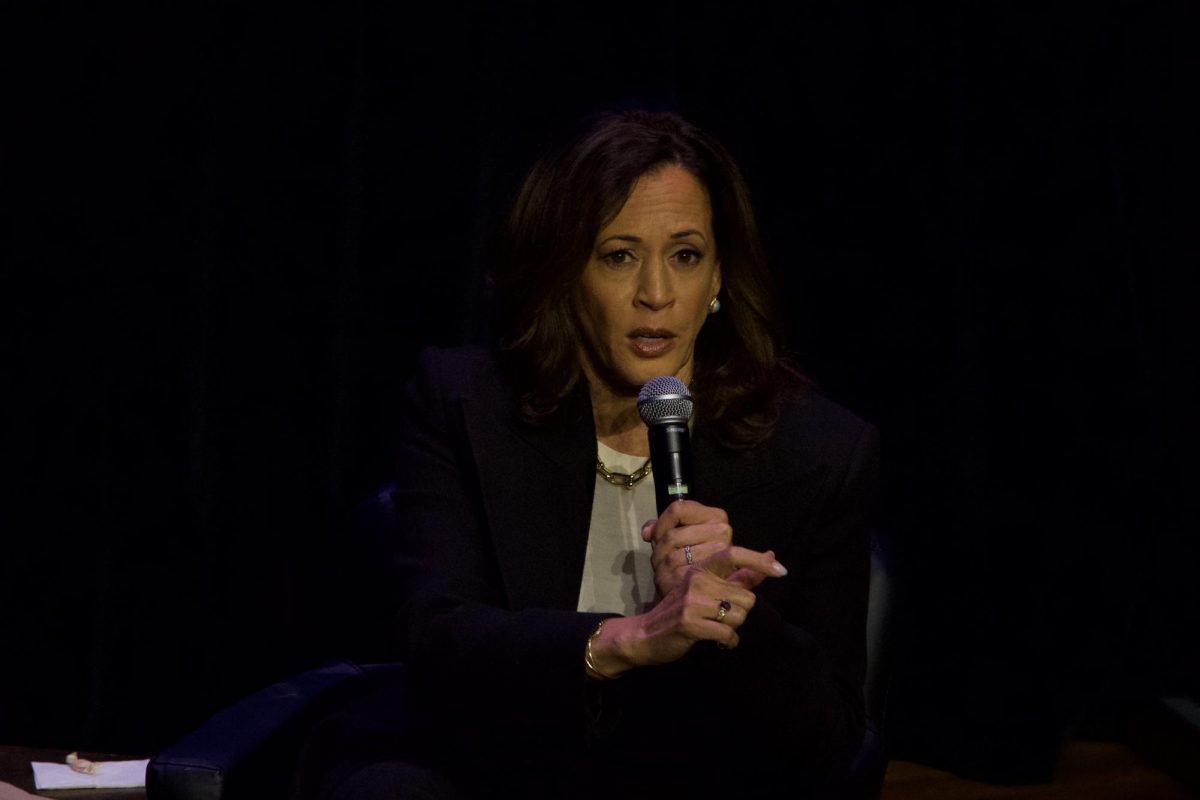
Following questions from Miller, Harris received a handful of audience questions. She responded to questions about engaging young and Democratic voters in the South, the different atmosphere Generation Z is expected to experience in comparison to previous generations and the results of the 2025 election cycle.
During their discussion of the recent election cycle, Miller asked Harris about her personal opinion of New York City mayor-elect Zohran Mamdani, whom the audience showed their support for, despite him not being present. While she did not discuss specific policies, she spoke about the effect his campaign had on everyday New Yorkers and Americans living outside of the New York metropolitan area.
“He energized people and he brought people in, and I think that’s good for democracy,” Harris said. “Somebody asked me if I’m scared of him and I was like, ‘No.’”
She continued by talking about the election results across the country where Democratic candidates won. She cited victories by Virginia Governor-elect Abigail Spanberger, New Jersey Governor-elect Mikie Sherrill and in statewide races in Georgia and Mississippi as signs of change across the country.
Before she left the stage, Miller asked Harris a question from an employee for an international aid company, who was experiencing another round of layoffs amid a freeze in federal funding and hiring. While Harris spoke directly to the employee in the audience, she presented a larger scale message instead to close out the evening.
“We have the power. It is our country, and we have the power. We will not allow our spirit to be defeated,” Harris said. “We are strong, we love our country, we care about community and we love the South!”