

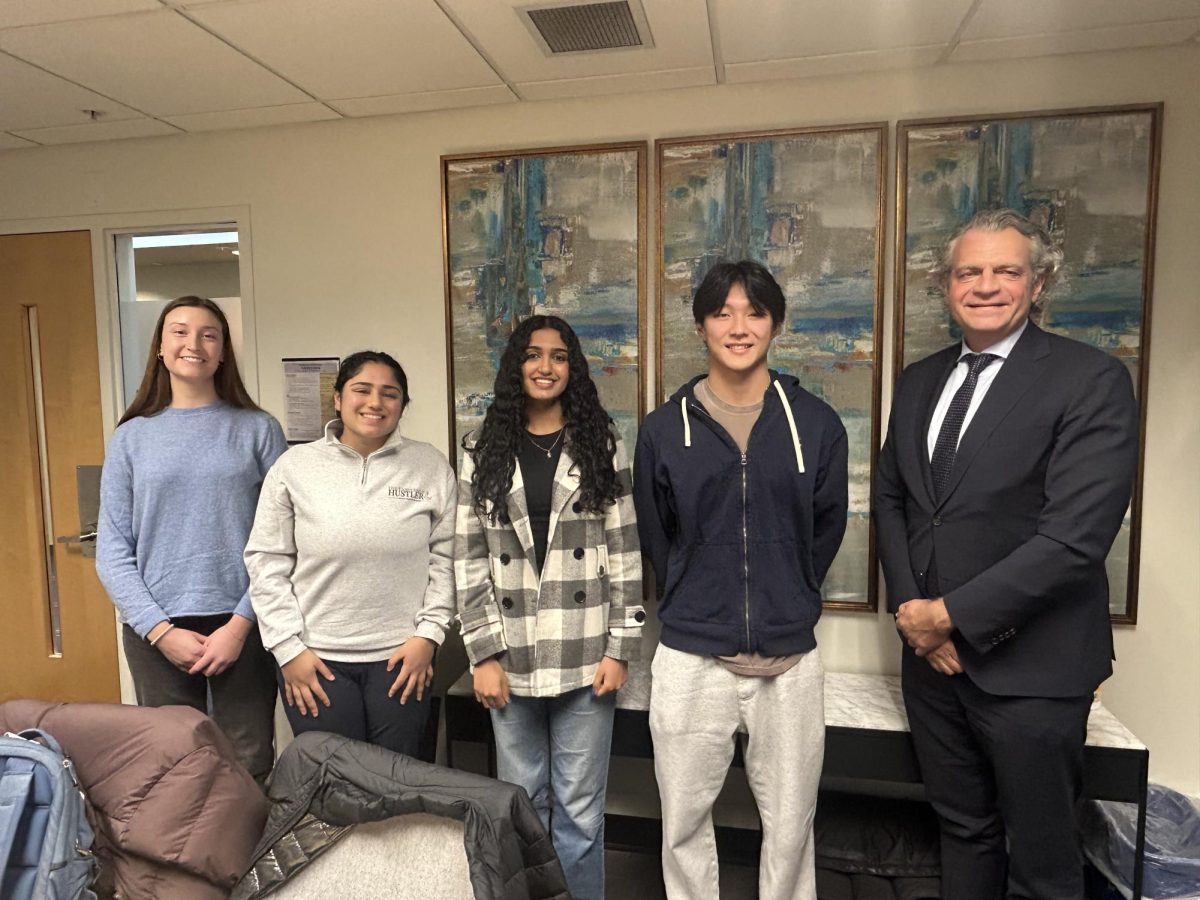
The Hustler spoke with Chancellor Daniel Diermeier for the first debrief of the 2025-26 school year. He discussed the role of the federal government in higher education, free speech on college campuses, campus safety and what the various campus expansions will look like.
He also shared his thoughts on Vanderbilt’s athletic success, investments and teams and his opinions on Vanderbilt’s academic rankings.
Federal government and higher education
The Hustler: President Donald Trump sent letters to nine universities, including Vanderbilt, asking them to sign a “Compact for Academic Excellence in Higher Education.” Does Vanderbilt plan to sign this compact?
Diermeier: We’re reviewing the document right now.
What factors are you considering in your decision?
That’s all I’m going to say.
Do you have any thoughts on what role the federal government should play in higher education?
That’s a big question. The federal government plays an enormously important role in support both for students in terms of financial aid — Pell grants and so forth — and then with respect to research funding, where it has been for decades the main source of funding basic research in this country. This has been enormously successful. For the American public, about every dollar invested by their federal government in research has yielded about $5 in social benefits, so it has been a wonderful thing, very important, hugely important for the innovation economy of the United States. So many innovations have come out of the research that has been conducted by the country’s great research universities. Overall, I think this has been a very, very positive thing to do for the U.S. government.
The federal government shut down on Wednesday. How will this shutdown impact students and faculty, and what is the university doing to provide resources to those who need them?
We don’t expect the short-term impact to be material on higher education, and we have a whole variety of contingency plans in place. So, we don’t think that this is going to have an effect on the university in the short run. If this runs very long, like months, that’s a different conversation. But at this point, I think we’re in good shape.
Campus safety and free speech
Following the assassination of Charlie Kirk on a college campus, students and professors have expressed concerns regarding safety and freedom of speech at Vanderbilt and other colleges. What steps is Vanderbilt taking to ensure the safety of its students as they participate in free expression on campus?
Safety of students and faculty and staff, of course, is a primary priority for us. What we do regularly is review our safety and security processes on campus, and we’ve done this again. We have worked with Vanderbilt University Public Safety to make sure that we’re enhancing our presence and so forth. We think we’re in good shape there.
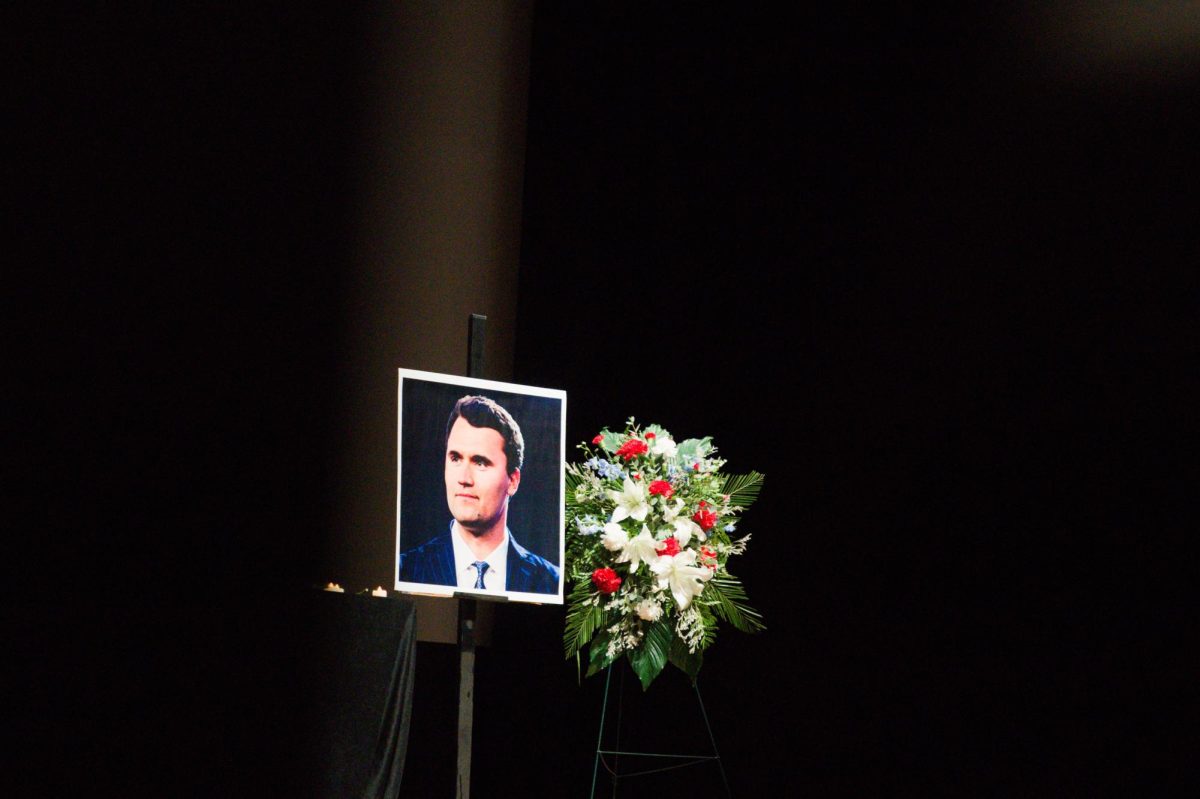
The second question that you had was about free expression. I have to say that I thought that our campus community reacted very positively. I was very proud of how our students responded to that. Many of you will know that our College Democrats and College Republicans issued a joint statement where they were condemning the horrible killing of Charlie Kirk and reaffirming their commitment to free speech and civil discourse. I think that’s exactly the right response, and I think I’m glad to see that the College Democrats and Republicans came together. Then, there was a vigil, and many students participated. I think overall, our university community has responded very well.
Faculty at universities across the country, including universities here in Tennessee, have faced termination and suspension for negative comments made about Charlie Kirk following his death. What do you see as Vanderbilt’s role in holding faculty members accountable for comments they make, both in person and online, while also balancing the university’s commitment to free expression?
We haven’t had any terminations. The important part is that whenever you have issues like this, you have to look at them, not only from the point of view of free expression, but also from the point of view of academic freedom. That’s especially true when faculty are commenting on issues of the day within their particular area of expertise. If there is an issue that is raised to the level of a violation of either the faculty handbook or any other university policy, we would be addressing that, and then there would be a process that we would go through. That hasn’t been the case. So, from our point of view, we think we have good processes in place if there’s a potential issue that arises. But we didn’t see the need to take any action in this particular instance.
Campus expansion and construction
The demolition of Branscomb Quad recently resumed after it was delayed to remove asbestos. Can you share any specifics about the new residential colleges that will be built in its place?
So, we went through that process. Whenever you do that, you do an inspection that sees whether there are any kind of residual problems. We found a small amount of asbestos that was removed right away. There was never any concern for anybody. That’s a standard procedure.
What will happen there is that we will build another set of residential colleges. They’re going to be a little different but fundamentally similar to what we did on West End Avenue. They’ll be enhancing the residential college experience for all our students. That really has been the goal for the residential colleges. Of course, we have that for our freshmen on campus at the Martha Rivers Ingram Commons area close to Peabody. We love the idea of residential colleges for our sophomores and juniors, but we did not have enough capacity to do this for everybody. Our goal is that this investment in the central campus residential colleges will allow every one of our students to be participating in the residential college experience fully.
Are there still plans for a senior commons area of campus?
We really have shelved that. Our sense has been that — we have had lots of discussions with students on that — many students like to live off campus in their senior year. Some want to live on campus. Some want to live off campus, but the senior year is a transition. It’s really like, in some sense, people have one foot on campus and one foot off campus. They love their campus life and love their campus experience, but they’re looking to the next stage in their life. So, we thought very hard about the senior commons, but our sense at this point is that we have shelved that. So, unless anything dramatic changes, we will not engage in a senior commons.
Discussions about Highland Quad demolition were also put on hold for a while. Has there been any change with that?
No. The original idea was to have the residential colleges that are now being built in the Central Neighborhood on Highland Quad. So that was original. That was the original thought. And then there were all sorts of things that that we had to consider. One of the challenges with these large building projects is they have kind of a domino effect. If you’re doing something there, now you have to worry about the other piece and so forth. When we did the Highland Quad project, we also thought about the future of science buildings, for example, on campus. That needed to be considered in conjunction.
At the end of the day, we decided that Highland court is not a good location, not the best location for residential colleges. Residential colleges are better located in the central neighborhood. They’re closer to the other residential colleges, and they almost build a ring around Alumni Lawn, if you will. There is a really beautiful way to think about the student community at the core of the campus.
We also then decided to basically create a new Stevenson Center 6 science building. At that point, that meant we didn’t have to do anything at Highland Quad. So, Highland Quad was basically put aside in terms of, like, what our plans are there because right now we can do both the science building and the Central Neighborhood residential colleges in these locations. We think that’s much better, and it preserves the ability to do something with Highland Quad in the future, if we so choose.
Plans were also announced this summer to build a new innovation district on the west side of campus. What exactly will this campus expansion entail?
We’re committed to being a partner in helping develop the innovation economy in Nashville, and our first step toward that was to create the Nashville Innovation Alliance, which we did together with the mayor. We also helped in creating the Greater Nashville Venture Capital Association. And we now also believe that we need to have some space where innovation can happen. This is an important part of many communities that are really thriving on innovation, is that you need to have a core location and creation space. Now we have things on campus, the Wond’ry of course. But once people develop companies, or you want to have larger companies, when you have the research facilities close by, it’s very good to have a location for that.
What we are managing there is really a living-innovation neighborhood. We don’t want it to be like an innovation park, where you drive back and forth, but we are really conceptualizing this as a neighborhood, so that there is hospitality, restaurants, cafes, places to live for people, parks and auto facilities. That’s a pretty substantial project, and we have done initial plans. We’re having discussions with the community at this point, and we hope to move this forward. So far, the discussions are going very well, and then we will start developing this. This is a multi-year process. It’s a pretty significant project, but we’re excited about it, and we’re excited to be an important partner for the city, in further advancing innovation and the economy.
Is the land that will be used for this expansion land Vanderbilt already owns adjacent to campus?
We own a lot of land there. For the first phase of the project, we own all the land. We may want to do a little bit more down the line. That’s to be decided, but we’re from a land point of view, we’re going to be okay, at least for phase one.
For businesses currently leasing land from Vanderbilt in that area, is the plan to have discussions with them about relocating their businesses?
It’s more like attracting new businesses. For example, we had Nissha Medical Technologies, which is a subsidiary, subsidiary of Nissha, a Japanese company. We just announced last week that they would relocate their R&D facilities right on what used to be called the Stadium Club, which is on top of the parking garage. So that’s the first example that we have where corporate partners are interested in being located next to the university. And the reason why, of course, is because they want to be close to the faculty and the students, which is really the history of this whole plan and this whole relocation. We were very happy to see this before we even got started, but now, of course, the availability of space gets limited because the whole thing hasn’t been developed yet. But this is really not so much about relocating people. This is really about attracting companies and startups that may come up from students and faculty that would then be relocated there.
How will you be attracting these new companies?
There’s a huge process on that. The first thing, of course, is the research strength and the innovation that’s happening there. I’ll give you one example: the whole history of how Nissha relocated. We have leading faculty members here. One of them is Bob Webster. They created a company that’s in the area of advanced surgery reporting, EndoTheia. They had Nissha invested in that. They love the relationship, and they say, “Hey, we love this so much we want to be close to it.” It’s almost always going to be something where we can make a case to a company for why being located in Nashville and close to Vanderbilt is the best thing for them. That will always be true if we have particular strength in an area that makes it advantageous for the company to be co-located.
We haven’t done this systematically, but other communities have done this very successfully. Kendall Square in Cambridge is probably the biggest example of that, where there’s a lot of biomedical companies which are which are very close to MIT, and Harvard is thinking about building something like that in the Allston area. We were delighted to have a new vice chancellor for real estate, Carl Rodrigues, who oversaw the Harvard effort and is now working for us and overseeing everything that’s real estate and facilities related.
Moving on to Vanderbilt expanding around the country, let’s talk about the plans for campuses in New York, West Palm Beach and San Francisco. Students were sent a survey about the possibility of a study-away program at the New York campus. Assuming everything gets approved from the correct officials in New York, what sort of programming can students expect?
You really want to think about this as intended for upperclassmen: seniors and juniors. We are still finalizing the programming and exactly what courses would be offered there, but you want to think about this as kind of a study-away program that focuses on experiential learning and internships. So, there would be residential facilities on campus, and the campus itself looks like a piece of Vanderbilt’s campus moved right in North Chelsea. It’s a neo-Gothic, beautiful set of buildings with a lovely refectory, a beautiful chapel and beautiful trees. It’s an amazing place.
This would be particularly intended for students that are thinking about a career in an area that New York is particularly strong in. You can imagine somebody who wants to have a career in the media, digital economy, art history or policy, and we will structure the curriculum around the possibilities, terms and interest. It takes full advantage of the assets that New York has to offer. For example, students that are interested in a career in the arts world could collaborate with galleries and the Whitney Museum in Chelsea because they’re right next door. That is something that is very difficult to replicate right here in Nashville because the New York art scene is the best in the world. Then you pair this with coursework that will support that. We still need to finalize these plans, but that’s the idea.
Will that campus be used solely for study away, or will there be any full-time students there?
No full-time (4-year) students there. During the semester of study away, they will be full time students earning academic credits. You want to think about this, and also Florida, as study away. The idea is that undergraduates start here [in Nashville]. We have freshmen Commons, then the residential colleges for year two and year three. Then in year four, many of the students will stay in Nashville. They may be interested in the opportunities in Nashville. Let’s say you’re interested in healthcare or healthcare management; Nashville’s a great place to be. Or you may say, ‘I want to spend a semester in New York because I’m interested in the media industry.’ Or you may want to spend a semester in West Palm Beach because you’re interested in FinTech. That’s how we’re thinking about it, and I think it honors the reality of students in the fourth year exploring different options. It allows them to advance their career goals now in a place that is a new experience. And some students might start their career exploration in their junior year.
We also hope to have a Master of Science in Business and Technology (pending regulatory approvals), which would be a joint offering between Engineering and the Owen School of Management.
Is the same true for the San Francisco campus?
We’re not there yet. It’s super, super early. We just really started conversations there. We’ve had great conversations with the mayor and his team in San Francisco, so we’re super early on that. What was super attractive about San Francisco is the presence of AI. Over half of the global investment in AI is taking place in San Francisco, so that’s an interesting space for us. But this is way too early to think about exactly what the programming offerings will end up being and whether this is going to be a reality. This is much, much earlier on and we are much, much further along in New York, and also in West Palm Beach, than we are in San Francisco.
Will West Palm Beach just be for graduates or also undergraduates?
It will have residential faculty and a considerable graduate student population, mostly in the areas of business, AI, the College of Connected Computing and probably some areas in engineering as well. But if you have an interest in these areas, you can spend time as an undergraduate in your fourth year there and participate in the classes there. So, the only difference is, in New York we’re not envisioning having permanent residential faculty there because the campus and what we’re trying to do in New York is too small for them—only a few faculty can live there. We would envision that faculty would stay there for a semester or for a year. In West Palm Beach we do want to have permanent faculty there that relocated there and then there would be a graduate program that would be structured around that. But again, undergraduates will have the opportunity to spend a year or a semester in West Palm Beach.
When’s the earliest students can expect to start participating in programs at these satellite campuses?
New York depends on the regulatory process. We hope the fall of 2026 would be the beginning. West Palm Beach is more complicated because we need to build something there. We have the land already, and the regulatory approval is effectively done, so you can basically say that once we have the money raised, it is plus two years. That’s what takes a bit longer because we don’t have existing facilities.
Will all new faculty be hired for each campus, or will current professors in Nashville be incentivized to move and teach?
In New York, we don’t envision permanent faculty, or a very small number. In West Palm Beach, mostly new faculty. It’s entirely possible that some people would want to say, ‘Hey, I have this particular research area. I want to relocate there.’ But then we would backfill this with new hires on the Nashville campus. This is really kind of a dare to grow strategy, and we really want to grow. We think that this would be advantageous, particularly for the business group, but also for in areas, for example, of computer science or engineering, where we traditionally have not been able to build strength.
Will any professors be required to split their time between Nashville and another campus?
I don’t think that we would require that. I think naturally what you would see is that some people may want to visit. People feel they’re part of one community, and it’s very conceivable that people say, ‘Hey, my home base, so to say, is here, but I’d love to spend time in New York, in Nashville, West Palm Beach. I think that’s the way it’s gonna go.
You’ve stated in the past that Vanderbilt has outgrown its initial vision to be the great university of the South and now wants to be the great university of the 21st century. Vanderbilt also values its Nashville roots and prides itself in being part of the Music City culture. Do you see any concern about Vanderbilt’s brand experiencing dilution as we expand across the country and are no longer just a Nashville hub?
Our home in Nashville will be our home in Nashville; that’s not going to change. If you’re an undergraduate, for example, you would spend the first three years in Nashville on this beautiful campus. You would have the undergraduate experience you’ve always had, and you can do this for your time here. You don’t have to go [to a study-away campus]. It’s additive, right? It’s not taking anything away. It adds news opportunities for family and for students.
What is really critical is that the location in Nashville is an important part of who we are, but so is our culture, and so is the community of students and scholars that we have. One thing we need to be mindful of is how do we maintain that community? And that’s one reason for why we are thinking about this primarily for seniors, but juniors can apply too. Seniors, as I mentioned before, are already at a part of their lives where they’re thinking about other opportunities, where they think about opportunities beyond college. Maybe what you do is you do a fall semester in New York or West Palm Beach and spend a spring semester here.
I think that’s pretty seamless. After a few years, it will just feel like a part of one place. It’s like having multiple homes. You’re not thinking about this as foreign. You’re thinking about this as part of your life, as part of your experience. I think that’s going to be just fine. I think all that is, is it will make this an even more attractive destination for the most promising students.
Are there other universities who have similar programs to this that you look to as a model, or is Vanderbilt a trailblazer in this regard?
What we’re doing is we’re pioneers. There are three examples that have some similarities. One of them was NYU’s global campuses in Shanghai and in Abu Dhabi. That’s a different model. Of course, global campuses is another conversation, and the way that was structured had a very, very different structure, a different purpose from what we’re trying to do. Cornell built a smaller campus in Roosevelt Island in New York City. That took a long time, and is not, at least to me, exactly clear how that’s going to shape out. So that’s still in process, if you will. Northeastern has a couple of different campuses across the country, but they have a very different model for the undergraduate education, which is based on the co-op program, and then students can start there and so forth. They’re all different models.
It’s very, very important that when you do something like this, you are clear about your strategic intent, why are you doing it, and why does it help to enhance the undergraduate experience. That’s what we’re trying to do. We’re not trying to go for growth’s sake. We’re not trying to have 100,000 students. We’re trying to make the undergraduate experience and the ability for students even better. We want to be able to play a role, and we want to enhance our research excellence in areas that are really important for the future and where being in a location where there is a particular local ecosystem that has these advantages will be much more conducive in realizing that vision.
Does the university plan on pursuing more campuses across the country?
We’re certainly evaluating it. We don’t have any firm plans or anything like that yet, but we are certainly evaluating other options.
Vanderbilt athletics
With the recent success of Vanderbilt Football, Men’s and Women’s Basketball this prior year and Baseball, how does that shift the narrative that Vanderbilt is not solely an academic school?
I think that we’ve always prided ourselves on athletics. We are, after all, in the best conference in the country. Our student-athletes have competed there for a long time. I think when we made the decision to invest in athletics for the Vandy United campaign, which started four-and-a-half years ago, we made that decision because we said we wanted to compete in athletics at the highest level. We want to be a school that’s competing in academics and that’s competing in athletics. That required investments that made sure that the stadium enhanced the fan experience and that our student athletes had an environment where they could succeed, and we’ve done that. We’ve done that with the support of a tremendous amount of our alumni and fans showing up to games and by supporting us financially. Now, we have a great stadium. The north end zone and the south end zone are spectacular. We have hired the right coaches, and I think we hired the right athletic director Candice Lee. We have great coaches, and they’re showing success now because they’re great people, and they know what they’re doing. We provide an environment where they can succeed.
We are having a phenomenal year in football, of course, and we had a great year last year. We had a very good year in basketball for men and women. We had a very good year in baseball, where we won the SEC. We have a very strong golf team. Track and field is much better. We tend to focus on one sport, but we’re good now across the board. I think that’s the result of committing to athletics. Like what I said five years ago, athletics is as much part of Vanderbilt as the law school or Blair, and so that’s how we have to treat it. We cannot attract the best faculty in biomedical engineering if we don’t provide labs where they can do their best work; we cannot expect to be competitive in the SEC and basketball if we don’t have training facilities that are appropriate. That’s the mindset. We sometimes say we want to compete with Harvard Monday to Friday and Alabama Saturday. And we did pretty well with Alabama last year. So, we’ll see how everything goes, but what I mean by that is excellence in everything we do. That’s the aspiration that we should have.
How else, besides Vandy United, is the university planning to invest in athletics in the future?
Well, Vandy United is really largely for facilities. So, that’s buildings, and we’re building a tennis center over there as well, you’ve probably seen that. We want to do something in Hawkins Field. I think that’s the main thing right now. We may still do a little bit more, but we’re not sure at this point. We’re just happy where things are going.
I think the next thing for us is to is to make sure we’re successful in the new world of college athletics. And the new world of college athletics is very different than the world was three years ago. We had this kind of wild west of NIL and the transfer portal. Now we have a settlement in place, a structure in place, that we are committed to with our colleagues in the SEC and the other power conferences to make work, which allows some revenue share to go to student-athletes, and which gives student-athletes the opportunity to participate in approved, legitimate third-party NIL activities. That changes the playing field. So, that is a different set of rules, and under a different set of rules, you have to adapt, and you have to think differently. So we did. One way to respond to that is we brought in a new executive, his name is Markus Schreyer. He’s the CEO of Vanderbilt Enterprises, which has one focus on athletics, but goes beyond that to hospitality, better fan experience, better licensing deals, better merchandising, all these type of things that we need to improve at this point. So that’s the way we’re thinking about it.
The women’s volleyball team was recently brought back this year, and they’ve been doing well so far. Are there plans to bring back any other discontinued sports, like softball, since Vanderbilt is the only school in the SEC without a team?
We thought it was a great launch. We’re not planning anything more at this point. We can always have discussions at some point. But right now, there’s a pretty heavy lift to do everything that we’re doing with existing teams, in large part because we’re entering this new world [of NIL], so adding teams at this point seems inadvisable, and we will always consider one opportunity at a time.
You touched on the Southeastern Conference being one of the stronger conferences in college athletics. What do you think about further SEC expansion?
Whatever we would do, in this case, would be done in partnership with our colleagues at the SEC. I think we’ve been very deliberate with expanding the conference with Oklahoma and Texas. I think that has been very successful. So that’s something we do together, and we haven’t. We haven’t had any serious discussions about doing that again. That may change in the future, but at this point, I think we’re feeling pretty good on where we are. And our students don’t have to travel the huge distances that we see in other conferences.
College rankings
This year, Vanderbilt was ranked No. 17 by U.S. News, which is up one spot from No. 18 last year. The past two years, you were outspoken in your criticism of ranking systems such as the U.S. News one. Why did you not speak out publicly this year?
I think I’ve made my point. I think these rankings are deeply flawed. I think they are methodologically not sound. We hired NORC, a leading independent research organization because we wanted to have an in-depth assessment of these rankings. They published a report, and they were very critical, matching the concerns that we had. We think that this is not a trivial matter. We think that the fact that these data and the rankings are misleading and are based on constructs that are not sound, and they create information or create input into the decisions of families choosing colleges that are misleading, and that will mean that the families will not go to a university that would be the best fit for them because these rankings put them in the wrong direction. We think that this is a serious matter and needs to be addressed. We think that it is much better to have kind of an integrated approach, like a rating system, and so we’re thinking about what that would look like. But, you know, my attitude toward the rankings has not changed.
Vanderbilt also rose in the Foundation for Individual Rights and Expression’s college free speech ranking from No. 142 to No. 7. To what do you attribute that rise? And do you think that system is similarly flawed?
We have a strong free speech culture on this campus. We have a strong commitment to civil discourse on this campus that is now part of the student culture, and we have seen it in the response to the killing of Charlie Kirk. We’ve seen it in classes like Free Speech and Dangerous Ideas, which is over-subscribed at 120 students. We feel this in the cultural fabric. Our students now look at this as part of what it means to be Vanderbilt students, and a pride of that is enormously valuable for us. I talk a lot to families of incoming students. Every family I talk to says that they think this is a place where they feel that their sons and daughters can freely express ideas. This was true last year, and this is true this year, so whether this is reflected in rankings or not, I’m not super concerned about.
Editor’s mix
Have you met Diego Pavia? What is your impression of him?
I met him at a practice. He has had a tremendous impact on the program. He is a natural leader. How he conducts himself during a game is really exemplary. He will throw, and he will block and he will be the first one to congratulate his teammates. You can see the leadership on the field of play, in addition to what he does with the ball — which is really impressive.
What I find most impressive is his ability to think really big. I think this is something that we as a university have to get used to. The world is kind of not catching up, and that’s why we are always underdogs and always beat the spread — not always — but almost always beat the spread. People are not catching up with the realities. I think this is a fantastic team. Last year was a lot of heroics and a lot of individual efforts — that was great — but we didn’t have the depth this year’s team does. I mean, it’s dominating. The fact that we’re going into Alabama right now, and it’s a toss-up is an incredible thing. I think he deserves a tremendous amount of credit for that, but so do the coaches that create a great team that does so many things right. They do it the right way, and we love the sense of ambition.
We love values that drive this team. We love the sense of camaraderie. We would call it radical collaboration and dare to grow, right? That’s what they’re doing, both of those things, and it’s wonderful to see that. It’s great to see how the student body is embracing this team. It’s terrific to see. I love to say hello to some of the students before the games, and it’s just great to see the energy there in the student section.
If you could sit in on any Vanderbilt class, which one would it be and why?
I think I would want to be in Free Speech and Dangerous Ideas. I think I really would love that. I think it’s such a cool idea. And I’ve talked to the professor already, and they were trying to figure out if I could at least participate in one class.
What is your favorite dining hall, and why?
If I go, I go to Rand, just because it’s so convenient for me. And it has a lot of choices. I love the new cafe at Carmichael. I think that’s very cool. I had great coffee there and I think some sweets, and I love that they were making them from scratch, so I think that was fantastic. Those are the two I usually go to if I go just because they are closest to my office, but I don’t have any favorites.
Answers have been edited for length and clarity.





Chuck Offenburger VU ‘69 • Oct 6, 2025 at 1:29 pm CDT
I’ve read a lot of Hustler interviews with the VU Chancellors, and I even conducted a couple of them in my long-ago Hustler editorship. I don’t think I’ve ever read a better one than this one you’ve just had. Excellent questions, very good answers — candid and insightful. I think we’ve got a veritable “quote machine” in Chancellor Diermeier!