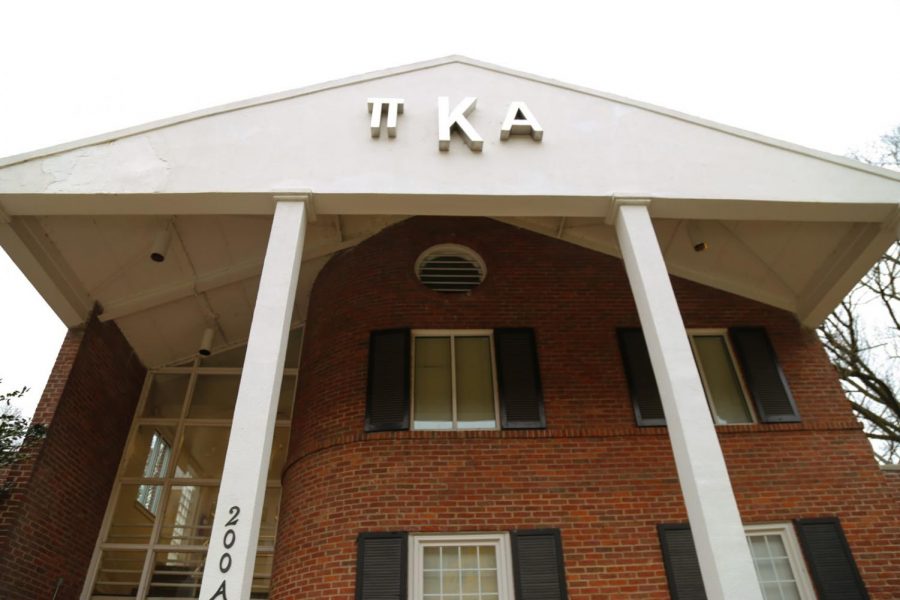


Evening gowns swept across the stage as contestants stepped into a spotlight shaped by months of preparation, mentorship and refinement at Vanderbilt University’s 2026 Miss Old Gold and Black Scholarship Pageant, hosted by the Kappa Theta Chapter of Alpha Phi Alpha Fraternity, Incorporated.
More than a performance competition, the pageant evaluated contestants across interview, fitness wear, creative performing arts, academic achievement and public presentation while centering conversations around healthcare disparities affecting Black women in the United States.
This year’s contestants transformed personal experiences with healthcare disparities and underrepresentation in medicine into advocacy platforms rooted in scholarship, leadership and visibility.
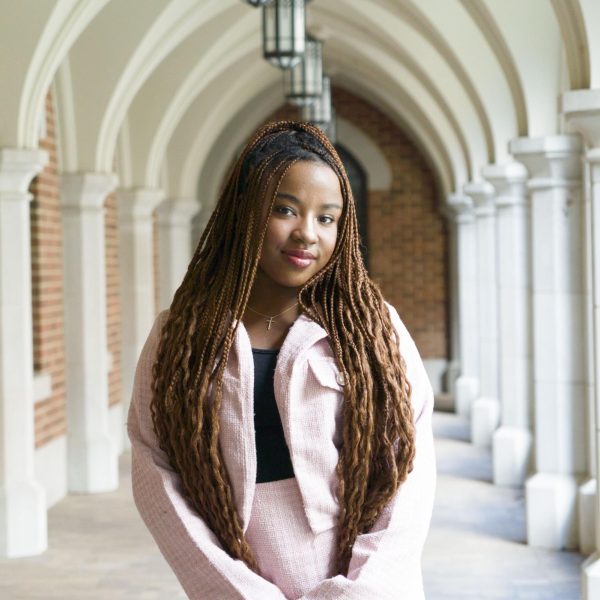
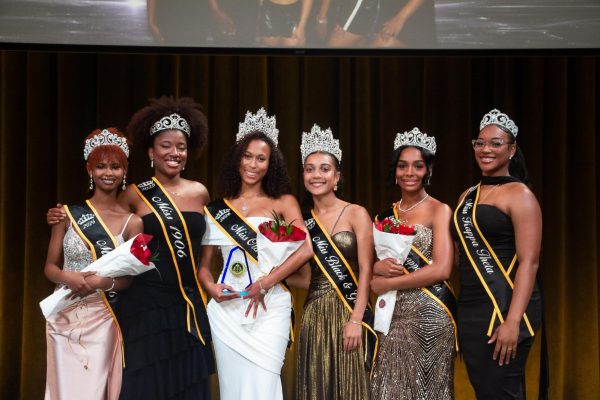
On the night of the 2026 Miss Old Gold and Black Scholarship Pageant, contestants Sage Kenley Harrison, Kendall Amaya Forrest, Jasmine Simone Davis, Aissatou Bah, Aaliyah Renee Ehiemua and Bethel Derege used performance, scholarship and advocacy to compete for the title of Miss Old Gold and Black 2026.

The six contestants started with a choreographed opening in football jerseys, followed by a fitness round that swapped traditional swimwear for high–impact personality. Forrest swung for the fences with a softball themed routine, Bah led a neon aerobics performance set to Candi Staton’s “Young Hearts Run Free” and Harrison traded her harp for boxing gloves, throwing punches in a red cape that earned a standing ovation.

The talent round featured Davis’ contemporary dance performance, Aaliyah Ehiemua’s dramatic portrayal of a pediatric surgeon encouraging a young Black girl before surgery and a harp performance by Sage Harrison, a sophomore harp performance major in the Blair School of Music, which drew a standing ovation from the audience.
Preparing for the performance
Much of the work took place long before contestants stepped onto the stage. Each contestant balanced rehearsals with academics, leadership positions and involvement across Vanderbilt’s campus.
Fortunately, they did not have to deal with this alone.
Contestants met multiple times each week with chapter members to rehearse performances, prepare interviews and refine presentations ahead of the competition.
Miguel Brown, a junior who serves as treasurer of the Kappa Theta Chapter of Alpha Phi Alpha Fraternity, Incorporated, and a pageant co-chair, said representation and self-expression are central to the pageant experience.
“Being a minority group on campus, it is very hard to do big things like this, which is why representation and attendance really matter,” Brown said.
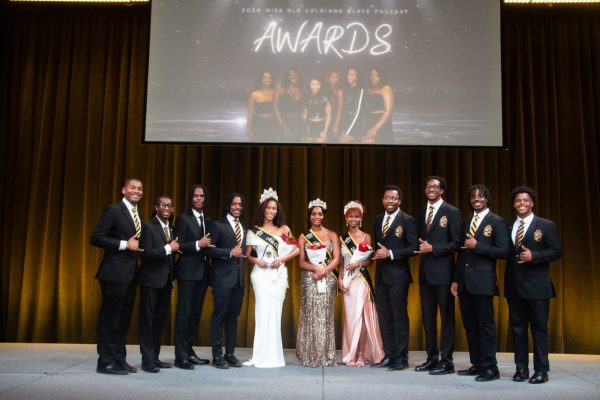
Founded in 1906, Alpha Phi Alpha is the first intercollegiate Greek letter fraternity established for African American men and was founded on the principles of scholarship, fellowship, good character and the uplifting of humanity.
The Miss Old Gold and Black Scholarship Pageant serves as one of the chapter’s signature programs, recognizing Black women for academic achievement, leadership and community service.
Preparing for the pageant requires far more than memorizing introductions or perfecting performances. For months, contestants balanced rehearsals with coursework, leadership commitments and the demands of everyday college life while rehearsing for one of the chapter’s most visible traditions.
“Each brother is paired with a contestant, and they coach the contestant through the entire pageant. Each portion of the pageant, from the intro to the oral, formal, fitness and talent, requires three practices a week, one solo with your contestant and two as a group,” Brown said.
By the time contestants walked onto the stage in evening gowns and performance costumes, hundreds of hours had already been spent in rehearsal spaces, classrooms and late-night practice sessions.
Brown said the process challenged contestants to embrace vulnerability while discovering confidence in themselves.
“It is just you out there on that stage, really expressing yourself and opening the most vulnerable part of yourself to try and connect with people in the audience, the judges and everyone else,” Brown said.
That pressure was not lost on contestants.
Sophomore Jasmine Davis said she initially struggled with the thought of performing in front of a crowd.
“I remember sitting in my room, and I was so overwhelmed with the fact that I was going to be competing on stage in front of people. I thought I was going to do terribly, and I had to take a second and think about the greater goal,” Davis said.
For Brown, those moments of uncertainty often become the most rewarding part of the experience.
“You see the finished product on stage, but you do not see the late nights and the hard conversations that happen behind the scenes to get them there. That is where real growth happens,” Brown said.

Pageants have long faced criticism for promoting narrow beauty standards, limited diversity and traditional gender expectations.
Roman Thomas, a senior and president of the Kappa Theta Chapter of Alpha Phi Alpha Fraternity, Incorporated, said this year’s pageant challenged contestants to think beyond the competition itself.
That emphasis was reflected in the event’s focus on healthcare disparities affecting Black women, a theme contestants explored through interviews, performances and personal experiences.
“I wanted to make sure that every year there is a clear initiative, so people understand that this pageant is not just a show; it is something that actually impacts the community. Each contestant has to know exactly what their philosophy is and what their platform is because that is what people remember,” Thomas said.

Healthcare and advocacy
During the interview round, contestants were asked to discuss healthcare disparities and the barriers Black women continue to face within the American healthcare system.
According to the Centers for Disease Control and Prevention, Black women over the age of 40 face a maternal mortality rate of 132.9 deaths per 100,000 live births, which is more than double the rate for white women in the same age category. This is an issue that the previous reigning royal court which included Gabby White, Selena Hairston and Aja Halbert sought to address.
Sophomore Sage Harrison later connected the issue to her own experience navigating epilepsy treatment.
“I remember waking up from my seizure to my mother frantically calling 911, and it was a traumatic situation. My mom is also a midwife. She is a healthcare professional, so that was hard for her, but she advocated for me because who knows where I would be today if she had not,” Harrison said.
Sophomore Aaliyah Ehiemua said her experiences with healthcare advocacy have shaped her goal of becoming a pediatric surgeon.
“This mindset fuels my mission to become part of the 4% of pediatric surgeons who are Black women because representation is not optional; it is necessary,” Ehiemua said.
Representation on stage
Beyond the pageant itself, contestants discussed initiatives ranging from healthcare advocacy to expanding opportunities for Black women in the arts. Harrison, for example, discussed creating an HBCU classical music program and expanding educational opportunities for Black women in the arts.
As the awards were announced, Derege received Miss Congeniality, voted by the contestants for her peer support and interpersonal leadership. Bah received Miss 1906, recognizing her as the standout first-year student embodying Alpha Phi Alpha values, and Davis was named runner-up and received Miss Kappa Theta, recognizing her overall excellence and chapter engagement.

When Harrison was crowned Miss Old Gold and Black 2026, the moment carried particular significance for a student pursuing classical music, a field where Black women remain underrepresented.
“I grew up in Atlanta, so I grew up with Spelman, Morehouse and Clark Atlanta all next to me, so that was what I dreamed of, but classical music told me no,” Harrison said.
For decades, Black musicians have challenged barriers within classical music. Figures such as Chevalier de Saint-Georges, often referred to as the “Black Mozart,” and contemporary cellist Sheku Kanneh-Mason have helped reshape perceptions of who belongs within the genre. At Vanderbilt, Harrison said she hopes to support Black classical musicians through her aspiration to become president of the upcoming Blair Black Musicians Association.
“If we are not represented, we do not know what we can achieve, and if we are not seeing ourselves in the places we want to be, then we do not know we can step into those rooms,” Davis said.
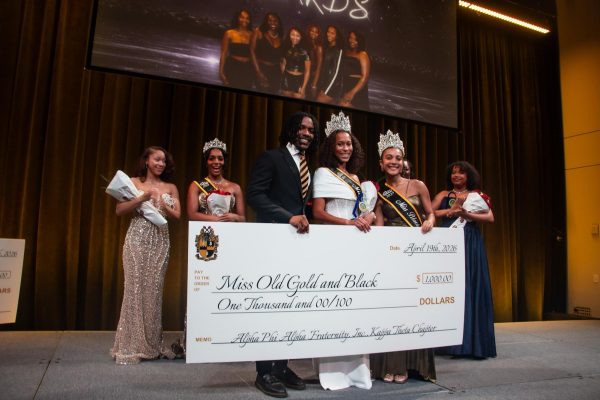
As the ceremony concluded, six Black women stood shoulder to shoulder holding roses and scholarship awards, having spent the evening transforming experiences too often overlooked into stories that demanded to be heard.
“Black women can be anything, and I do not want to put myself in a box,” she said.