
Vanderbilt Baseball was swept by No. 24 Alabama for the first time since 2009 this past weekend, April 30-May 2, and the Commodores are now 27-22 on the season and 10-14 in SEC play.
Currently, Vanderbilt is ranked 71st in Ratings Percentage Index, a key determinant in receiving a bid for a regional spot in the NCAA Tournament. It has seven games left, including a home midweek game against Louisville (ranked 104th in RPI), a road series against Missouri (122nd in RPI), and a home series against South Carolina (102nd in RPI).
TCU was ranked 59th in RPI in 2019, and it is the lowest-ranked RPI team to ever receive an at-large bid. Alabama is ranked fifth in RPI, and so failing to pick up a single win against the Crimson Tide was a massive hit to Vanderbilt’s odds of receiving a bid, especially since it doesn’t play another tournament-caliber team the rest of the season.
The Commodores were swept by Alabama because of the same issues that have plagued the VandyBoys the entire season: pitching and untimely hitting.
“They’re frustrated,” head coach Tim Corbin said after Vanderbilt’s Saturday loss. “And I’m sure they’re looking around, going ‘how do we fix this?’ But they’re young kids, and they’re ultimately going to have to figure out how to get onto the field and play.”
In Game 1 of the series, Vanderbilt led 4-0 in the bottom of the sixth inning, and after starting pitcher Connor Fennel was surprisingly pulled after a season-low 70 pitches, Alabama tied the game two batters later on a three-run home run by Eric Hines. The Tide then walked it off in the ninth on a leadoff home run. Games 2 and 3 of the series featured multiple instances of Vanderbilt failing to drive home runners in scoring position. The Commodores had more hits than Alabama in each of the three games, but left 24 runners on base and failed to lead once in either of the final two games.
A fix needs to come now or never for Vanderbilt, and although it was the usual trends that led to the Commodores being swept, let’s take a look at some of the more specific reasons why the Black and Gold were swept in Tuscaloosa.
Star players didn’t come through
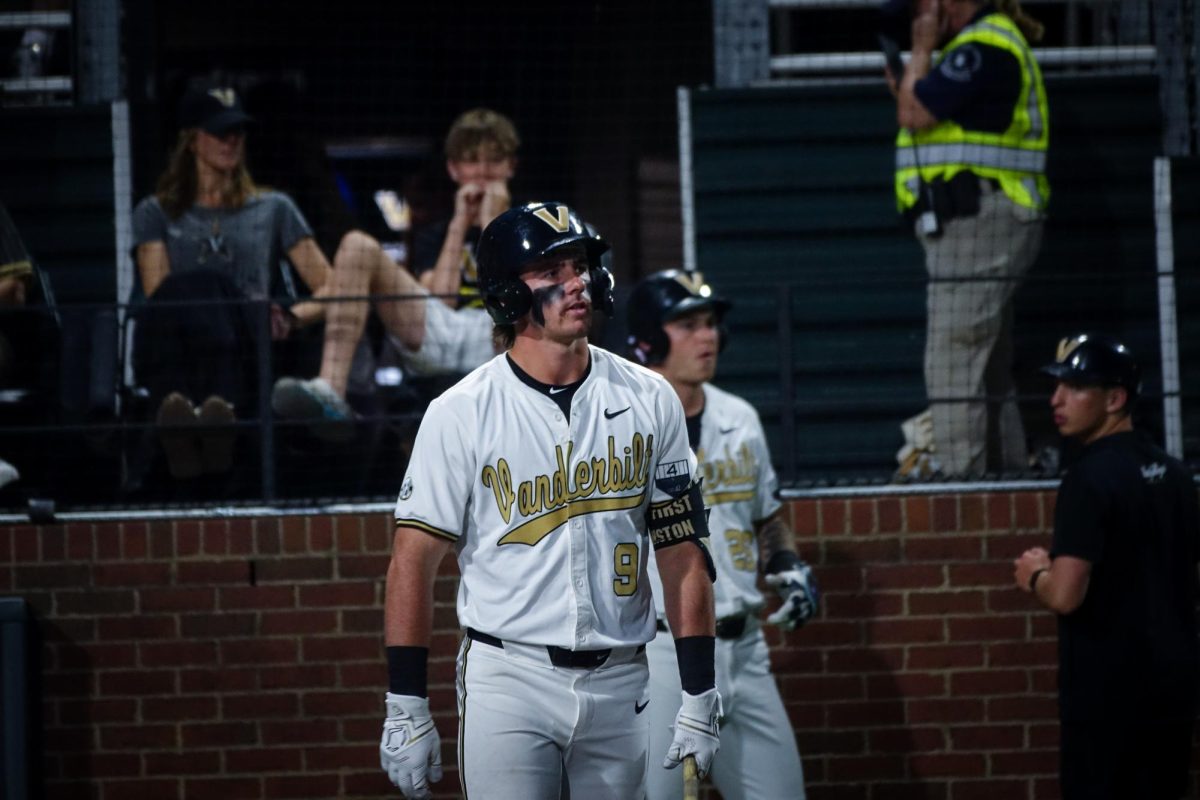
With tournament aspirations on the line, Vanderbilt did not receive strong contributions from arguably their two best hitters in Mike Mancini and Brodie Johnston. The duo went 5-for-26 in the series with five strikeouts, leaving seven runners on base and no RBIs.
This issue has actually been hurting the Commodores for the last 10 games. Johnston is 10-for-43, and Mancini is 11-for-41 in that time frame. Taken together, Vanderbilt’s two star players are hitting .250 with 3 home runs and 22 strikeouts.
Although this is not a horrific slump, for these hitters it is, as Johnston’s batting average dropped from .378 to .347, and Mancini’s on-base plus slugging percentage has dropped nearly 100 points.
Baseball is a game defined by slumps and hot streaks, but given the position Vanderbilt Baseball is in, its star players were needed. In the Alabama series, its stars were not the difference makers the Commodores would have hoped they would be.
The good news for Johnston and Mancini is that, in baseball, with slumps come hot streaks. With seven games and the SEC Tournament remaining, the duo could lead an offensive charge that helps Vanderbilt run the table and potentially punch their ticket to the postseason.
Tyler Baird’s success in relief
Tyler Baird, a freshman pitcher from North Carolina, began the season as a midweek starter, where in three starts, he had a 12.15 ERA in just 6.2 innings pitched.
Baird then transitioned into a relief role, and in 17 relief appearances, the freshman holds a 3.19 ERA with 5 saves in 31 innings.
Over the past month, Baird has thrown two bad pitches. In game one of the Alabama series, Baird gave up a walk-off home run, and against Kentucky, Baird allowed another walk-off.
However, in his last five relief appearances, Baird has thrown 8.2 innings with a 2.08 ERA and 10 strikeouts.
He made another appearance in Game 3 of the Alabama series, where he went 3 innings of shutout baseball and struck out 4 batters.
Baird has been one of the few, potentially the only, pitchers in the Commodores’ rotation who have actually improved during the course of the season. As a freshman, being a high-leverage reliever is extremely difficult, but even with some downs, Baird has shown he is up for the challenge and will be a key player — not only for Vanderbilt’s postseason hopes, but also over the rest of his collegiate career.
Live and die by the long ball
During the Alabama series, Vanderbilt only scored two runs that didn’t come from home runs, and they both came in the third game of the series.
The Commodores’ identity this year has been the long ball, as they have the fourth-most in Division I baseball with 97.
Typically, Tim Corbin teams have a small-ball focus, but this year’s home run hitting approach is very similar to an MLB hitting model, and is due to hitting coach Jason Esposito, who before joining the Black and Gold, worked as an MLB hitting coach for a few years.
In some ways, the model works — in games where Vanderbilt hits more home runs than their opponents, it is 23-6.
However, when the ball isn’t flying, the Commodores struggle to have consistent offensive production, and that was the case again in the series against Alabama, as they out-hit the Crimson Tide in all three games, but scored nine fewer runs.
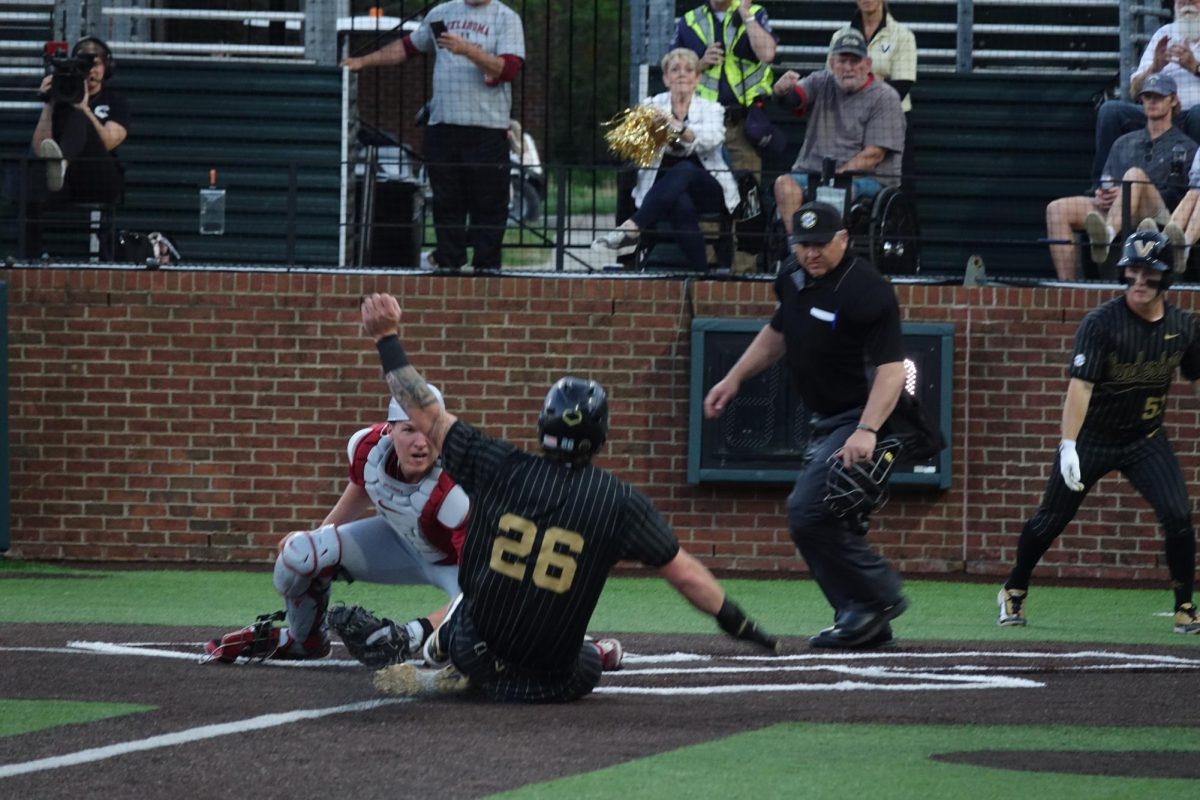
In Game 1 of the series, Vanderbilt had runners on second and third with one out, Johnston up and Braden Holcomb due next. The Commodores couldn’t cash in and ended up losing the game on a walk-off. In Game 2, Vanderbilt racked up 8 hits in the first 5 innings, but left 10 runners on base, and didn’t score a single run in the game. In the eighth inning of Game 3, Vanderbilt had the tying run up to the plate with one out, runners on first and second, but couldn’t plate a single run.
Overall, Vanderbilt’s pitching has put the Commodores in a lot of deficits this year, and with the VandyBoys’ offense relying so heavily on the long ball instead of trying to manufacture runs and chip away, the Commodores look to get it back all in one swing, and this approach has cost them at times.
‘Dores need to run the table and need help
Vanderbilt’s resume is not great in some areas, as it is 5-14 in games not at Hawkins Field, is four games below .500 in conference play, and doesn’t have many quality series wins.
History is on the Commodores’ side, though, as in the 64-team NCAA Tournament era (1999-present), no SEC team with a winning conference record has ever missed the tournament.
With seven games remaining, the Commodores must win out to have any shot at an at-large NCAA Tournament bid. Missouri and South Carolina are the bottom two teams in the SEC standings, and Louisville is 4-11 in road games. There is a solid chance of Vanderbilt winning out and ending the season two games above .500 in conference play. Still, given their remaining opponents’ low RPI and conference records, the SEC Tournament might be how the Commodores must punch their ticket.
There is zero margin of error for Vanderbilt moving forward, and it can’t take any opponent for granted.
Vanderbilt returned to Hawkins Field May 5, where it faced the Louisville Cardinals at 5 p.m. CDT.