

It’s been over a decade since I last dreamt in my mother tongue.
Raised by two Iranian immigrants, I once understood the world through a Persian lens. It was how I articulated my thoughts, how I communicated with my loved ones and how my subconscious would whisper to me in my dreams. But somewhere along the way, my dreams began unfolding in English. So too did my interactions, my thoughts and my words.
When it first truly registered to me that I never dreamt in Persian anymore, I was immediately concerned. People often talk about dreams as a way of assessing proficiency in a language. While little research exists to back up the belief that dreaming in a language proves fluency, there is some merit to the underlying idea. Dr. Deirdre Barrett, a lecturer in psychology at Harvard Medical School, states, “people who speak any second language, even without good proficiency, at least occasionally dream in the second language.” But Persian wasn’t just a rudimentary second language for me. It was the first language I’d ever learned. So, what did it mean that it had completely disappeared from my dreams?
The truth is, my Persian had gotten rusty over the years. Between wanting to fit in with my American peers and having to constantly use English in school, Persian started to fade from the forefront of my mind. But it didn’t have to be that way. There was certainly a world in which I could have retained fluency in both.
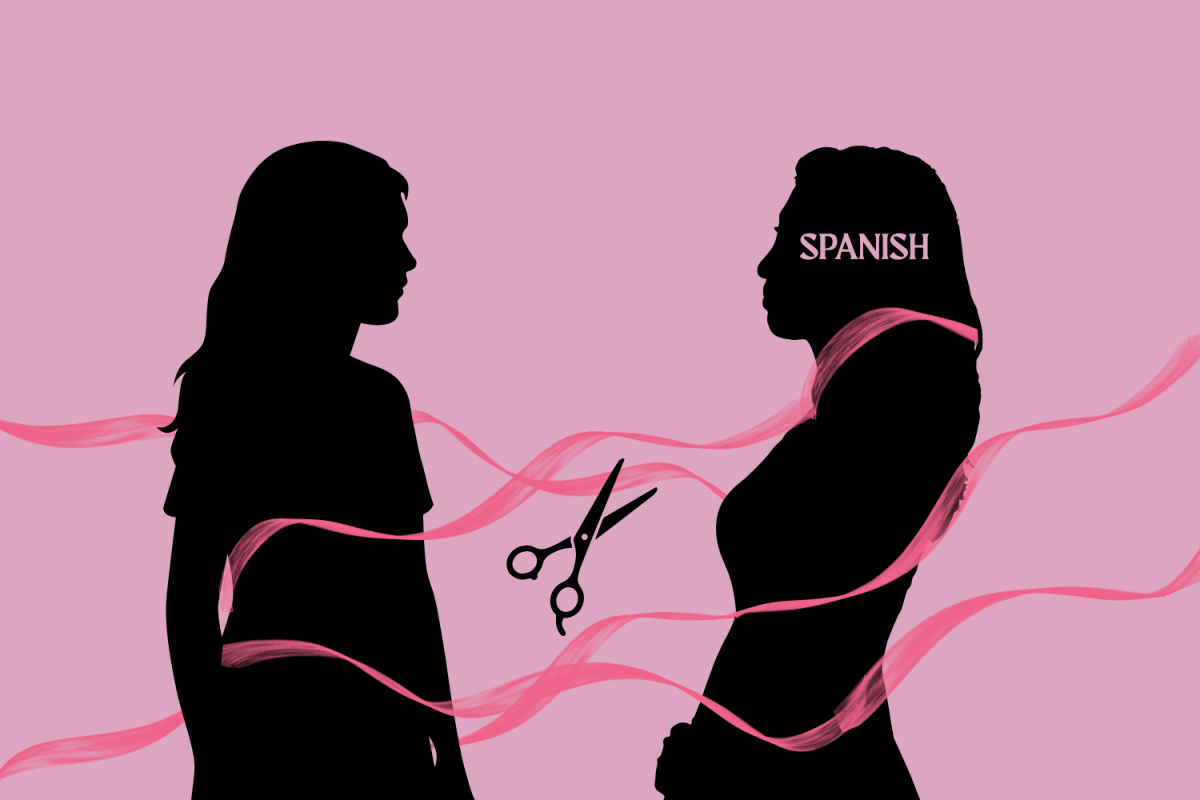
The reality is that America perpetuates the misguided notion that language is a zero-sum game — that in order to have one, you have to sacrifice the other. And this mindset isn’t arbitrary; it’s institutionalized. For instance, in March, President Trump signed an executive order declaring English as the official language of the United States. While it might seem like a harmless initiative, it reinforces a long history of resistance to multilingualism. According to the U.S. Census Bureau, 22% of people in the United States speak a language other than English at home. What we receive in turn is the overarching and all-too common “we speak English in America” attitude. The message is loud and clear: English is the only language of belonging.
That belief has tangible consequences. According to the Modern Language Association of America, between 2016 and 2021, U.S. colleges saw a 16.6% decline in enrollment in foreign language courses. In those years, the total number of language programs in higher education dropped by 961 — an 8.2% decline. Due to anti-multilingual attitudes and their subsequent effects, I, like many other heritage speakers, found myself losing touch with not just my native language but my cultural identity.
I never imagined Vanderbilt’s Core requirement for first-years in the College of Arts and Sciences would change any of that. Like most students, I found myself browsing language courses this summer with the sole intention of checking off the mandatory language requirement. But as I scrolled through the catalogue, I saw something that caught my eye: Elementary Persian I.
In middle and high school, the only languages consistently offered were Spanish, French and maybe Chinese, if we were lucky. The idea of studying Persian in an American classroom was unthinkable. So, when I saw that Vanderbilt offered it, I instantly enrolled.
Not long after, I found myself sitting in a classroom in Buttrick Hall and learning Persian from scratch. My professor, Azadeh Najafian, greeted us with a cheerful “Salaam!” and suddenly, the language I had buried for years started to resurface. At first, I stumbled with pronunciation and recalling certain terms and phrases that I once spoke with ease. But with each consecutive lesson, a knot in my brain would loosen, and now, just two months later, I can not only speak Persian with relative ease, but I can even write it for the first time. I am still not as fluent as I once was, but I am closer than I ever thought I would be.
There are only six people in Elementary Persian I, but the class still has undeniable impact. For Najafian, the value of all language programs deserves to be recognized.
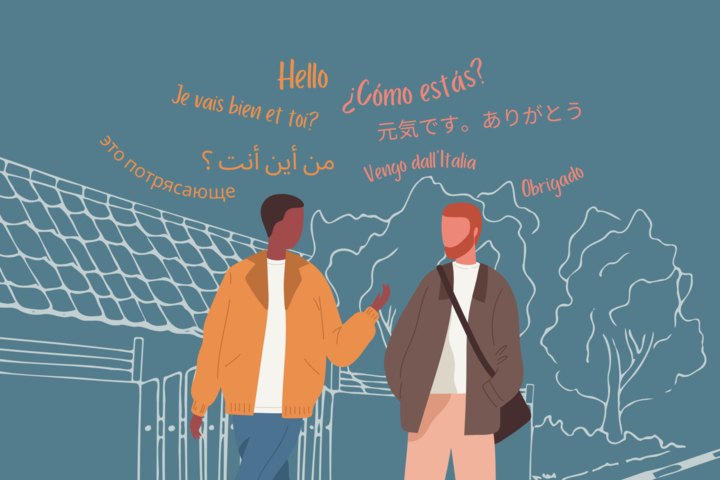
“Every language has its importance,” Najafian said. “We see the world and think about it through language. When different languages are taught at a university, it ensures the diversity of the place and helps initiate various multicultural discussions. When you learn a new language, you learn a new way to think. Language learning enables us to see the world from a different perspective.”
That perspective has the power to enlighten all kinds of students, including heritage students.
“It is so rewarding to see heritage students feel confident in speaking Persian or finally understanding the meaning of a phrase that they have always heard their family use but could not grasp,” Najafian said.
So yes, there may only be six of us in Elementary Persian I, but that number cannot accurately capture its worth. It cannot capture the accomplishment I felt when I wrote my name in Farsi for the first time or the comfort I feel when I hear others speak the language I grew up with. It cannot capture the hope I have that I will dream in Persian again. Because for heritage learners like me, the opportunity to take a language class like Persian at Vanderbilt is not strictly academic. It is a chance to strengthen identity and create a sense of belonging.