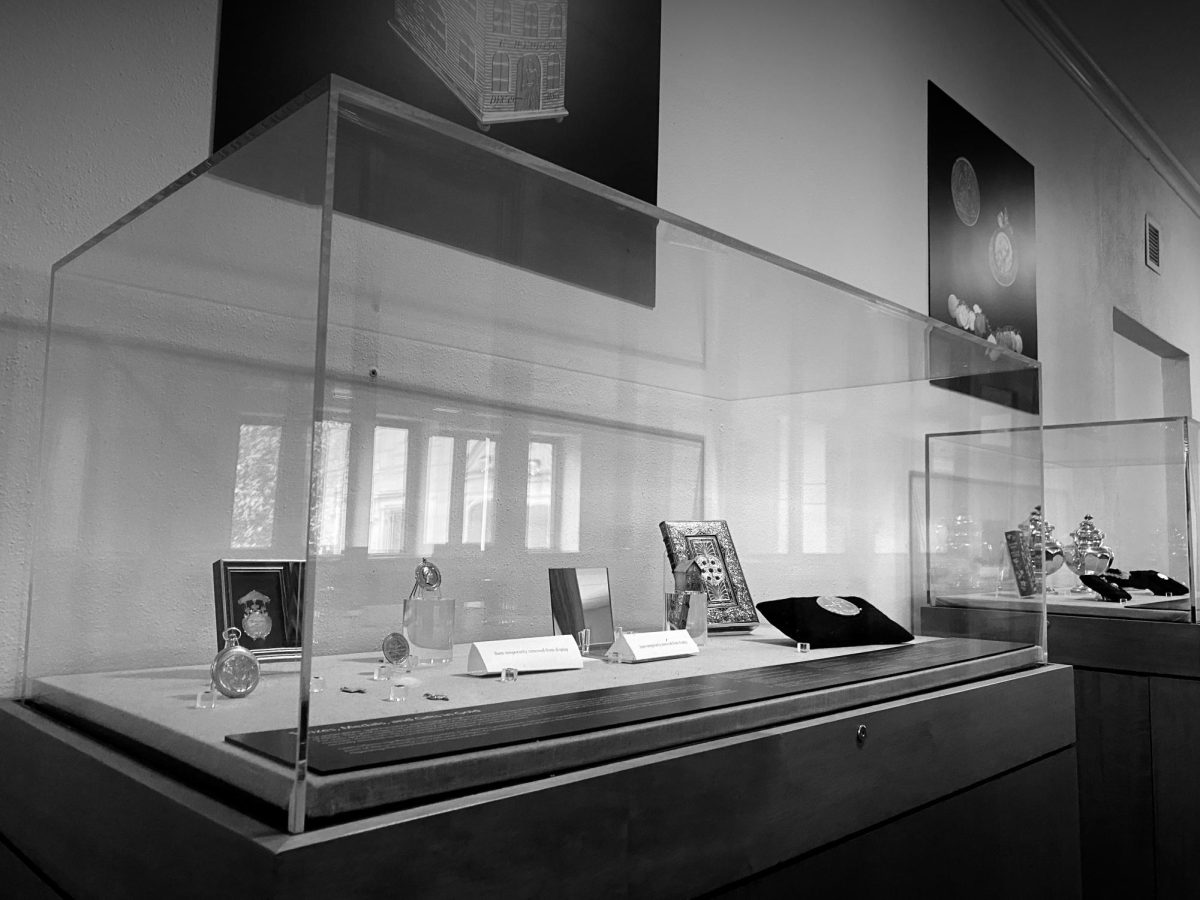


The Vanderbilt Cloud Innovation Lab, a project-based initiative supported by Amazon Web Services, was launched in Central Library on Oct. 27 at 3 p.m. CDT. The lab allows students to gain hands-on experience digitizing and preserving the archival collections of university libraries with artificial intelligence and cloud technologies.
The launch is part of Vanderbilt’s partnership with AWS Skills to Jobs Tech Alliance and the Nashville Innovation Alliance. The partnership aims to accommodate an increasing demand in Middle Tennessee for technology-oriented jobs by focusing on AI and cloud development, according to Lindsey Beeson, account manager at AWS. Tennessee is the sixth state to join the Skills to Jobs Tech Alliance, representing the larger AWS initiative around digital job training across the country.
The event began with remarks from Andrew Wesolek, chief digital strategist for the Jean and Alexander Heard Libraries and senior director of the lab. Wesolek said the lab fosters collaboration between members of the Vanderbilt community and helps solve current issues.
“It’s the first lab of its kind to be hosted in an academic library, and we’re able to combine the deep talent of our Vanderbilt students, the expertise of our librarians on staff and the power of AWS technologies to bring [the lab’s work] together,” Wesolek said. “[The lab] solve[s] real world challenges facing digital preservation and the analysis of our shared cultural memory.”
Wesolek was followed by Jon Shaw, a university librarian who has been involved in other initiatives concerning digital preservation. He said the lab will connect the various groups involved in the partnership and encourage students to learn important skills.
“[The Cloud Innovation Lab is] a bridge [between] technology and culture. It bridges our tech and our thought leaders but also our cloud engineers with all that Amazon has,” Shaw said. “[This] gets back to our central mission of hav[ing] students not only learn on the job but develop skills that influence the work that we do.”
Beeson said the lab aims to improve AWS cloud solutions, improve students’ skills and benefit the community.
“Outcomes include rapid prototyping using AWS cloud solutions to develop open-source solutions,” Beeson said. “[The lab will] driv[e] workforce development within the community and next-gen tech talent, impacting the community far beyond just Vanderbilt University and the Vanderbilt community within Nashville.”
General remarks wrapped up with insights from additional library faculty and media leaders, concluding with the introduction of student projects. Daniel Genkins, digital library architect for university libraries, worked with the inaugural cohort of students in the lab, most of whom are computer science students. He said their project built digital infrastructure that helped preserve cultural heritage resources in the university’s libraries.
“The [members of the group] all have [computer science] backgrounds, but also kind of a diverse set of technical interests that are relevant to the kind of work that we’re doing,” Genkins said. “[The work] is, broadly speaking, building digital infrastructure for cultural heritage preservation projects like those that the library supports.”
Each cohort member contributed a different part to the project. Sophomore Oybek Ablakulov, a member of the inaugural student cohort, said he worked on building a framework that the final project will be tested against.
“I work on the evaluation framework. Basically, for the final solution, we’re going to have my framework test[ed] to see if it meets the requirements that we set out initially when we started with the project,” Ablakulov said.
Sophomore Wasi Hussain, another member of the cohort, said that using digital tools helped automate the process. Their specific work entailed using AI and machine learning technology to query and parse through old television news footage to create usable data for historical researchers.
“It’s an interesting project, both in terms of technical skills and usefulness,” Hussain said. “We have hundreds and hundreds of hours of backlog of video that one person may have had to manually go and label. Instead, we can automate the whole process, which saves so much time.”
Sophomore Rithika Thambireddy, another cohort member, said the entire group found it very interesting how they utilized cloud computing and technology with the Vanderbilt Television News Archive to complete their project.
“What really intrigues us all about this project is how we’re able to use cloud computing and technology to connect it to the concept of TV, like this TV archive project and digital preservation,” Thambireddy said. “[We’re seeing] how we can see that [collaboration] across a period of many years and how to help automate the efficiency with that as well.”