
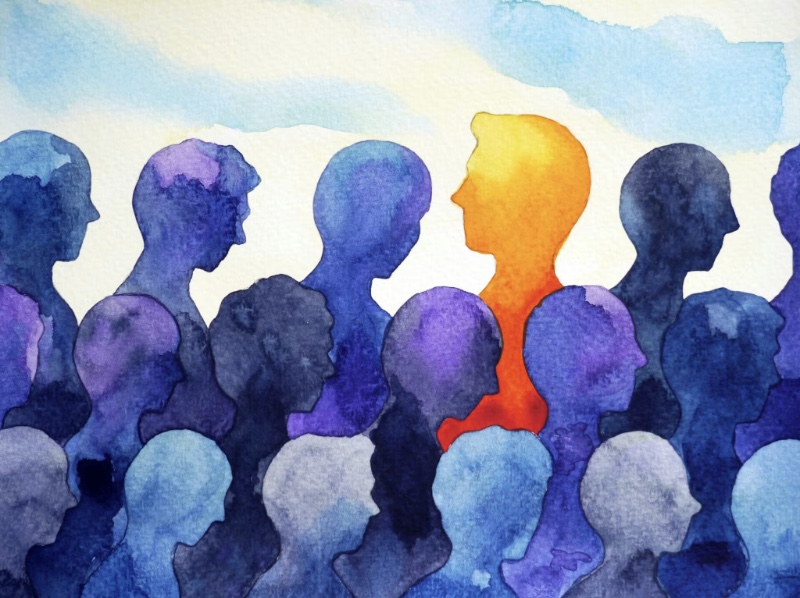

If you are in Gen Z, you are probably familiar with the pressure to seem totally self-sufficient. Being “unbothered” has become a kind of social currency. Hyper-independence is aestheticized, while attachment can feel embarrassing. Needing people too much, caring too openly or relying on others looks weak, clingy or unserious.
We live in a culture that has led us to believe that the highest form of freedom is not needing anyone and being truly independent and self-sufficient. In reality, the refusal to depend on others and be depended on is leaving us isolated and unfulfilled.
Individualism has always been a core and important American value. But individualism did not always look the way it does today. Enlightenment liberalism emphasized the autonomous individual, self-government and rational self-interest, and that worldview became foundational for American political thought. But this tradition does not mean a society in which all dependence was treated as a failure. There used to be a greater focus on ties to neighborhoods, churches and other communal groups. Modern America has kept the language of individual freedom while losing many of the communal structures that once balanced it. Today, many of these communal institutions are weaker, and the ideal self is increasingly imagined as detached, mobile and answerable to no one.
Now, life is about existing independently, not letting others bother you or hold you back from your individual aspirations.
Even looking around the world today, we see that hyper-individualism is not the norm everywhere. In more collectivist cultures, identity is shaped more explicitly by family, community and social obligation. Interdependence is less likely to be framed as a weakness in the way it often is in America. This is not to say collectivist cultures are simply superior; they have their own drawbacks, and American individualism has real strengths. But it is worth recognizing that the ideal of total independence is not universal or historically normal.
There is plenty of evidence to show that hyper-individualism is backfiring, especially among Gen Z college students. Loneliness has become a defining feature of our generation. Many college students are surrounded by people yet still feel deeply disconnected. Stanford psychologist Jamil Zaki found that although Gen Z craves social connectedness, they “regularly underestimate how friendly and kind others are,” which inhibits people’s willingness to reach out. This aligns with a culture that rewards emotional distance and nonchalance. We are taught to appear unbothered and self-sufficient, even when we are not. The result is a generation of people who want connection but are hesitant to initiate it.
At the same time, rates of anxiety and depression are also incredibly high among Gen Z, suggesting that our current social norms are not producing the kind of well-being they promise. A culture that discourages dependence may also be discouraging the very relationships that protect against loneliness and mental distress.
We can see these patterns clearly in modern dating culture, which often emphasizes no strings, no labels and no expectations. While this may appear to maximize freedom, it often minimizes stability and trust. Many Gen Z men report feeling anxious and unsure about how to approach women, reflecting a greater uncertainty about how to form romantic relationships at all. Additionally, research suggests that both men and women in Gen Z are “dismissive in nature” due to increasing hyper-independence and the concept of self-reliance as a defense mechanism.” Independence may prevent rejection, but it also prevents connection.
But the truth is that commitment in relationships and stable marriages are among the strongest predictors of long-term well-being. When relationships are viewed primarily as constraints on autonomy, fewer people are willing to invest in them. Families become less stable, long-term commitments feel riskier and individuals are less willing to make sacrifices for others. Over time, this erodes the very structures that give life meaning and support.
We see interdependence as a threat in nearly every context today. If something or someone places demands on us, our instinct is to cut it off. In many cultural conversations, especially those surrounding ambition and equality, ties to others are framed as obstacles rather than sources of meaning. This is particularly evident in discussions around motherhood and caregiving. Because these roles involve dependence and sacrifice, they are often described primarily in terms of limitation or oppression. But if we treat all forms of dependence as intrinsically demeaning, then care itself becomes a bad thing. Parenthood, family life and even friendship begin to look like burdens rather than goods. This misses something essential: giving care and being needed by others is not degrading, but virtuous and meaningful.
Interdependence is at the core of what it means to be human. Every one of us is the result of others’ sacrifices. Think of all of the people who have committed to you, made sacrifices for you and worked to support you. It may be parents, teachers, friends, communities or even strangers who maintain infrastructure and serve others. All of us depend on others, whether we recognize it or not, and hyper-independence causes us to forget this important reality.
Real freedom is not freedom from others, but the freedom to choose to commit to others and let others depend on us. We misunderstand freedom when we define it only as the absence of ties. The richest moments of life come from the ties that we freely choose, and this was the idea at the root of individualism.
As college students, it is important that we embrace the idea of interdependence and remember that needing others is not a weakness. Instead of romanticizing doing everything on our own all the time, we can normalize asking others for support, building deep friendships even if it takes personal sacrifice, committing to relationships and letting others know that we care about them. Additionally, we should allow ourselves to be depended on: show up for others, keep promises and let our commitments shape our time and habits. Even as college students, which is often a time of great personal freedom, we should seek out ways to be depended on.
Maximizing our individual freedom now when we are young is not necessarily a bad thing, but we don’t want to look back on these years and regret not investing more in our ties with others. Instead of solely focusing on our individual goals and achievements and desires, we should also make sure we have communal-related goals. We can ask ourselves questions that focus on interdependence: Which people do I want to live my life with? Who am I showing up for? What communities am I investing in?
Hyper-individualism promises us freedom, but it has left us lonely. The cure for loneliness isn’t more self-sufficiency but rediscovering the beauty of interdependence with others. We are not meant to live on self-contained islands but are meant to live in dedicated communities, bringing deeper meaning and purpose to our own lives and the lives of others.