
“There comes a time when one must take a position that is neither safe, nor politic, nor popular, but he must take it because conscience tells him it is right,” Martin Luther King Jr. said.
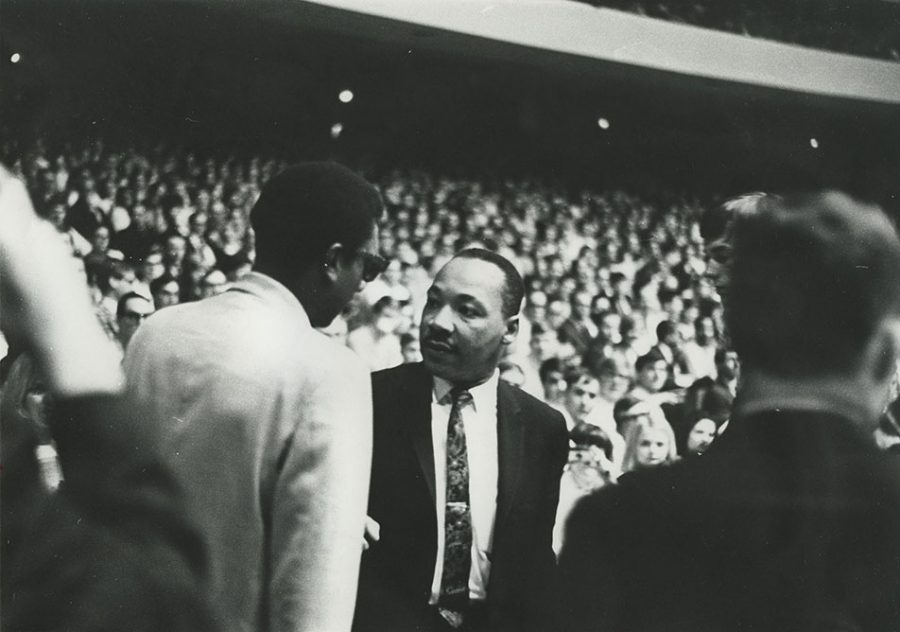
King wrote these words in his “Testament of Hope,” which enumerated philosophies of nonviolent civil disobedience, egalitarianism and radical love. King was a pacifist, a pastor and one of the most prominent figures of the American Civil Rights Movement. Less frequently recognized, King was also a democratic socialist, a 29-time arrestee and a prolific writer, authoring five books and dozens of articles, sermons and speeches.
This Black History Month, it is especially pertinent that we recognize the mechanisms that King utilized to mobilize peaceful resistance against racial and socioeconomic disparities to understand how we can more effectively galvanize social movements against injustice in the status quo. Drawn from his “Testament of Hope,” here are three things we all ought to learn from King today:
King believed that challenging unjust laws required mass mobilization from all individuals; in King’s eyes, complacency in the face of injustice was equivalent to injustice. King repeatedly criticized the complicity of moderate individuals in maintaining “negative peace,” which he viewed as merely a perpetuation of injustice under the guise of “order.”
In our modern era, protestors against systemic racial injustice have been branded as “disturbers of peace” or “outside agitators.” This rhetoric has been frequently used to delegitimize social movements and compel those who do not agree with injustice into complicity. It is exactly this complicity that King criticized.
Rather than succumbing to the easier path of negative peace, MLK urged people to pursue the higher ground of “positive peace,” which he defined as “the presence of justice.” In any modern social movement, it is pertinent that we remain centered on this active pursuit of justice, which can only be understood in terms of giving each their due. I believe this encompasses our inalienable rights to life and liberty, which cannot be taken away from any person without due process under the Fifth and Fourteenth Amendments. As both citizens and noncitizens alike face death and detainment — a loss of life and liberty — at the hands of Immigration and Customs Enforcement agents without due process, we must pursue positive peace as King once instructed.
King strongly affirmed that enduring economic resistance was perhaps the greatest means by which we may achieve our desired ends of social change. He believed that, by placing economic pressure on the government and powerful corporations, we could compel the government to listen to the will of the people.
The Montgomery Bus Boycotts in Alabama did not last a day; they spanned just over a year, inducing financial pressure on the transportation industry and ultimately ending segregation on city buses. A key aspect of King’s economic resistance methods was that they were persistent and ongoing.
Economic boycotts today, such as the national “economic blackout” on January 30, are a hopeful start, but they must remain continual and persistent to facilitate any real economic pressure on our government and end the persecution that dissenting citizens and undocumented immigrants have been facing. Otherwise, one-off boycotts are merely empty statements of dissatisfaction rather than moving socioeconomic forces for justice.
King believed in radical, redemptive love for all human beings. It was this love that formed the basis for his nonviolent civil disobedience methods, which were inspired by Mahatma Gandhi’s peaceful resistance against British occupation in India. King believed that, by challenging unjust laws without resorting to violence, persecuted individuals could emphasize the fundamental injustice of these laws and thereby bring about legal change. This, to King, was the ultimate act of love.
It was also this love that underscored his understanding that all human beings were equal and worthy of human dignity. His advocacy and belief in the civil rights of Black Americans as fundamental to the protection of this dignity remain just as powerful as ever.
Although we have made significant strides in social justice since the Civil Rights Movement, injustice persists in American society. From the killing of U.S. citizen Alex Pretti to the crimes within the Epstein files to the racist rhetoric against Hispanic and Black Americans, we are faced with the choice to take a stand against injustice or remain silent.
As Vanderbilt students, we have personal culpability in speaking out against these societal issues and using our platforms to advocate for systemic change; otherwise, we are simply enabling injustice to persist. Perhaps, if we could all love a little more like King, then we might gain the courage to stand up for our rights and truly protect liberty and justice for all.