Vanderbilt’s Center for Global Democracy was recently established as the new U.S. home for the Comparative Study of Election Surveys, per a university press statement Jan. 29. CSES is a resource used by researchers and institutions across the world to understand elections and democracy.
CSES partners with researchers and institutions from over 60 other countries to collect and analyze election data. Before the move to Vanderbilt, the U.S. home for CSES was the Center for Political Studies at the University of Michigan, where the institute was originally established in 1994. The institute will now be equally managed by Vanderbilt’s CGD in the U.S. and by GESIS Leibniz Institute for the Social Sciences in Germany.
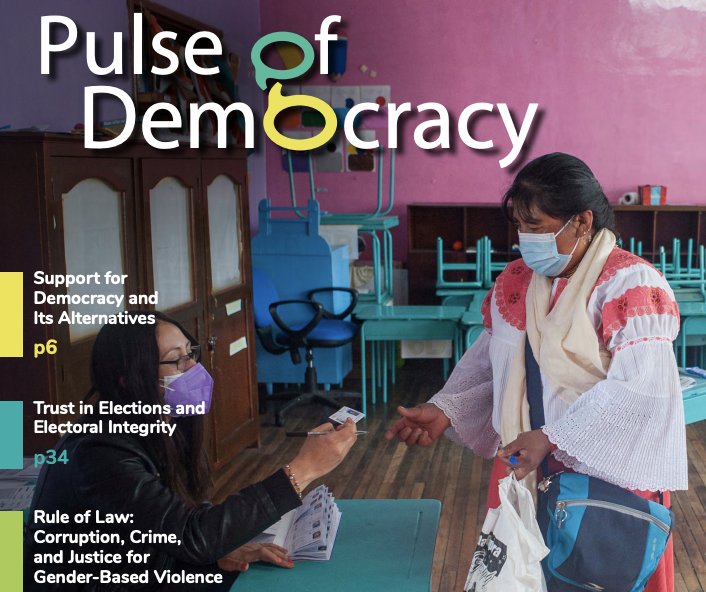
CSES combines individual survey responses with socioeconomic data to analyze the interactions between political institutions, context and their influence on voting behavior. According to the press release, CSES’s move to Vanderbilt benefits the university’s international political research, along with the AmericasBarometer program.
As part of this transition, CGD’s Director for Research and Engagement, Mariana Rodríguez, will become the director of studies for CSES. CDG’s research staff will work with GESIS to maintain high scientific standards, quality data and collaboration.
CGD’s director, Noam Lupu, explained in a message to The Hustler how this move reinforces Vanderbilt’s leadership in the study of democracy and global public opinion.
“The CSES is a key resource for understanding how people around the world view their democratic institutions and how they’re making electoral decisions,” Lupu said. “The Vanderbilt community will benefit enormously from our partnership with these collaborators around the globe, and we’ll be able to draw on these expert partners for new research collaborations.”
Lupu also described how CSES’s newfound presence at Vanderbilt presents new opportunities for students interested in pursuing research on elections and democracy globally.
“What this means for our students is that there will be more opportunities to get involved with these election studies and with the CSES project as research assistants for CGD,” Lupu said. “Our center already works with students on other research projects, and we’ll now be able to get Vanderbilt students involved in working on the CSES as well.”
Senior Adam Hosein, editor-in-chief of the Vanderbilt Political Review, said he believes hosting CSES will benefit members of the organization.
“I think that Vanderbilt becoming the new home for CSES is an incredible opportunity. At a time when political scientists have been observing democratic backsliding throughout the world, hosting CSES will provide students with the opportunity to more rigorously study democratic institutions and analyze this trend,” Hosein said. “Having a program like this will also likely provide an excellent opportunity for VPR members to engage in research that will be relied upon by political scientists worldwide.”
Junior Leon Phillips expressed skepticism concerning CSES’ relocation to Vanderbilt.
“I think it’s kind of strange that Vanderbilt is the choice because it’s not like Nashville, the location, is known for its huge presence in political science. The university is known for its huge presence in political science, theory or application compared to universities where historically [political science] has a much bigger presence,” Phillips said. “It strikes me as super strange because it doesn’t seem like it’s a good fit with the culture, values, norms or what [Vanderbilt] is really known for.”