“Crescere Aude.” Dare to grow. When Vanderbilt’s founders handed down this decree, they understood that excellence demands courage. They called on us to challenge limits in the spirit of service. Their legacy urges us to take risks in pursuit of growth.
As a proud Vanderbilt alum, I urge university leadership to reject the higher education compact proposed by President Donald Trump’s administration and decline to sign it. Accepting its terms would jeopardize Vanderbilt’s commitment to growth and its mission to bring out the best in humanity. This compact is not a benign agreement but a calculated attempt to impose ideological control over American universities. It threatens Vanderbilt’s autonomy in admissions, hiring and curricula, and it risks undermining the global relationships that make our university a powerhouse of innovation.
A threat to institutional autonomy
The compact outlines sweeping changes to admissions, hiring and learning practices that would severely limit Vanderbilt’s ability to shape its own community. It caps international student admission at 15% and requires screening these students for anyone “who demonstrates hostility to the United States, its allies or its values.” It denies schools the opportunity to factor in identity when making admissions decisions, preventing the university from shaping an intentionally diverse student body. With an acceptance rate just above 6% and a U.S. News & World Report ranking of 17 in the nation for 2026, there is no doubt the university takes the utmost care to handpick the members of this community. Vanderbilt has earned its reputation through careful, independent decision-making. Additionally, the compact’s vague and intrusive hiring requirements would compromise the integrity of our faculty selection process. It states that signatories must uphold “a steadfast commitment to rigorous and meritocratic selection based on objective and measurable criteria,” which may undermine the value Vanderbilt places on fostering a diverse faculty — not only as a matter of equity in hiring but also as a source of meaningful representation that enriches the educational experience for students. As Tennessee’s second-largest private employer, Vanderbilt prides itself on attracting world-class talent. Altering these practices to suit political whims would be a disservice to the working people who make Vanderbilt exceptional.
A politicized approach to free speech
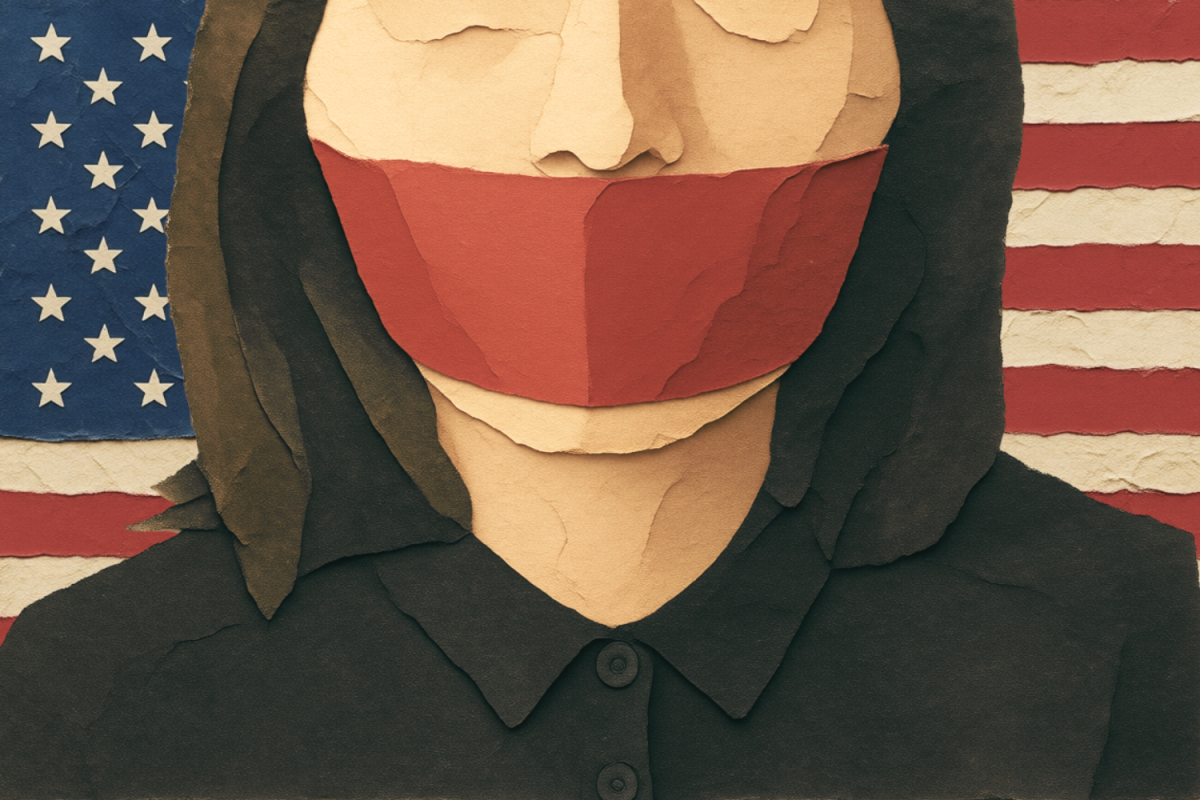
The compact claims to support “truth-seeking” and a “vibrant marketplace of ideas,” yet it singles out conservative voices for protection. The document states that “signatories commit themselves to revising governance structures as necessary to create such an environment, including but not limited to transforming or abolishing institutional units that purposefully punish, belittle and even spark violence against conservative ideas.” In a bipartisan democracy, privileging the protection of one political ideology undermines the very principle of free expression. The document’s call to police “hecklers” raises troubling questions: Who decides what qualifies as heckling? Who gets silenced? Universities must uphold truth — not partisan agendas. Freedom of speech must be protected for all, not selectively enforced.
A dangerous overreach into gender identity
The document calls upon the universities listed to define “male,” “female,” “woman” and “man” strictly by reproductive function. This rigid binary not only contradicts modern science and social understanding but also endangers students. The federal government’s intrusion into the gender development of young people is a stark overstep. According to the Yale School of Medicine, suicide deaths among 10- to 24-year-olds rose by 62% from 2007 to 2021. The Trevor Project reports that 39% of LGBTQ+ youth seriously considered suicide in the past year, including 46% of transgender and nonbinary youth. On a heartening note, they also found that transgender and nonbinary young people who found their school to be gender-affirming reported lower rates of attempting suicide. The takeaway here is simple. Make universities places that match the needs of young people, and we will be doing our part to lower suicide rates.
Undermining global partnerships
The compact also seeks to subject universities’ international relationships to the preferences of a single political administration. Based on its underlying bias, the compact alleges that international students have a greater likelihood of “saturating the campus with noxious values such as anti-Semitism and other anti-American values, creating serious national security risks.” Vanderbilt’s global partnerships — with universities, labs and research centers — are the lifeblood of its innovation. These include study abroad and international immersion programs in over forty countries as well as esteemed collaborations, like the Vanderbilt Institute for Global Health tackling global needs from infectious disease to maternal and child health. Introducing political uncertainty and antagonistic assumptions into these collaborations would be shortsighted and damaging. Vanderbilt University must protect its ability to engage freely with the world.
Vanderbilt taught me to think critically, to ask: Who does this serve? The compact states, “Institutions of higher education are free to develop models and values other than those below, if the institution elects to forego federal benefits.” I urge Vanderbilt to do just that. The values developed by our community — free expression, diversity of thought and rigorous discourse — are worth defending.
Now is the time to honor our motto. Will we dare to grow, or will we shrink to fit a mold designed by political interests? I call on Vanderbilt’s leadership to reject this compact and reaffirm our commitment to truth, autonomy and the flourishing of all students.