



One morning, I woke up to the news that Vanderbilt was constructing a new dorm on Commons. Then I sat up and hit my head on a ceiling tile, because I sleep in a fully lofted bed about two feet from the ceiling, since there isn’t enough space in my triple to sleep closer to the ground. After reading the plans to house 150 new students on top of Parking Lot 90, I thought about my own dorm: Historic Neighborhood’s East House.
Sitting next to Wyatt Center, East stands tall and mighty. Although it was originally built in 1924, it underwent renovations most recently in 2006. But when East is compared to other first-year dorms like Hank Ingram House and Stambaugh House, I cannot shake a feeling of injustice when I enter East House’s ‘historic’ halls. Without a laundry room or a seminar room and forced triples leaving one roommate with a wardrobe instead of a closet, East shows that it has overstayed its welcome and is desperate for a break from the tumult of first-year fun for some necessary renovation.
I do not hate East by any means: I’ve met multitudes of cool people here, had amazing snacks at East Treats, played ping pong in the basement, participated in the handprint tradition and worn a dusty magenta T-shirt. But the discrepancy between smaller, older homes like East and West and newer buildings with better facilities like Hank and Stambaugh makes me wonder: what community are we trying to build? What qualifies as good housing?
When asked about their time in the Historic Neighborhood, plenty of upperclassmen will tell you how much house pride they have. Some Commodores will say that small houses bring people closer together, and they appreciate the community that was formed from that environment. But after spending a lot of time in Crawford House, I’ve realized just how much an open-concept common room fosters community compared to East’s end-of-hall closed rooms.
But why should a community be built in discomfort? With a current housing cost at a flat rate of $7,380 each semester per student, why can’t the residential experiences of first-years be equal? How can I be paying the same amount as someone with a skyline view of downtown Nashville or an unlimited supply of washing machines in their basement? Why is it that students who go random — something the institution itself recommends — are the only group of people placed in triples? Something needs to change.
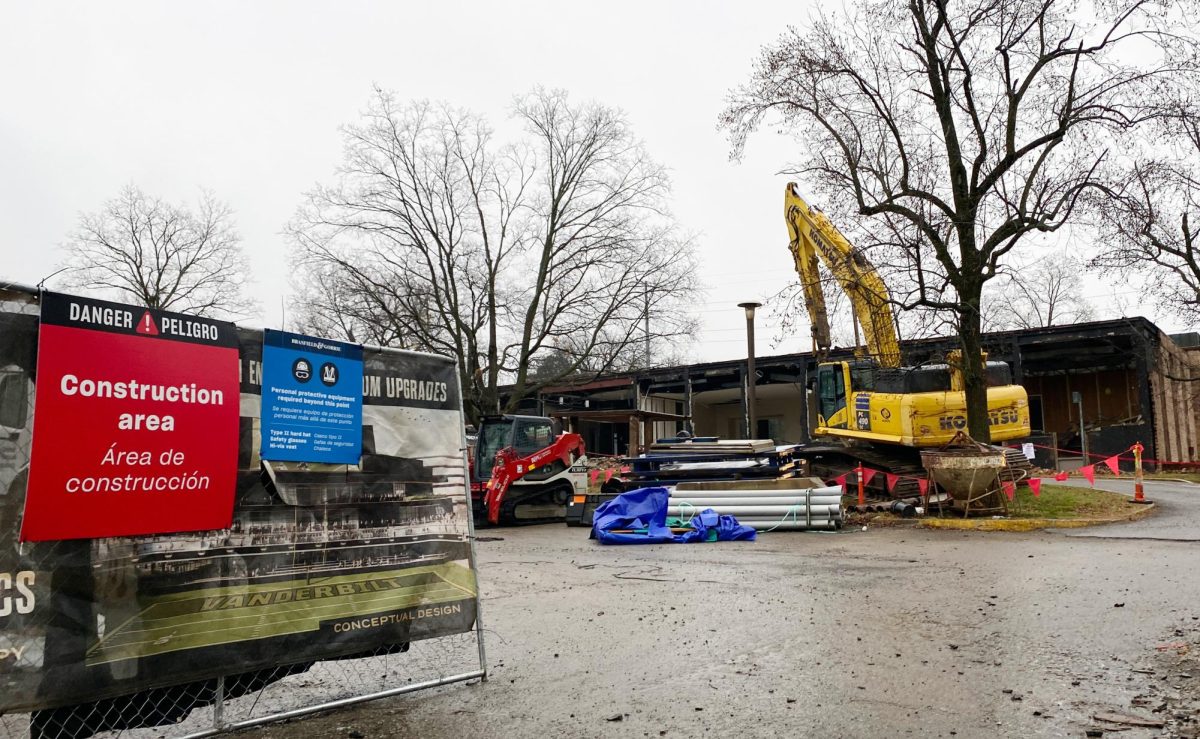
But it doesn’t seem like change is bound to happen. Instead of renovating or fixing the current East debacle, Vanderbilt is building a new dorm directly behind it. While I hoped this would lead to either the relocation of residents from Historic Neighborhoods during much-needed renovations or the permanent elimination of forced triples, Vanderbilt instead appears to be planning to enroll more students. But with our off-campus housing rate higher than ever (requiring many transfer students to miss out on the on-campus Vanderbilt experience), where are these new first-years going to live when they progress to sophomore year?
Returning from winter break to a parking lot sectioned off by construction for the brand-new dorm directly behind East House, I also learned we are opening a San Francisco campus. And we cannot forget about the recent New York expansion news, perfectly encapsulating our “Dare to Grow” slogan.
Although it would require Vanderbilt to acknowledge the discrepancy in first-year housing, I don’t find it productive to point out a problem without offering a solution: Give Historic Neighborhood residents an additional half point for the sophomore year housing process.
For those who are unfamiliar, housing after your first year works with a lottery point system, and those with more points get priority housing. Every sophomore has two points. I propose that those who live in the historic neighborhood (excluding North 2 private bathroom lucky ducks) get a half point added to their score to even out the playing field. Let the New Neighborhood students have their amenity-filled first year experience, and those in the Historic Neighborhood have it for their sophomore year. This method would allow everyone to experience preferred housing during their first two years at the university and preserve the Harry Potter-esque sorting of houses and fun rivalry that occurs during the Commons Cup.
The privilege of attending such a prestigious institution is not lost on me; I am so grateful for the friends and education I’ve received here. The Commons experience is truly special, so I’m not suggesting there must be a complete overhaul. But that doesn’t stop me from questioning a process that’s been in place for decades because that’s what allows us to make progress or, rather, dare to grow.





Anonymous • Jan 21, 2026 at 9:30 pm CST
Insightful commentary from this young scholar! I could not agree more. Let’s get those Historic Neighborhood students another half point!!
Anonymous • Jan 21, 2026 at 11:54 am CST
Love the article! As someone with the amenities of a new neighborhood dorm, I can speak on the fact that laundry should not have to take a trip to a different building- I already hate my trip down the elevator! If renovations were done well, the historic neighborhood could still preserve its charm and tight-knit communities. I love Vandy, but our steps towards progress seem illogical.