

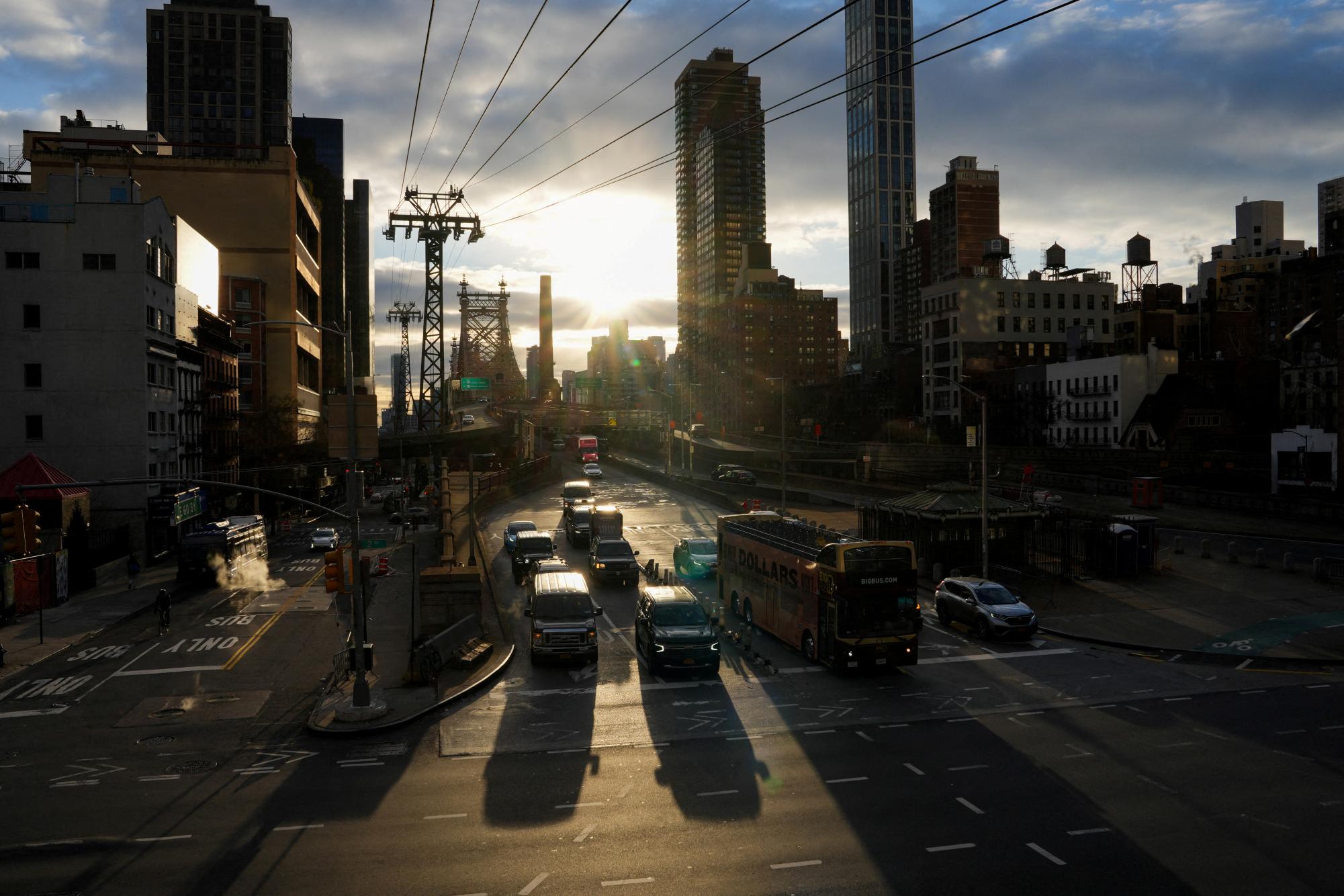
Vanderbilt announced the opening of its New York City campus last month. The announcement highlighted semester-long programs, experiential learning, internships and industry partnerships in finance, media, technology and public policy. Positioned as a gateway to real-world experience and professional networks that are less accessible in Nashville, the campus was presented as a strategic step to elevate Vanderbilt’s national and global presence. We asked our Opinion section what they thought.
Who do you think is the primary purpose of the New York City campus? Is it for undergraduates, or does it serve as a branding tool for alumni, external partners, donors and graduate programs?
Ahmed Nawaz, Staff Writer: The NYC campus truly feels like it’s for everyone and anyone at Vanderbilt. Current students interested in finance, startups, media, arts, real estate — basically anything New York does better than Nashville — will finally get hands-on exposure Nashville can’t provide. But it’s also a social hub for alumni, all the Vandy people already in New York, and even students who are just passing through the city on flights or internships. It’s honestly a bold move in academia. Harvard and Yale don’t have full satellite campuses; they only have social clubs in the city. Vanderbilt is doing something very different — almost like building both a campus and the beginning of a social home.
Eva Schneider, Staffer-In-Training: The opening of the New York campus is an unprecedented step for the university, and uncertainty will likely mark its initial years. Naturally, considerations include questioning the intended purpose or beneficiaries of these opportunities. However, Vanderbilt has demonstrated an authentic dedication to the undergraduate community throughout this process. As Provost C. Cybele Raver commented in a recent article, this expansion marks an ongoing commitment to providing Vanderbilt students with access to the “global community.” By expanding Vanderbilt’s presence in a center of valuable alumni and business connections, the university ultimately continues to serve undergraduate students.
Josie Guzzo, Staffer-In-Training: This campus could be for undergraduates, but it feels catered only to undergraduates who are on very specific career paths. For those of us who are on track to receive less conventional or less profitable degrees, the door feels shut. Given expressed intention with other campuses such as the West Palm Beach property, the goal — even if not explicitly stated now — will likely morph to cater those willing to pour extra money into the university, whether it means graduate programs or external donors. Though some lucky undergraduates will rub elbows with those they may not otherwise encounter, this will likely end — secondary to other interests — and will detract from further developing these opportunities within the culture of our existing campus.
Evan Wong, Staffer-In-Training: Despite the campus offering tremendous internship opportunities for undergraduate students, the availability is limited. The campus admits only 100 undergraduate students each semester, despite having over 7,000 undergraduate students. In addition, only five elective courses are offered on campus. In that case, I believe it serves more as a branding tool to boost Vanderbilt’s reputation and influence — especially in the northeastern region of America — thereby attracting more students. I also think the campus would be a tool to boost college rankings, because one key ranking factor in the U.S. News ranking is peer assessment, which weighs 20% and includes aspects such as innovative teaching and institutional health. The new campus allows students to pursue internships in the vibrant New York City community while completing academic courses, which would qualify as an innovative way of teaching. This, I believe, helps boost Vanderbilt’s overall ranking, despite the limited availability for students. As a result, the college ranking would also strengthen Vanderbilt’s reputation, which serves as a branding tool to attract more students.
Does the NYC campus expand access or concentrate opportunity?
Nawaz: For access, I truly feel like it expands opportunity megafold. Vanderbilt students are talented and weirdly interdisciplinary — like a pre-med running a startup, or an English major using data science to tell stories. A semester in Manhattan puts them around the best people in the world at what they do. And it accommodates every student. Even if someone is first generation, low income, the same Opportunity Vanderbilt program that makes studying in Nashville possible will also apply to Vanderbilt University-New York City as told to me by a financial aid representative at an open house this November.
Schneider: The new campus appears poised to expand undergraduate opportunities significantly. First, Vanderbilt provides generous study-away aid to all students, ensuring they never pay more than their typical semester’s tuition. The New York City semester program appears to fall within the same category. Second, by offering a study-away program entirely owned and directed by Vanderbilt, the process is likely streamlined. I’ve spoken to several upperclassmen who advocated for study-abroad opportunities but complained about the difficulty of the process. Offering students a study-away network within the United States also promotes access to incredible opportunities that are likely very different from those provided by programs in other countries.
Guzzo: Opportunity seems to be concentrated toward people on very specific tracks. Though it says this program can be for anyone, I see a clear focus on those who aim to work in business and tech. I am a major in environmental science and currently working with the English department to build a journalism major. Though I was initially excited to see this being offered to the broader student population, the structure of the study-away experience — especially with classes offered and the emphasis on viable internships — clearly favors some over others. I struggle already to find academic opportunities on Vanderbilt’s main campus to dive into the topics I care about. Unfortunately, it seems New York will be no different, and I know I am not the only one who will be left behind as a result.
What does Vanderbilt owe to its main campus before expanding outward?
George Albu, Photography Editor: Honestly, Vanderbilt needs to remember that Nashville should remain its flagship. A satellite campus means nothing if the “Earth” campus is in dismay. The ongoing construction here in Nashville does show promise that Vanderbilt will not abandon us, but again, any satellite campus should provide value back into the flagship and not leech off its resources. Furthermore, Vanderbilt needs to enhance its communication on any expansion projects. When we were in the initial stages of expanding into New York and West Palm Beach, multiple in-class discussions last semester showed that many professors did not even understand Vanderbilt’s exact plans for the expansions. I am not harshly against expansion, but I am against not being transparent with the flagship community before expansion.
Guzzo: Vanderbilt owes its main campus and all students on it the consistent opportunity and support to equally “dare to grow.” Though there is much talk of how this study-away experience can be for any student, there is a skewed sense of favor toward opportunities that are considered more profitable, both for the future degree holder and the university itself. For all the talk of this being the leading university of the twenty-first century, we have a long way to go in becoming more well-rounded before we can even consider expanding that mission.
Erina Haque, Staffer-In-Training: While the new campus may promote new outlets for opportunities, Vanderbilt must prioritize funding for academic, extracurricular and residential programming on its main campus prior to investing millions in funding outwardly. Our residential living spaces are frequently cramped, and laundry rooms face infestations of strange insects. Some bathrooms, such as the one in the Carmichael lobby, have been out of order for long durations of time. Multiple residential halls lack even basic amenities, such as a laundry room. Vanderbilt owes it to its student body to prioritize time and funding to address these issues first and foremost. Furthermore, the recent elimination of MOSAIC, a longstanding Vanderbilt program providing stipends for an overnight campus visit to admitted students from diverse backgrounds, adds to the irony of our university administration funneling funding into a New York City campus under the rationale of expanding opportunity. We must prioritize our existing residential infrastructure and the core services that make Vanderbilt unique — including diversity-based programs like MOSAIC — before expanding outside of Nashville in order to truly expand opportunity for all.
Do you think the new campus strengthens Vanderbilt’s academic mission or dilutes it?
Schneider: The opening of a new campus in New York City is consistent with Vanderbilt’s core mission to “dare to grow.” As a first-year student, I am proud to be a member of a community that is tangibly expanding. In addition to the New York City campus, Vanderbilt is broadening its academic offerings internally, including the College of Connected Computing and the Institute of National Security. Alongside these exciting new fields, I believe the semester-away programs in New York will contribute to both Vanderbilt’s growing national presence and to the widening of undergraduate students’ academic horizons.
Benjamin Joo, Staffer-In-Training: I think the new campus could potentially strengthen Vanderbilt’s academic mission by expanding experiential learning while also attracting students and faculty who want access to New York City’s ecosystem. However, this ultimately depends on how Vanderbilt drives expansion with equity while upholding its institutional values. If the focus shifts more toward branding, revenue and prestige over education and scholarship, there’s a real risk of dilution. As long as Vanderbilt remains committed to its core values, this campus will be a wonderful addition to the university.
Fanga Rajan, Staffer-In-Training: The New York City campus enhances Vanderbilt’s mission for transformative academic experiences. With the creation of this new campus, students will be able to pursue academic experiences in new cities, allowing them to explore internships, research, local events and a variety of novel opportunities not present in Nashville. While the university’s home city in the heart of Tennessee builds its high-quality education, an extra campus in one of the largest cities in the world only expands student perspectives and helps interested students become more well-rounded and worldly.
Haque: While the new campus could strengthen Vanderbilt’s academic mission, it should not come at the cost of programs based in Nashville. Part of what makes Vanderbilt so special is its unique location in the center of Nashville, one of the fastest-growing cities in the United States. Nashville was ranked No. 15 on a list of cities with the “Best Places for Businesses and Careers,” while New York City was ranked No. 115. Nashville has booming industries in health care, entertainment, technology, manufacturing, education, finance and tourism/hospitality. As one of the most prestigious schools in the nation, it would be a shame if we were to sacrifice our unique programs in Nashville for a relatively new and underdeveloped initiative. While New York City still presents avenues for growth, the Vanderbilt administration must not sacrifice the strength of its main campus. The heart of the university is based in Nashville, and we must strengthen our academic mission at the heart.