

NEON Rated’s latest early student release was hosted at Regal Green Hills, with a line coming out of the theater waiting to watch “Shelby Oaks.” Students from multiple Nashville colleges were buzzing at the prospect of the new movie, and NEON’s offerings made the wait more worthwhile. An array of merch, including posters, badges reading “What happened to Riley Brennan?” and NEON shirts, were enough to make me excited for what “Shelby Oaks” had to offer.
“Shelby Oaks” is Chris Stuckmann’s directorial debut and showcases his career potential due to the creativity as well as risk-taking that this film demonstrates. I was excited to see that Mike Flanagan was the executive producer behind this, and I tried my best to see the potential that he saw in this film. As the director of Netflix’s “The Haunting” anthology, “Ouija: Origin of Evil” and “Doctor Sleep,” his background in horror is well established, so my expectations were high. However, what was showcased was vastly different from what I expected.
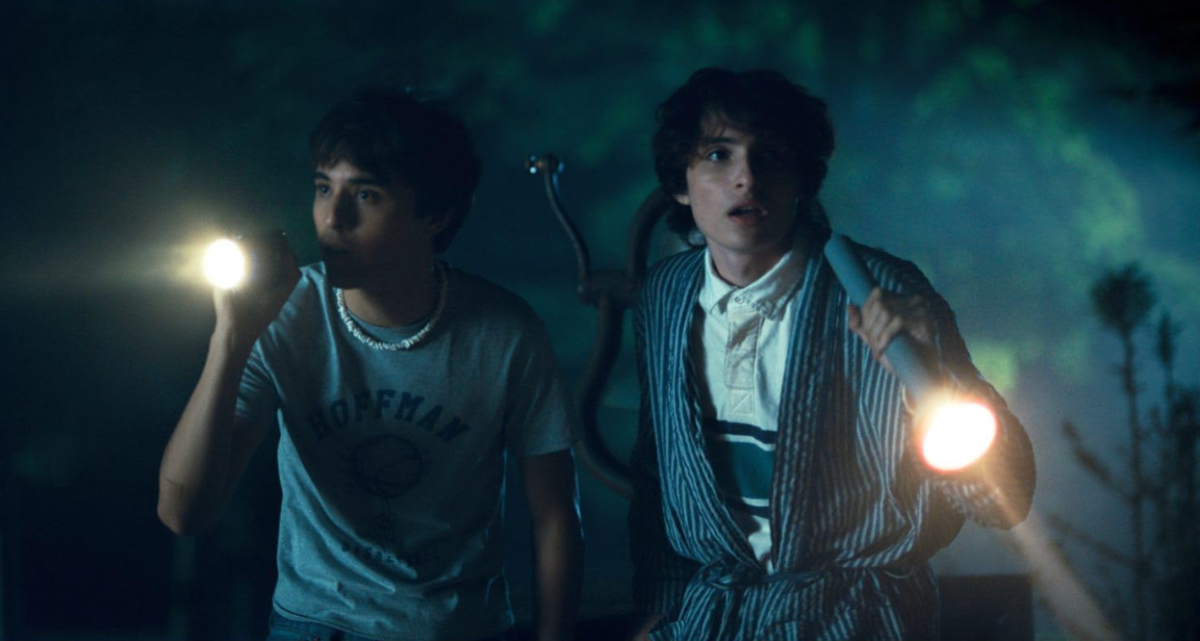
Initially staged as a crime documentary, “Shelby Oaks” features a modern take on the found-footage horror genre, feeling eerily similar to movies like “The Blair Witch Project” and “Creep.” It was interesting to see the initial 15 minutes of this movie as a different genre and medium before the drastic shift to the traditional horror film following Mia Brennan (Camille Sullivan), who attempts to uncover the truth behind the disappearance of her sister, Riley (Sarah Durn). The pivotal moment in the film was the first scare based on its sheer shock factor garnering gasps from most of the theater. The movie’s strength lies in its creative beginning and in the found footage that imitates the early internet space of the 2000s.
The strength and performance that Sarah Durn offers in the VHS tapes of her character that we see add to the haunting mystery that unfolds of the disappearance of Riley Brennan. The sound design added to the tension and suspense of the plot, making the movie best watched in cinemas.
Once Sullivan takes the lead, the narrative shifts and slowly loses its identity toward the third act of the film. The film becomes a full-fledged supernatural horror, with a weak base of demonology spurring out the plot and resolution of the film. With a runtime of only 91 minutes, the ending seems rushed and cheap compared to the original vision of the film. The horror and gore become gratuitous, lacking the emotional spirit necessary for us to feel connected to the characters. Students leaving the screening had mixed reactions to the movie and its ambiguous ending.
“Movies like this are why people with a vision deserve to be given a voice. Let artists be heard,” first-year Caleb Im said.
Those on the other side of the spectrum were more disappointed and bored at the conclusion of the film, which did not reflect its first half.
“It seemed very predictable, and I had already guessed the plot by the middle of the film,” Naima Salat, a Belmont student, said.
With what can be argued as a sensational new era to horror in terms of scares, Stuckmann underperforms the core aspect of the film — the story. Lacking emotional depth and a strong script, Shelby Oaks fails to commit to the genre of found footage as well as a coherent narrative, which ultimately is the downfall of the movie.
Shelby Oaks released in theaters nationwide on Oct. 24.