


Vanderbilt Football sits at a comfortable 5-1 record halfway through its regular season. With key wins over Virginia Tech and South Carolina, the Commodores have drawn national media attention and appeared in five consecutive AP polls for the first time in program history. Much of their success has been attributed to the outstanding play of quarterback Diego Pavia and his surrounding offense. However, Vanderbilt’s numerous victories would not have been possible without the efforts of its defense, which is in its first year under the management of defensive coordinator Steve Gregory.
Gregory — who played eight years in the NFL as a defensive back, including two as a New England Patriot under Bill Belichick — has a creative mind for play-calling and extensive experience to back it up.
Compared to last year, when head coach Clark Lea called Vanderbilt’s defensive schemes, Gregory has been substantially more aggressive in attacking the line of scrimmage. As a result, Vanderbilt’s run defense and pass rush have been excellent. However, this approach has also led to more man coverage, which the secondary has struggled to handle. Gregory has given the Commodores a new defensive identity, but the tape still shows mixed results.
Outmanned
Vanderbilt’s secondary was one of the biggest concerns for fans entering the 2025 campaign, as the Commodores struggled to defend the pass at many points in 2024. Through six games, they have allowed their opponents an average of 237 passing yards per game, and a troubling 334 yards per game in their two SEC games — the Commodores rank as the worst AP Top 25 team in opponent pass efficiency.
Vanderbilt’s cornerbacks have been less than stellar. While Kolbey Taylor and Martel Hight have been effective tacklers, they have frequently been beaten on routes down the field. Hight especially struggled to contain the Crimson Tide wideouts, as Ryan Williams’ speed and lateral quickness allowed him to get open on several go-routes. Hight also tends to be impatient with passes and jumps for the ball early, which gave Williams extra space to make big catches.
Taylor, on the other hand, often lines up far from the line of scrimmage, which helps him compensate for speed disparities. However, it gives Taylor’s matchups ample space to get free over the middle of the field, and he frequently gives up big gains on crossing routes.
This inability to go one-on-one with SEC receivers is concerning for the Commodores, who have to face Biletnikoff-contending pass catchers almost every weekend going forward.
Aggressive nature
So far through 2025, the Commodores have been elite at getting to the quarterback. They have had 18 sacks through six games, averaging three per contest — higher than last year’s two per game. Not only have they been hitting the quarterback, but they have been elite at creating big losses, as Vanderbilt currently is fifth in the FBS in sack yards. In addition, this aggressiveness has been great for getting to ball carriers early, as the Commodores rank in the top 10 in tackles for loss as well.
Leading the charge in this is true edge rusher Miles Capers. Capers is extremely lean and athletic for his position, allowing him to run through blockers and effectively chase ball carriers. The interior defensive line has also been great at collapsing the pocket and applying pressure on opposing quarterbacks.
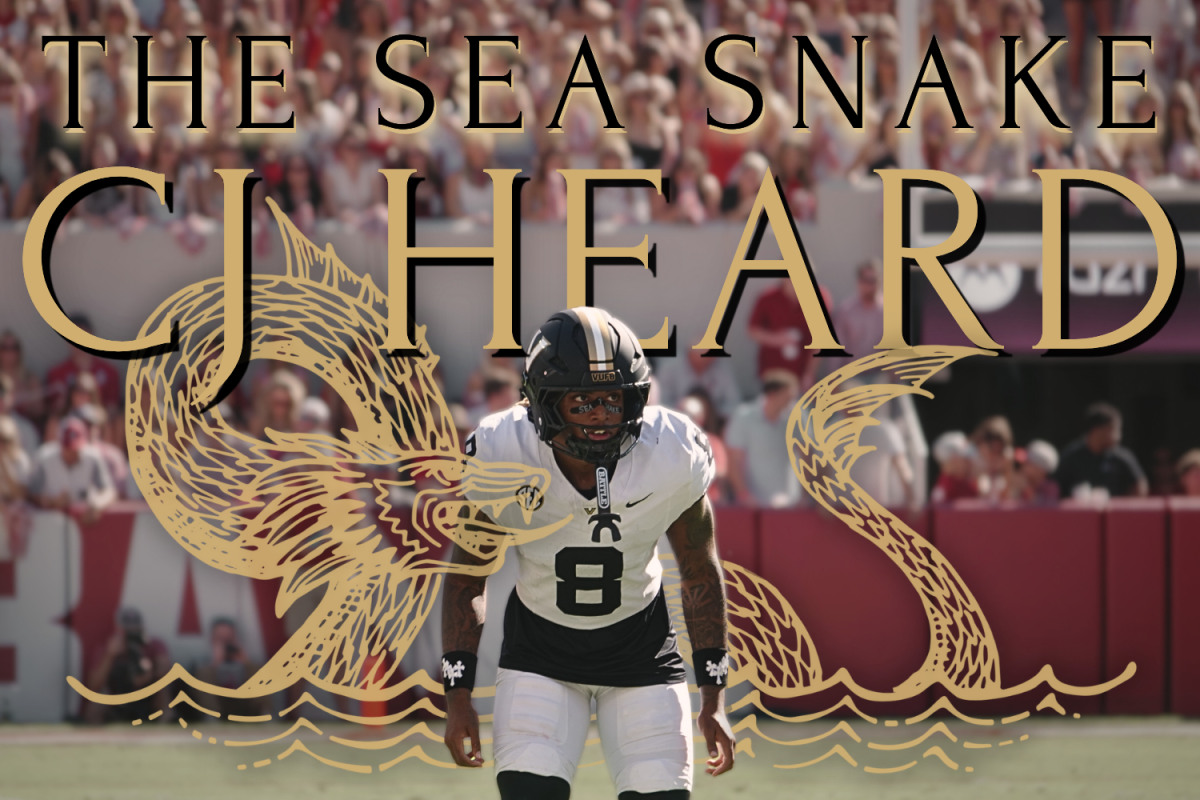
Perhaps the most notable feature of Gregory’s scheme, though, has been the creative use of Vanderbilt’s linebackers. Bryan Longwell and Nick Rinaldi are consistently lined up close to the neutral zone or set as blitzers before the snap. Whether rushing as an individual or as a tandem, both are incredibly efficient at surprising unprepared offensive lines and getting into the pocket. When Gregory is feeling especially daring, he also sends in safety CJ Heard, who is one of the best tacklers in college football and can effectively stop runners behind the line of scrimmage. These strategies were particularly effective in Vanderbilt’s upset win over South Carolina.
Blocked
For the most part, Gregory’s blitz calls have been the key to stopping the run and limiting quarterback effectiveness. But sometimes, when a ball carrier escapes the pocket, an absence of defenders in the middle of the field leads to longer runs than expected. This is often a risk worth taking for Gregory, but as the Commodores face teams with stronger offensive lines, the strength of their defensive tackles will be crucial, especially as star tackle Issa Ouattara remains injured.
Alabama running back Jam Miller posted 136 yards and a touchdown on 22 carries against Vanderbilt. Most of his touches came on runs up the middle — an area Vanderbilt was strong against entering the game. Even with Commodore defensive tackle Khordae Sydnor having the best game of his career with five tackles and a sack, the Crimson Tide guards were especially effective at pushing Vanderbilt away from Miller and opening running lanes.
Alabama also used Miller and its receivers in pre-snap motion before runs, which put Vanderbilt linebackers out of position to defend draw plays. Longwell was often neutralized by extra blockers brought in to counter his blitzing. While Vanderbilt’s defensive line should rebound from this performance, adjustments will be crucial as the team prepares for run-heavy offenses like Tennessee and Auburn.
The Commodores next take the field against LSU on Saturday, Oct. 18 at 11 a.m. CDT at FirstBank Stadium.